Oh Sumi, Lee Hyejung, Kim Sue, Kim Sanghee, Lyu Chuhl Joo, Park Chang Gi, Kang Hyoung Jin
College of Nursing, Health and Nursing Research Institute, Jeju National University, Jeju Special Self-Governing Province, South Korea.
College of Nursing, Mo-Im Kim Nursing Research Institute, Yonsei University, Seoul, South Korea.
Asia Pac J Oncol Nurs. 2023 May 11;10(7):100241. doi: 10.1016/j.apjon.2023.100241. eCollection 2023 Jul.
We developed a new scale-the Social Adjustment Scale for Youth Cancer Survivors-and examined its psychometric properties.
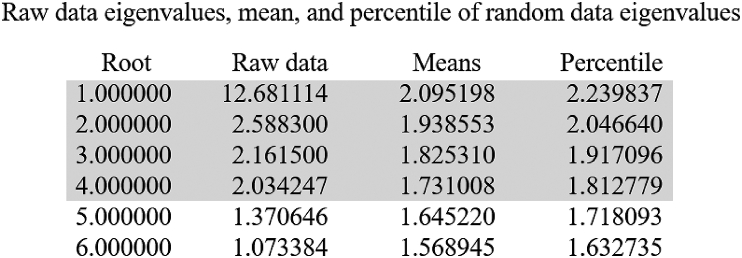
In the scale's development stage, preliminary items were constructed based on the results of a concept analysis of the hybrid model, literature review, and interviews. These items were then reviewed through content validity and cognitive interviews. In the validation stage, 136 survivors were recruited from two children's cancer centers in Seoul, South Korea. An exploratory factor analysis was performed to identify a set of constructs, and validity and reliability were tested.
Starting with 70 items constructed through literature review and interviews with youth survivors, the final scale comprised 32 items. The exploratory factor analysis identified four domains-namely, role achievement in one's present position, harmony in relationships, disclosure and acceptance of cancer history, and preparation and expectation for future roles. Correlations with quality of life indicated good convergent validity ( = 0.82, < 0.001). The Cronbach's α of the overall scale was 0.95, indicating excellent internal consistency; and the intraclass correlation coefficient was 0.94 ( < 0.001), suggesting high test-retest reliability.
The Social Adjustment Scale for Youth Cancer Survivors exhibited acceptable psychometric properties in measuring the social adjustment of youth cancer survivors. It can be used to identify youths facing difficulty in adjusting to society after treatment and to investigate the effect of interventions implemented to promote social adjustment among youth cancer survivors. Future research is needed to examine the applicability of the scale in patients across diverse cultural backgrounds and healthcare systems.
我们开发了一种新的量表——青少年癌症幸存者社会适应量表,并检验了其心理测量特性。
在量表开发阶段,基于混合模型的概念分析结果、文献综述和访谈构建了初步项目。然后通过内容效度和认知访谈对这些项目进行了审查。在验证阶段,从韩国首尔的两个儿童癌症中心招募了136名幸存者。进行探索性因素分析以确定一组结构,并测试效度和信度。
从通过文献综述和对青少年幸存者的访谈构建的70个项目开始,最终量表包含32个项目。探索性因素分析确定了四个领域,即当前职位的角色成就、人际关系的和谐、癌症病史的披露与接受以及对未来角色的准备与期望。与生活质量的相关性表明具有良好的收敛效度(r = 0.82,p < 0.001)。总量表的Cronbach's α为0.95,表明具有出色的内部一致性;组内相关系数为0.94(p < 0.001),表明重测信度高。
青少年癌症幸存者社会适应量表在测量青少年癌症幸存者的社会适应方面表现出可接受的心理测量特性。它可用于识别治疗后难以适应社会的青少年,并调查为促进青少年癌症幸存者社会适应而实施的干预措施的效果。未来需要研究检验该量表在不同文化背景和医疗系统患者中的适用性。