Zhu Ping, Li Shi-You, Ding Jin, Fei Zhou, Sun Sheng-Nan, Zheng Zhao-Hui, Wei Ding, Jiang Jun, Miao Jin-Lin, Li San-Zhong, Luo Xing, Zhang Kui, Wang Bin, Zhang Kun, Pu Su, Wang Qian-Ting, Zhang Xin-Yue, Wen Gao-Liu, Liu Jun O, August John Thomas, Bian Huijie, Chen Zhi-Nan, He You-Wen
Department of Clinical Immunology, Xijing Hospital, Department of Cell Biology, National Translational Science Center for Molecular Medicine, Fourth Military Medical University, Xi'an, 710032, China.
Beijing Tricision Biotherapeutics Inc., Beijing, 100176, China.
J Pharm Anal. 2023 Jun;13(6):616-624. doi: 10.1016/j.jpha.2023.04.012. Epub 2023 Apr 21.
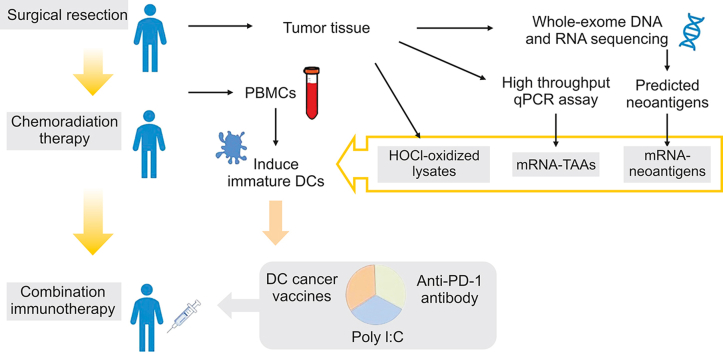
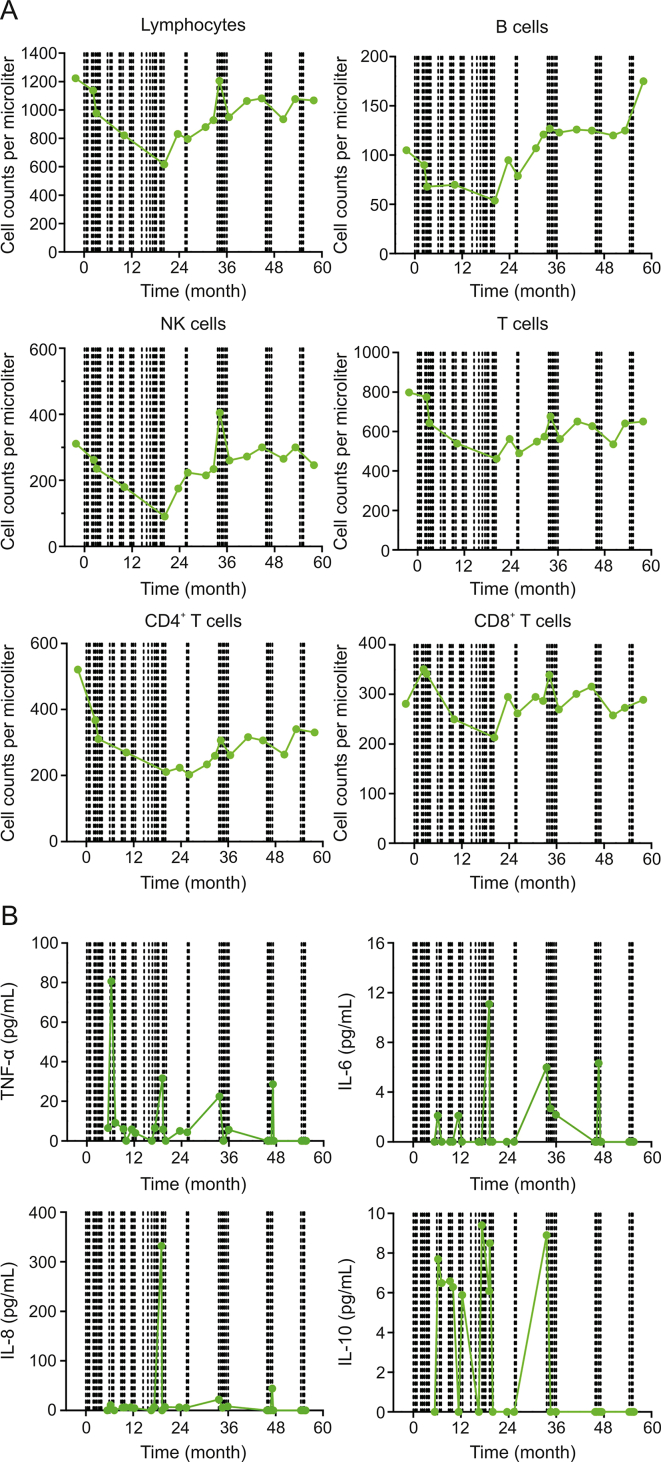
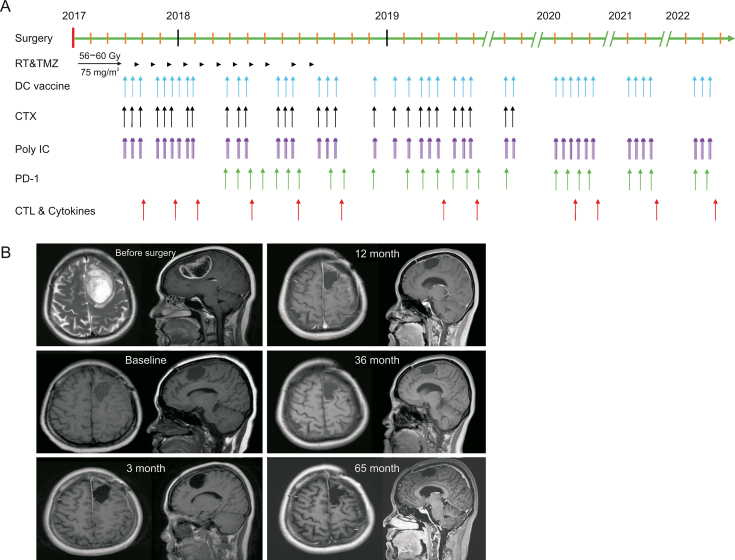
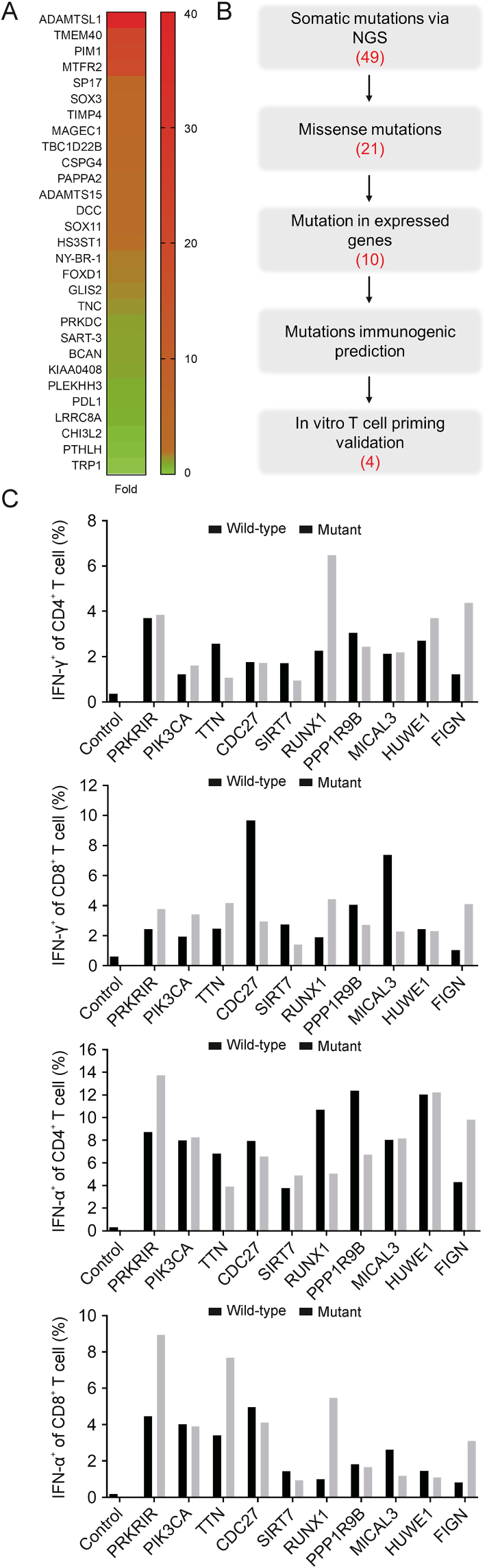
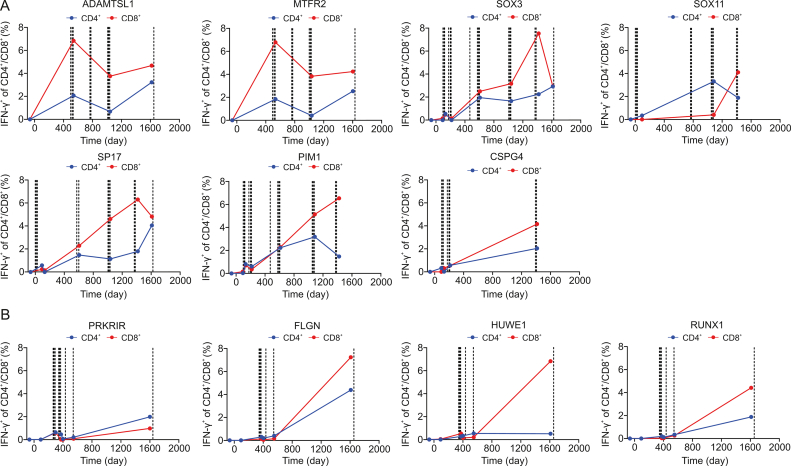
Glioblastoma (GBM) is a lethal cancer with limited therapeutic options. Dendritic cell (DC)-based cancer vaccines provide a promising approach for GBM treatment. Clinical studies suggest that other immunotherapeutic agents may be combined with DC vaccines to further enhance antitumor activity. Here, we report a GBM case with combination immunotherapy consisting of DC vaccines, anti-programmed death-1 (anti-PD-1) and poly I:C as well as the chemotherapeutic agent cyclophosphamide that was integrated with standard chemoradiation therapy, and the patient remained disease-free for 69 months. The patient received DC vaccines loaded with multiple forms of tumor antigens, including mRNA-tumor associated antigens (TAA), mRNA-neoantigens, and hypochlorous acid (HOCl)-oxidized tumor lysates. Furthermore, mRNA-TAAs were modified with a novel TriVac technology that fuses TAAs with a destabilization domain and inserts TAAs into full-length lysosomal associated membrane protein-1 to enhance major histocompatibility complex (MHC) class I and II antigen presentation. The treatment consisted of 42 DC cancer vaccine infusions, 26 anti-PD-1 antibody nivolumab administrations and 126 poly I:C injections for DC infusions. The patient also received 28 doses of cyclophosphamide for depletion of regulatory T cells. No immunotherapy-related adverse events were observed during the treatment. Robust antitumor CD4 and CD8 T-cell responses were detected. The patient remains free of disease progression. This is the first case report on the combination of the above three agents to treat glioblastoma patients. Our results suggest that integrated combination immunotherapy is safe and feasible for long-term treatment in this patient. A large-scale trial to validate these findings is warranted.
胶质母细胞瘤(GBM)是一种治疗选择有限的致命性癌症。基于树突状细胞(DC)的癌症疫苗为GBM治疗提供了一种有前景的方法。临床研究表明,其他免疫治疗药物可与DC疫苗联合使用,以进一步增强抗肿瘤活性。在此,我们报告一例GBM患者接受了由DC疫苗、抗程序性死亡1(anti-PD-1)、聚肌胞苷酸(poly I:C)以及化疗药物环磷酰胺组成的联合免疫治疗,该治疗与标准放化疗相结合,患者无病生存69个月。患者接受了负载多种形式肿瘤抗原的DC疫苗,包括信使核糖核酸 - 肿瘤相关抗原(mRNA-TAA)、mRNA-新抗原以及次氯酸(HOCl)氧化的肿瘤裂解物。此外,mRNA-TAAs采用了一种新型TriVac技术进行修饰,该技术将TAA与一个不稳定结构域融合,并将TAA插入全长溶酶体相关膜蛋白-1中,以增强主要组织相容性复合体(MHC)I类和II类抗原呈递。治疗包括42次DC癌症疫苗输注、26次抗PD-1抗体纳武单抗给药以及126次用于DC输注前的poly I:C注射。患者还接受了28剂环磷酰胺以清除调节性T细胞。治疗期间未观察到与免疫治疗相关的不良事件。检测到强大的抗肿瘤CD4和CD8 T细胞反应。患者仍无疾病进展。这是关于上述三种药物联合治疗胶质母细胞瘤患者的首例病例报告。我们的结果表明,综合联合免疫治疗对该患者的长期治疗是安全可行的。有必要进行大规模试验来验证这些发现。