Tamiya Hironari, Urushihara Naoko, Shizuma Kazuko, Ogawa Hisataka, Nakai Sho, Wakamatsu Toru, Takenaka Satoshi, Kakunaga Shigeki
Department of Rehabilitation, Osaka International Cancer Institute, Osaka 541-8567, Japan.
Department of Orthopaedic Surgery, Osaka International Cancer Institute, Osaka 541-8567, Japan.
Cancers (Basel). 2023 Jul 4;15(13):3484. doi: 10.3390/cancers15133484.
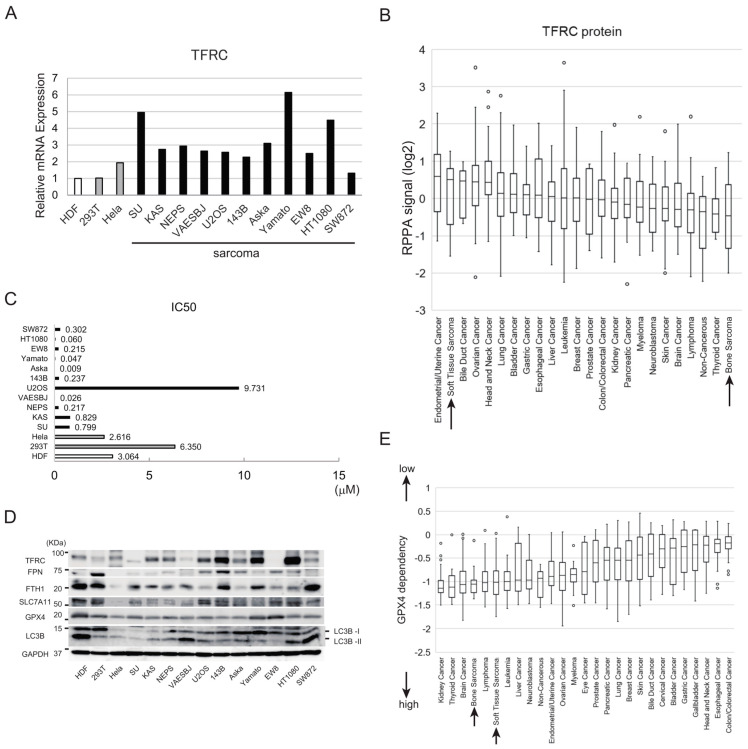
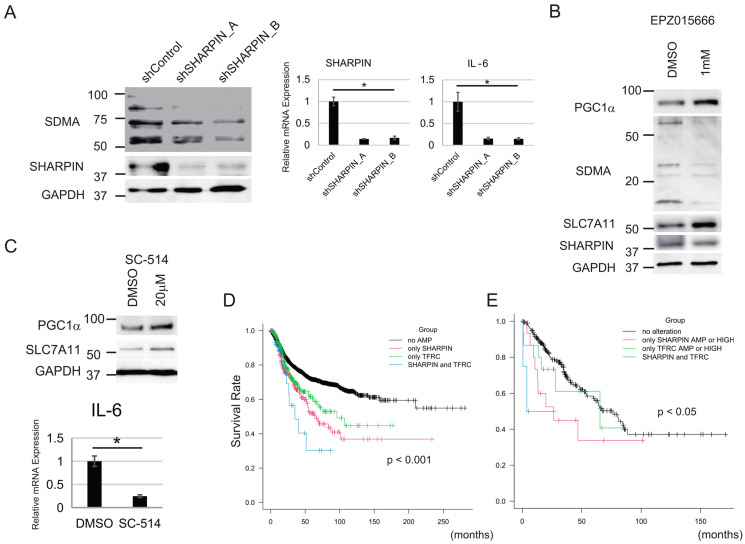
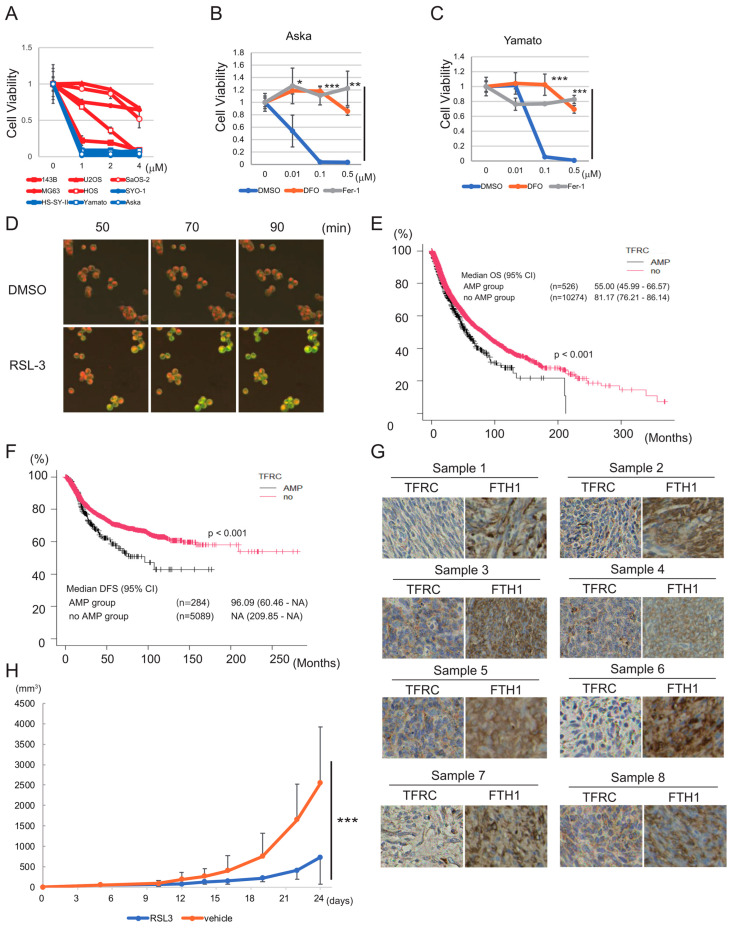
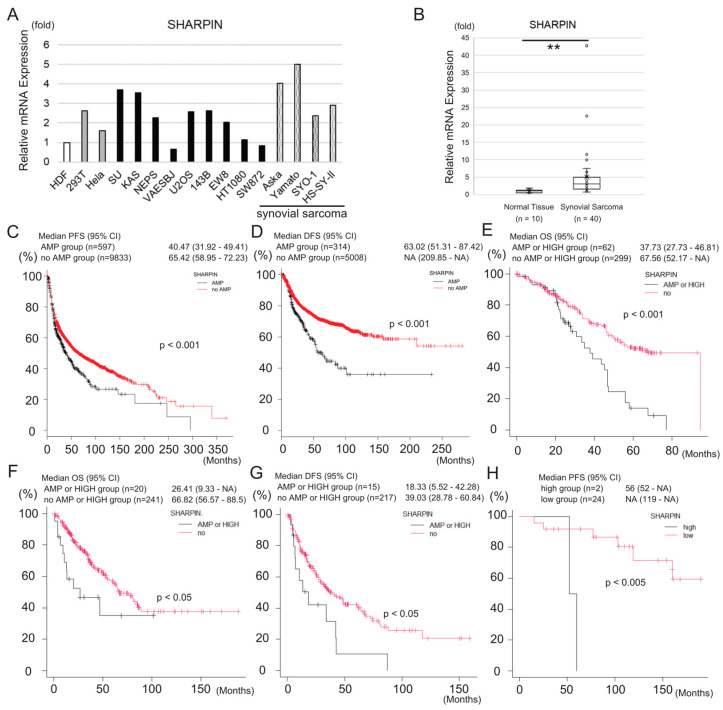
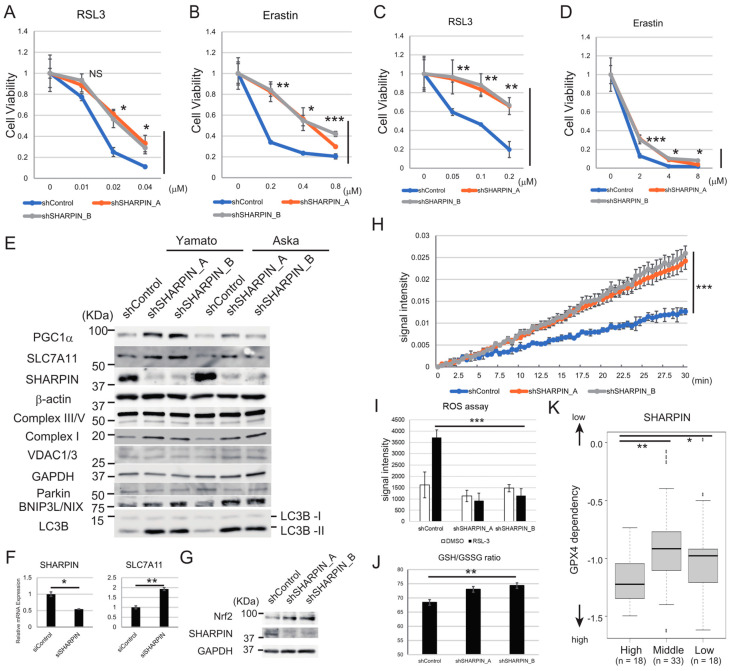
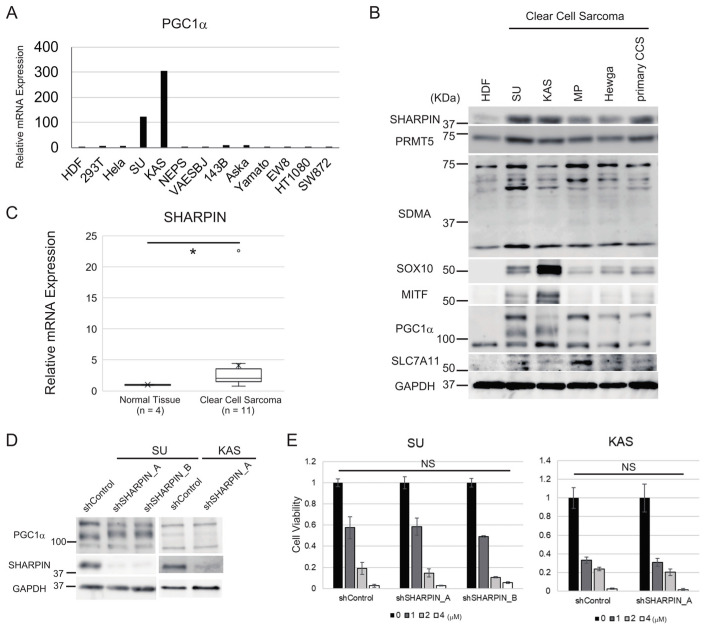
Sarcoma is a rare type of cancer for which new therapeutic agents are required. Ferroptosis is a nonapoptotic cell death triggered by iron-mediated lipid peroxidation. We found that TFRC, an iron uptake protein, was expressed at higher levels in sarcoma cell lines than in noncancer and carcinoma cell lines. Glutathione peroxidase 4 (GPX4) protects cells against ferroptosis, and its inhibition using RAS-selective lethal 3 (RSL3) had an antitumor effect that was more pronounced in sarcoma cell lines, particularly synovial sarcoma cells, compared to non-sarcoma cells. Because NF-κB can provoke ferroptosis, we examined the role of SHARPIN, an activator of NF-κB, in sarcoma. We found that SHARPIN expression was significantly associated with reduced survival in cohorts of patients with cancer, including sarcoma. In addition, SHARPIN promoted the sensitivity of sarcoma cells to ferroptosis. Further analyses revealed that the PGC1α/NRF2/SLC7A11 axis and BNIP3L/NIX-mediated mitophagy are regulated through NF-κB and PRMT5 downstream of SHARPIN. Our findings suggest that ferroptosis could have a therapeutic effect in sarcoma, particularly in subpopulations with high TFRC and SHARPIN expression.
肉瘤是一种需要新型治疗药物的罕见癌症类型。铁死亡是一种由铁介导的脂质过氧化引发的非凋亡性细胞死亡。我们发现,铁摄取蛋白转铁蛋白受体(TFRC)在肉瘤细胞系中的表达水平高于非癌细胞系和癌细胞系。谷胱甘肽过氧化物酶4(GPX4)可保护细胞免受铁死亡影响,使用RAS选择性致死3(RSL3)抑制该酶具有抗肿瘤作用,与非肉瘤细胞相比,这种作用在肉瘤细胞系尤其是滑膜肉瘤细胞中更为明显。由于核因子κB(NF-κB)可引发铁死亡,我们研究了NF-κB激活剂含PHD和RING结构域的蛋白1(SHARPIN)在肉瘤中的作用。我们发现,SHARPIN的表达与包括肉瘤在内的癌症患者队列的生存率降低显著相关。此外,SHARPIN可促进肉瘤细胞对铁死亡的敏感性。进一步分析表明,过氧化物酶体增殖物激活受体γ共激活因子1α(PGC1α)/核因子E2相关因子2(NRF2)/溶质载体家族7成员11(SLC7A11)轴以及BNIP3L/NIX介导的线粒体自噬通过SHARPIN下游的NF-κB和蛋白精氨酸甲基转移酶5(PRMT5)进行调节。我们的研究结果表明,铁死亡可能对肉瘤具有治疗作用,特别是在TFRC和SHARPIN高表达的亚群中。