Institute of Pharmacology & Toxicology, College of Pharmaceutical Sciences, Key Laboratory of Medical Neurobiology of The Ministry of Health of China, Zhejiang University, Hangzhou, China.
Key Laboratory of Neuropharmacology and Translational Medicine of Zhejiang Province, College of Pharmacology Science, Zhejiang Chinese Medical University, Hangzhou, China.
Cell Death Dis. 2021 Dec 20;13(1):14. doi: 10.1038/s41419-021-04469-y.
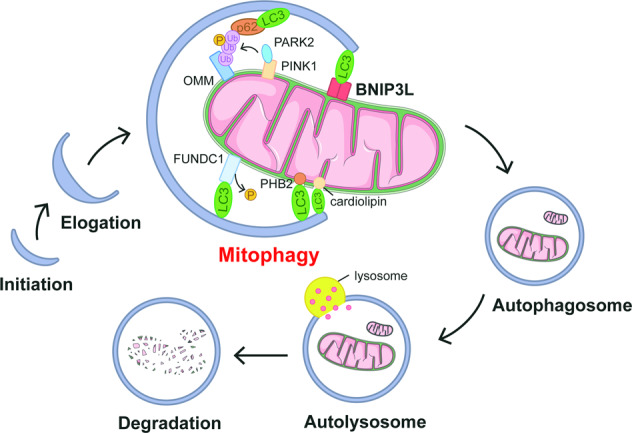
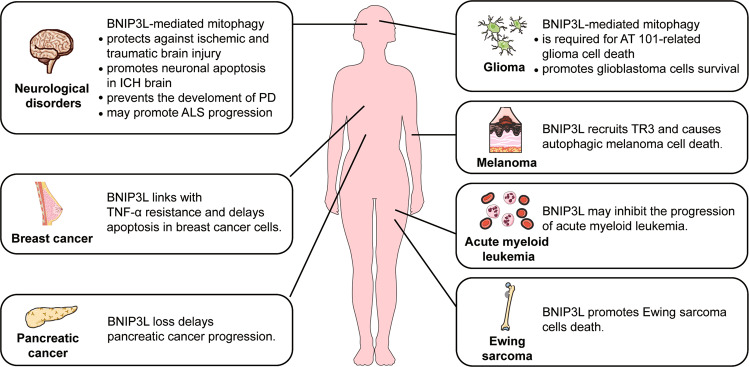
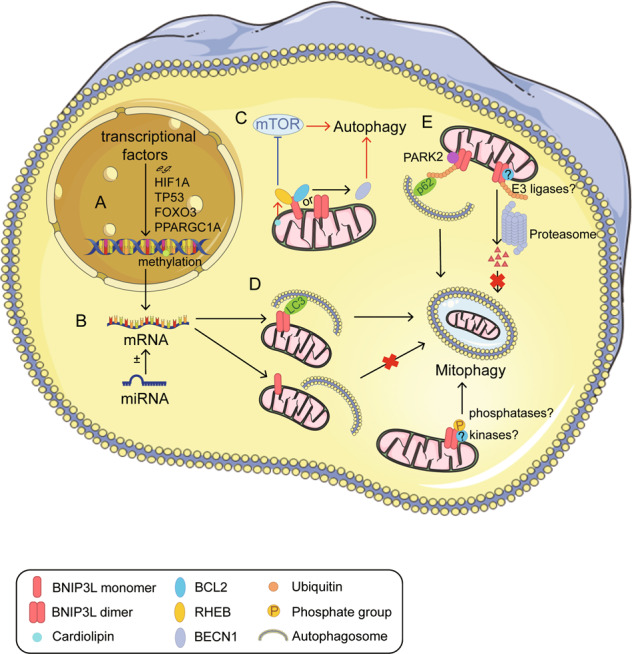
Mitophagy is a highly conserved cellular process that maintains the mitochondrial quantity by eliminating dysfunctional or superfluous mitochondria through autophagy machinery. The mitochondrial outer membrane protein BNIP3L/Nix serves as a mitophagy receptor by recognizing autophagosomes. BNIP3L is initially known to clear the mitochondria during the development of reticulocytes. Recent studies indicated it also engages in a variety of physiological and pathological processes. In this review, we provide an overview of how BNIP3L induces mitophagy and discuss the biological functions of BNIP3L and its regulation at the molecular level. We further discuss current evidence indicating the involvement of BNIP3L-mediated mitophagy in human disease, particularly in cancer and neurological disorders.
自噬是一种高度保守的细胞过程,通过自噬机制消除功能失调或多余的线粒体来维持线粒体的数量。线粒体外膜蛋白 BNIP3L/Nix 作为一种自噬受体,通过识别自噬体来参与这一过程。BNIP3L 最初被认为在网织红细胞的发育过程中清除线粒体。最近的研究表明,它还参与了多种生理和病理过程。在这篇综述中,我们概述了 BNIP3L 如何诱导自噬,并讨论了 BNIP3L 的生物学功能及其在分子水平上的调节。我们还进一步讨论了目前的证据,表明 BNIP3L 介导的自噬参与了人类疾病,特别是癌症和神经紊乱。