Faculty of Biology, Paisii Hilendarski University of Plovdiv, 4000 Plovdiv, Bulgaria.
Nykode Therapeutics ASA, 0349 Oslo, Norway.
Int J Mol Sci. 2023 Jun 28;24(13):10811. doi: 10.3390/ijms241310811.
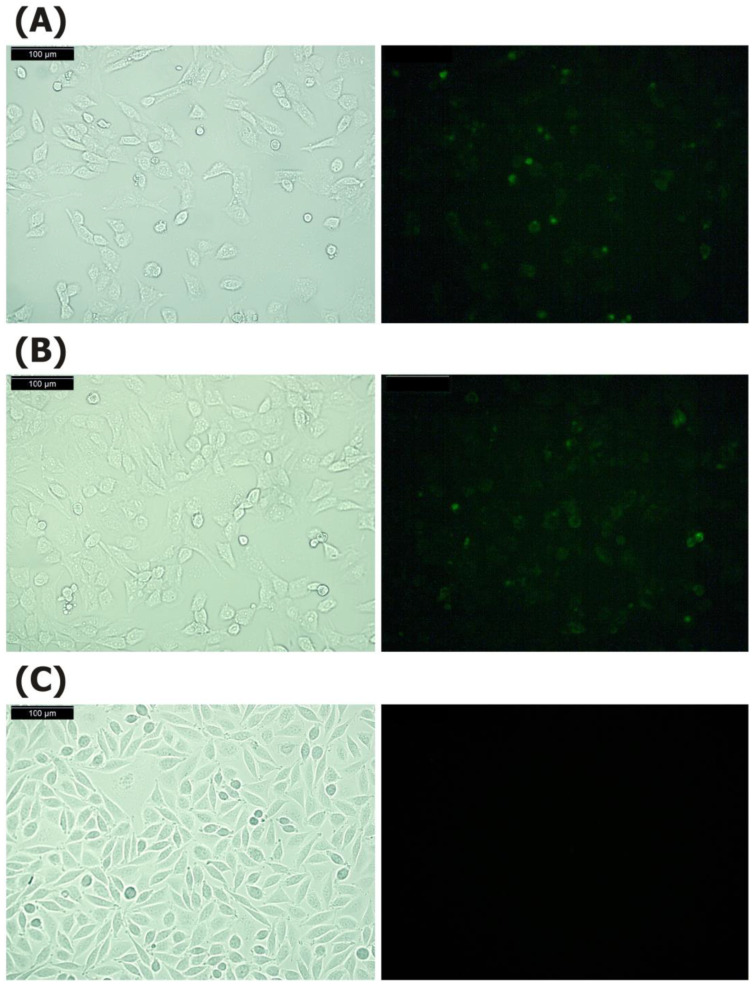
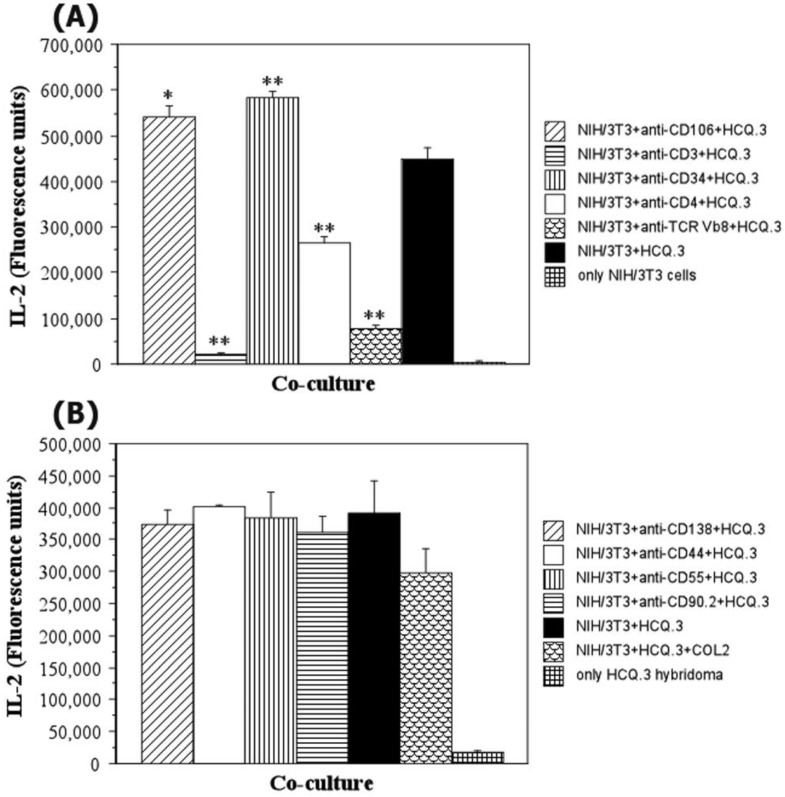
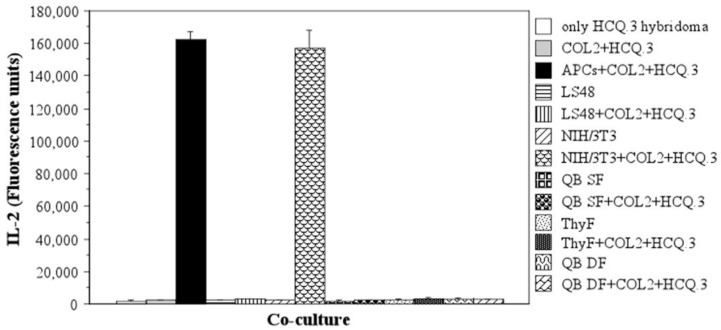
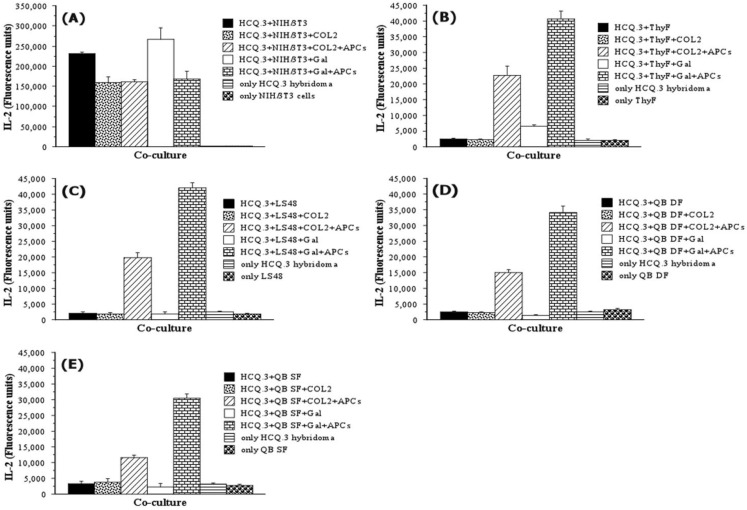
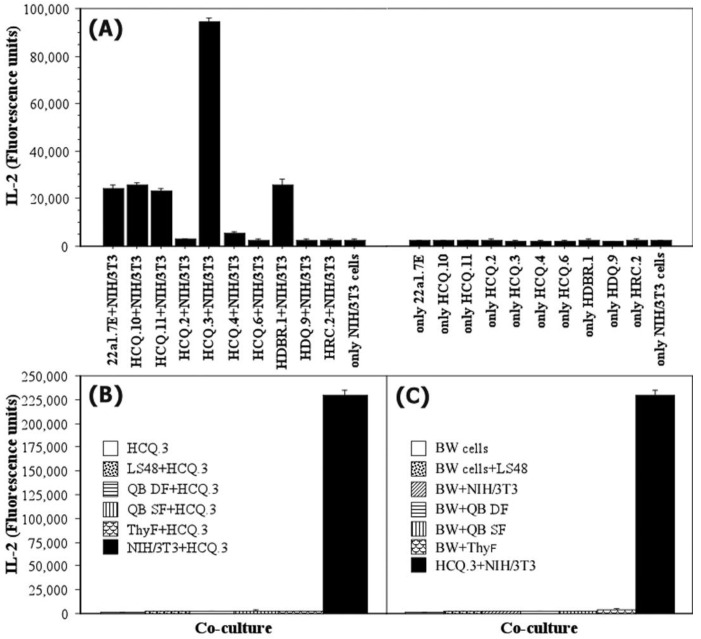
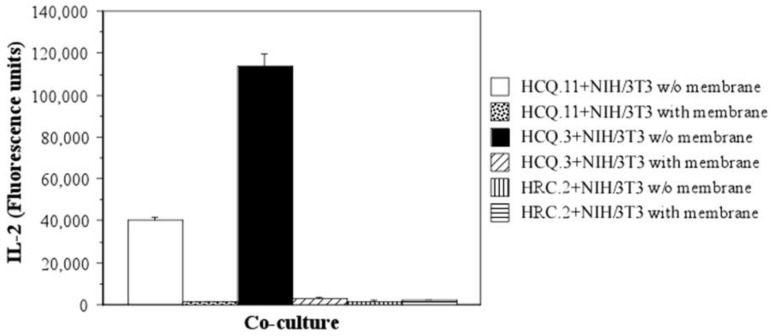
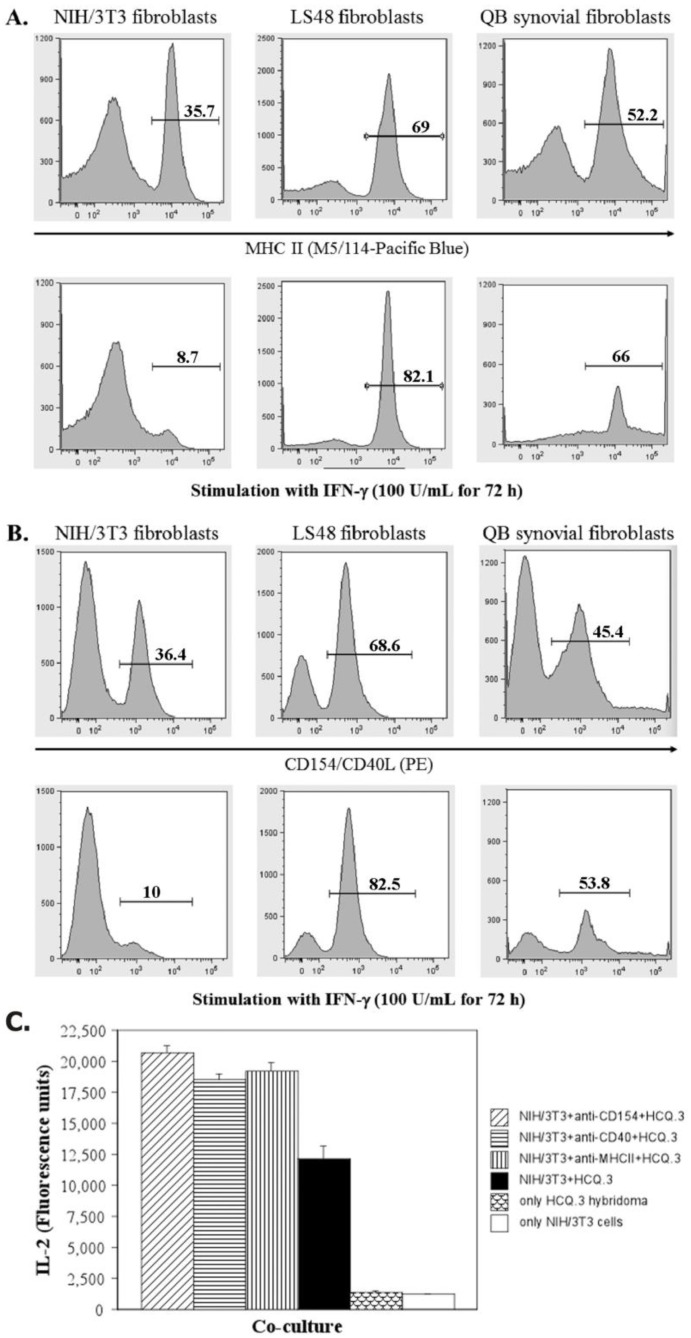
It has been shown that synovial fibroblasts (SF) play a key role in the initiation of inflammation and joint destruction, leading to arthritis progression. Fibroblasts may express major histocompatibility complex class II region (MHCII) molecules, and thus, they could be able to process and present antigens to immunocompetent cells. Here we examine whether different types of fibroblasts (synovial, dermal, and thymic murine fibroblasts, destructive LS48 fibroblasts, and noninvasive NIH/3T3 fibroblasts) may be involved in the initiation of rheumatoid arthritis (RA) pathogenesis and can process and present type II collagen (COL2)-an autoantigen associated with RA. Using a panel of MHCII/Aq-restricted T-cell hybridoma lines that specifically recognize an immunodominant COL2 epitope (COL2), we found that NIH/3T3 fibroblasts activate several T-cell clones that recognize the posttranslationally glycosylated or hydroxylated COL2 epitope. The HCQ.3 hybridoma, which is specific for the glycosylated immunodominant COL2 epitope 259-273 (Gal264), showed the strongest response. Interestingly, NIH/3T3 cells, but not destructive LS48 fibroblasts, synovial, dermal, or thymic fibroblasts, were able to stimulate the HCQ.3 hybridoma and other COL2-specific T-cell hybridomas. Our experiments revealed that NIH/3T3 fibroblasts are able to activate COL2-specific T-cell hybridomas even in the absence of COL2 or a posttranslationally modified COL2 peptide. The mechanism of this unusual activation is contact-dependent and involves the T-cell receptor (TCR) complex.
已经表明,滑膜成纤维细胞(SF)在炎症和关节破坏的起始中起关键作用,导致关节炎进展。成纤维细胞可能表达主要组织相容性复合体 II 区(MHCII)分子,因此,它们能够处理和向免疫活性细胞呈递抗原。在这里,我们研究了不同类型的成纤维细胞(滑膜、真皮和胸腺鼠成纤维细胞、破坏的 LS48 成纤维细胞和非侵袭性 NIH/3T3 成纤维细胞)是否可能参与类风湿关节炎(RA)发病机制的启动,并且能够处理和呈递与 RA 相关的 II 型胶原(COL2)-一种自身抗原。使用一组 MHCII/Aq 限制性 T 细胞杂交瘤系,这些杂交瘤系特异性识别免疫显性 COL2 表位(COL2),我们发现 NIH/3T3 成纤维细胞激活了几个识别翻译后糖基化或羟化 COL2 表位的 T 细胞克隆。HCQ.3 杂交瘤特异性针对糖基化免疫显性 COL2 表位 259-273(Gal264),表现出最强的反应。有趣的是,NIH/3T3 细胞,但不是破坏的 LS48 成纤维细胞、滑膜、真皮或胸腺成纤维细胞,能够刺激 HCQ.3 杂交瘤和其他 COL2 特异性 T 细胞杂交瘤。我们的实验表明,NIH/3T3 成纤维细胞即使在缺乏 COL2 或翻译后修饰的 COL2 肽的情况下,也能够激活 COL2 特异性 T 细胞杂交瘤。这种异常激活的机制是依赖接触的,涉及 T 细胞受体(TCR)复合物。