Department of Respiratory Medicine and Allergology, Sahlgrenska University Hospital, 413 46 Gothenburg, Sweden.
Department of Internal Medicine and Clinical Nutrition, Institute of Medicine, Sahlgrenska Academy, University of Gothenburg, 405 30 Gothenburg, Sweden.
Nutrients. 2023 Jun 26;15(13):2887. doi: 10.3390/nu15132887.
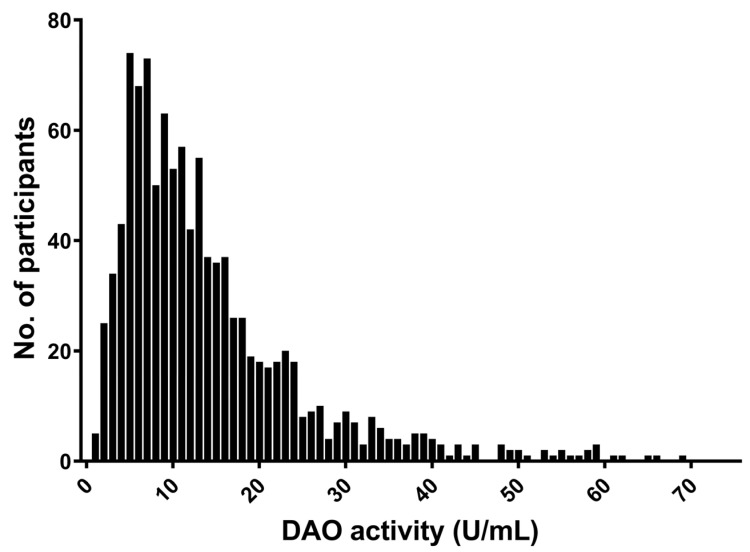
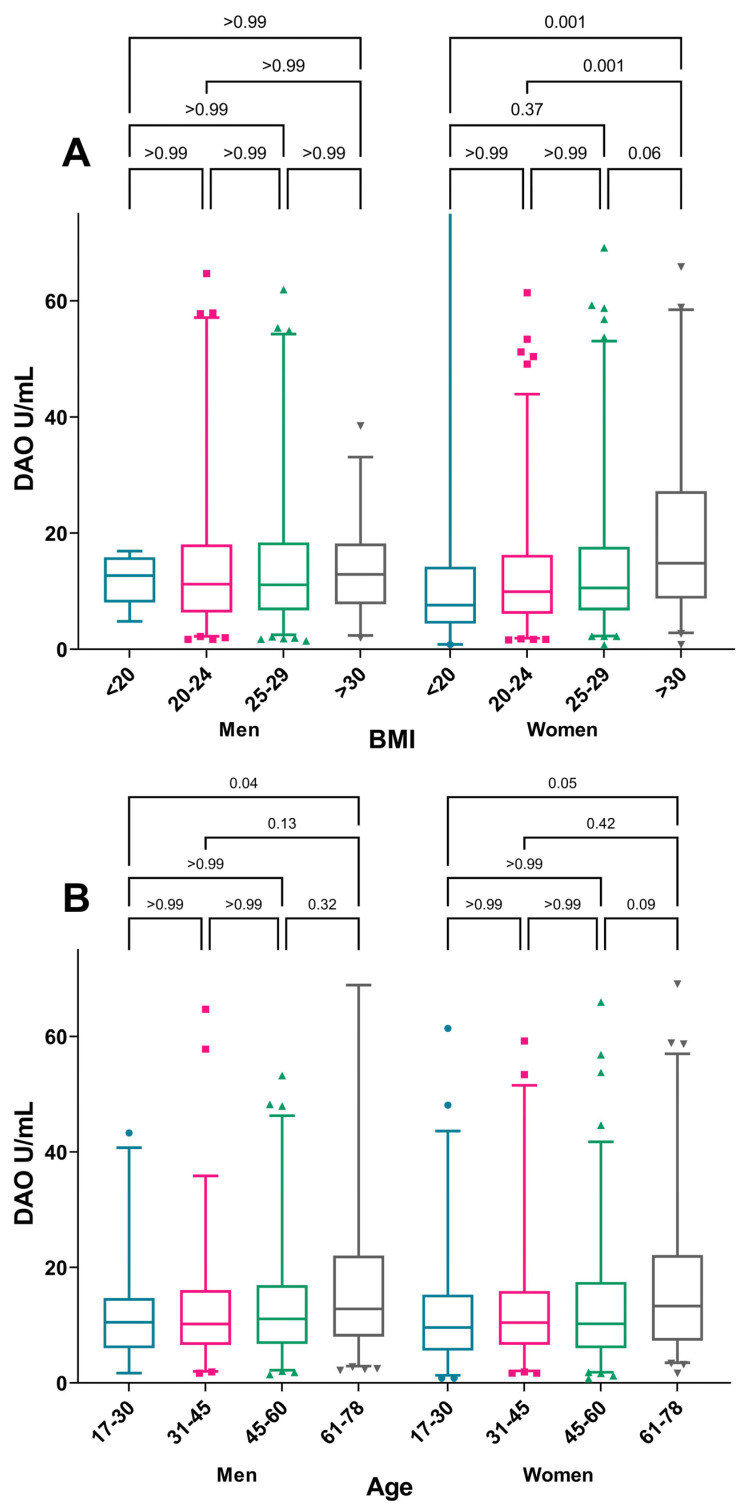
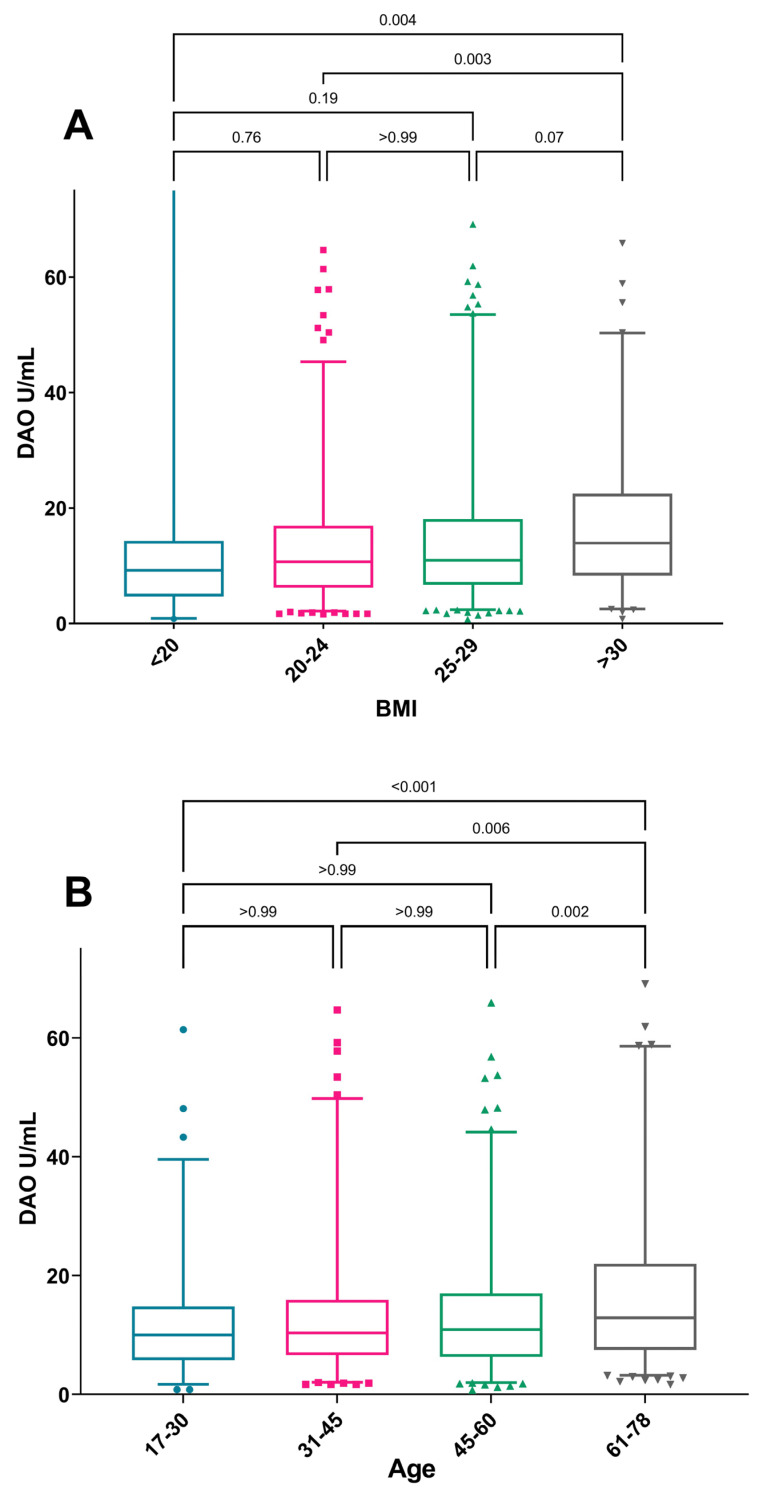
Histamine intolerance (HIT) is a common adverse reaction to food where elimination and reintroduction of histamine-rich food is part of the investigation. Analysis of the enzyme diamine oxidase (DAO) is sometimes used as an additional tool for diagnosis. This study aimed to describe the distribution of DAO in a large representative cohort of adults and to determine the association between DAO activity and possible associated factors. The study is based on the population-based West Sweden Asthma Study and includes 1051 subjects. Subjects underwent structured interviews including questions on demography, asthma, allergy symptoms, and lifestyle factors. Subjects were assessed for specific-IgE-antibodies and measurement of DAO activity in serum. Previously suggested cut-off levels for low values (<3 U/mL), normal values (>10 U/mL), and median levels of DAO were used. In the group of 1051 subjects, only a few presented reactions upon histamine intake, whereas 44% presented DAO levels below the suggested normal cut-off levels. BMI and age were shown to have an impact on DAO activity among women with increasing activity of DAO with increasing BMI and age. Among men, only increasing age was seen to have an impact on DAO levels. There was no difference in DAO levels with different sensitization status to common foods or airborne allergens. No association between DAO levels and reported symptoms to histamine-rich foods could be found. In conclusion, the determination of the DAO enzyme needs to be re-evaluated and may not be used as a valuable tool for histamine intolerance using current cut-off values. Further studies are needed to improve the use of DAO as a biomarker for histamine intolerance.
组织胺不耐受症(HIT)是一种常见的食物不良反应,消除和重新引入富含组织胺的食物是调查的一部分。分析酶二胺氧化酶(DAO)有时也被用作诊断的附加工具。本研究旨在描述大量代表性成年人中 DAO 的分布,并确定 DAO 活性与可能相关因素之间的关联。该研究基于基于人群的瑞典西部哮喘研究,包括 1051 名受试者。受试者接受了结构化访谈,包括人口统计学、哮喘、过敏症状和生活方式因素的问题。对受试者进行特异性 IgE 抗体检测和血清 DAO 活性测定。使用先前建议的低值(<3 U/mL)、正常值(>10 U/mL)和中位数 DAO 水平的截断值。在 1051 名受试者中,仅有少数人在摄入组织胺后出现反应,而 44%的人 DAO 水平低于建议的正常截断值。BMI 和年龄对女性 DAO 活性有影响,随着 BMI 和年龄的增加,DAO 活性增加。在男性中,只有年龄的增加对 DAO 水平有影响。DAO 水平与对常见食物或空气传播过敏原的致敏状态无差异。未发现 DAO 水平与报告的富含组织胺食物的症状之间存在相关性。总之,需要重新评估 DAO 酶的测定,并且不能使用当前的截断值将其作为组织胺不耐受的有价值工具。需要进一步研究以改善 DAO 作为组织胺不耐受生物标志物的使用。