Baroudi Alia, García-Payo Carmen, Khayet Mohamed
Department of Structure of Matter, Thermal Physics and Electronics, Faculty of Physics, University Complutense of Madrid, Avda. Complutense s/n, 28040 Madrid, Spain.
Department of Industrial Engineering, Higher Polytechnic School, University Antonio Nebrija, C/Santa cruz del Marcenado 27, 28015 Madrid, Spain.
Polymers (Basel). 2023 Jun 24;15(13):2804. doi: 10.3390/polym15132804.
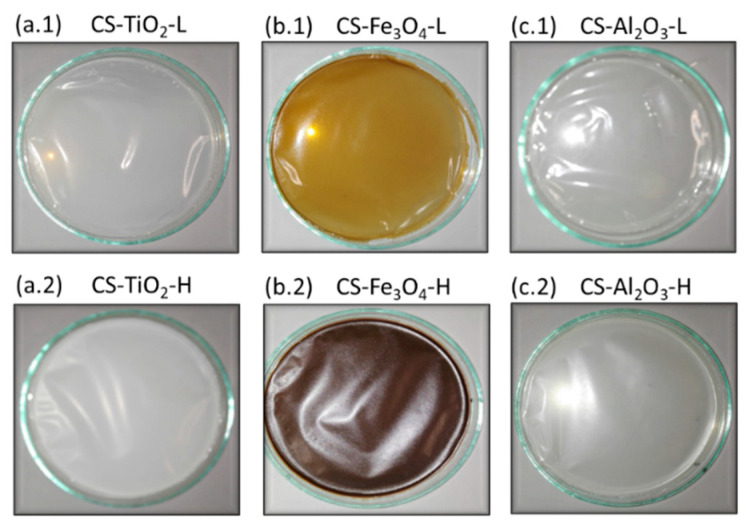
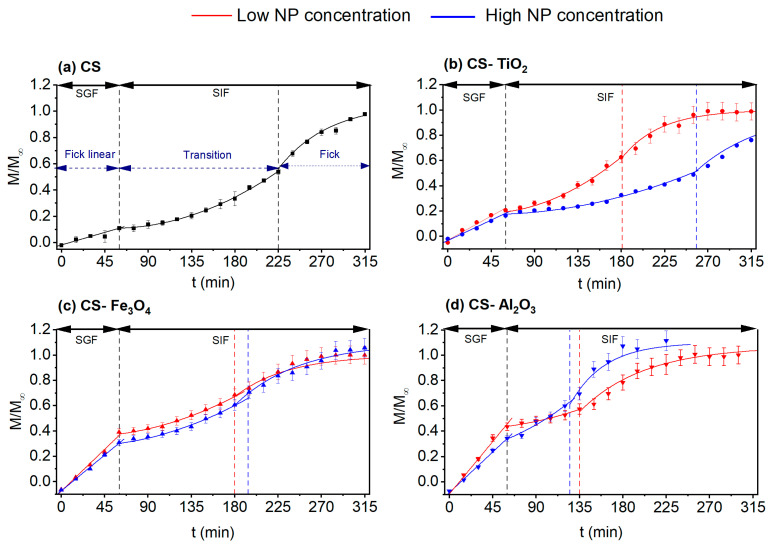
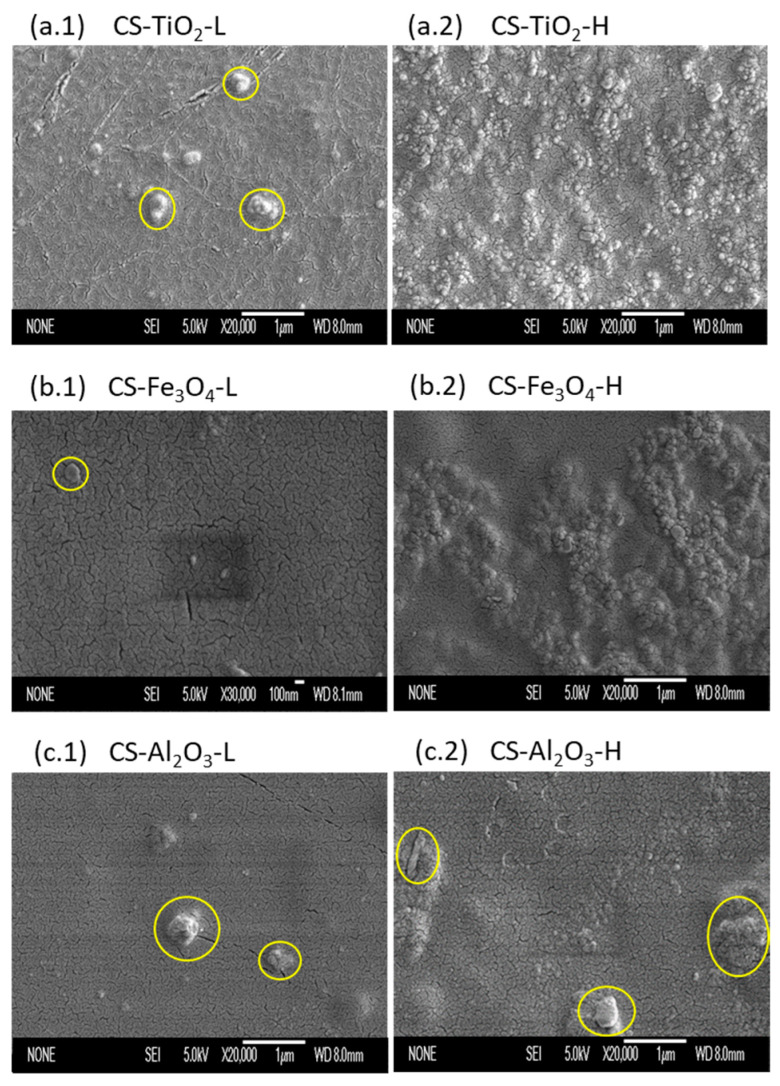
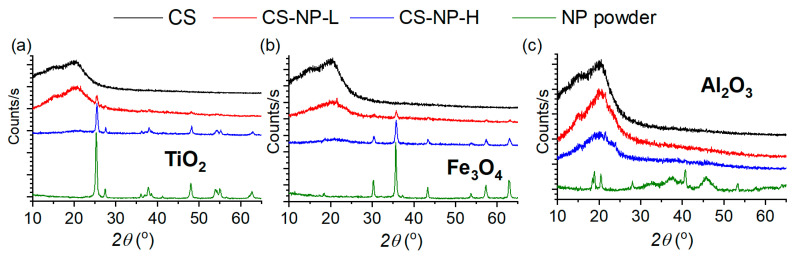
Chitosan (CS) composite membranes were prepared using different biocompatible metal oxide nanoparticles (NPs): titanium dioxide (TiO); iron oxide (FeO); and aluminum oxide (AlO). For each nanoparticle, the CS-based composite membranes were prepared with two NPs contents in the CS solution, high (H) and low (L) NPs concentrations. To establish both concentrations, the NPs saturation point in the CS polymeric matrix was determined. The influence of NP concentrations on the physicochemical properties of the CS films was assessed. The prepared CS membranes were characterized with different techniques, such as X-ray diffraction (XRD), scanning electron microscopy (SEM), and zeta potential. It was found that the addition of NPs in the CS matrix improved both swelling and mechanical properties. Nanocomposite CS membranes could be prepared using AlO NPs. Swelling experiments revealed different pH-sensitive mechanisms, which might be beneficial in biomedical applications since solute permeation through CS-based composite membranes could be controlled by adjusting environmental conditions. When aspirin transport (ASA) through the prepared membranes was carried out in different release media, SGF (simulating gastric fluid) and SIF (simulating intestinal fluid without enzymes), it was observed that the Fickian diffusion coefficient () was conditioned by the pH of the release solution. In SGIT (simulating gastrointestinal transit) medium, a transition time () was detected due to the shrinkage of the CS polymeric chains, and the drug release depended not only on the Fickian's diffusion but also on the shrinkage of the biopolymer, obeying Peppas and Sahlin equation.
使用不同的生物相容性金属氧化物纳米颗粒(NPs)制备了壳聚糖(CS)复合膜:二氧化钛(TiO);氧化铁(FeO);和氧化铝(AlO)。对于每种纳米颗粒,在CS溶液中以两种NPs含量(高(H)和低(L)NPs浓度)制备基于CS的复合膜。为了确定这两种浓度,测定了CS聚合物基质中NPs的饱和点。评估了NP浓度对CS膜物理化学性质的影响。使用不同技术对制备的CS膜进行了表征,如X射线衍射(XRD)、扫描电子显微镜(SEM)和zeta电位。发现向CS基质中添加NPs改善了溶胀和机械性能。可以使用AlO NPs制备纳米复合CS膜。溶胀实验揭示了不同的pH敏感机制,这在生物医学应用中可能是有益的,因为通过基于CS的复合膜的溶质渗透可以通过调节环境条件来控制。当在不同的释放介质(模拟胃液(SGF)和模拟无酶肠液(SIF))中进行阿司匹林(ASA)通过制备的膜的转运时,观察到菲克扩散系数()受释放溶液pH的影响。在模拟胃肠道转运(SGIT)介质中,由于CS聚合物链的收缩检测到一个转变时间(),药物释放不仅取决于菲克扩散,还取决于生物聚合物的收缩,符合Peppas和Sahlin方程。