Schwarz Melbert, Beza-Beza Cristian F, Mikaelyan Aram
Department of Entomology and Plant Pathology, North Carolina State University, Raleigh, NC, United States.
Front Microbiol. 2023 Jun 28;14:1173696. doi: 10.3389/fmicb.2023.1173696. eCollection 2023.
Wood digestion in insects relies on the maintenance of a mosaic of numerous microhabitats, each colonized by distinct microbiomes. Understanding the division of digestive labor between these microhabitats- is central to understanding the physiology and evolution of symbiotic wood digestion. A microhabitat that has emerged to be of direct relevance to the process of lignocellulose digestion is the surface of ingested plant material. Wood particles in the guts of some termites are colonized by a specialized bacterial fiber-digesting microbiome, but whether this represents a widespread strategy among insect lineages that have independently evolved wood-feeding remains an open question.
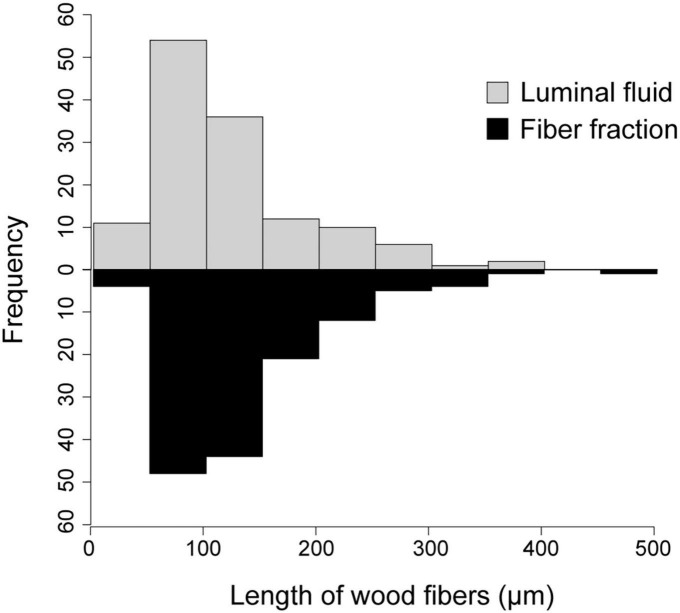
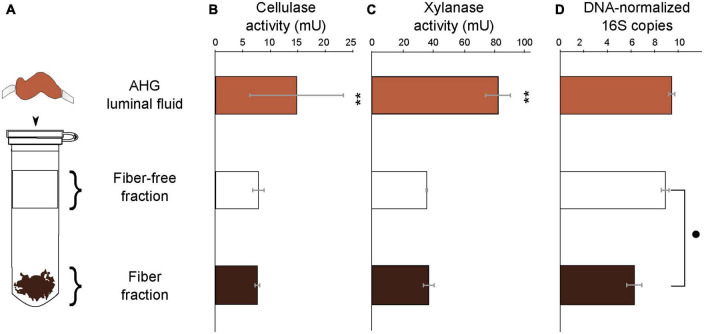
In this study, we investigated the bacterial communities specifically associated with wood fibers in the gut of the passalid beetle . We developed a Percoll-based centrifugation method to isolate and enrich the wood particles from the anterior hindgut, allowing us to access the wood fibers and their associated microbiome. We then performed assays of enzyme activity and used short-read and long-read amplicon sequencing of the 16S rRNA gene to identify the composition of the fiber-associated microbiome.
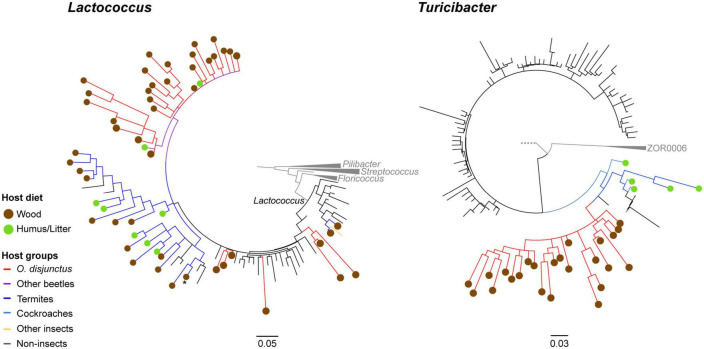
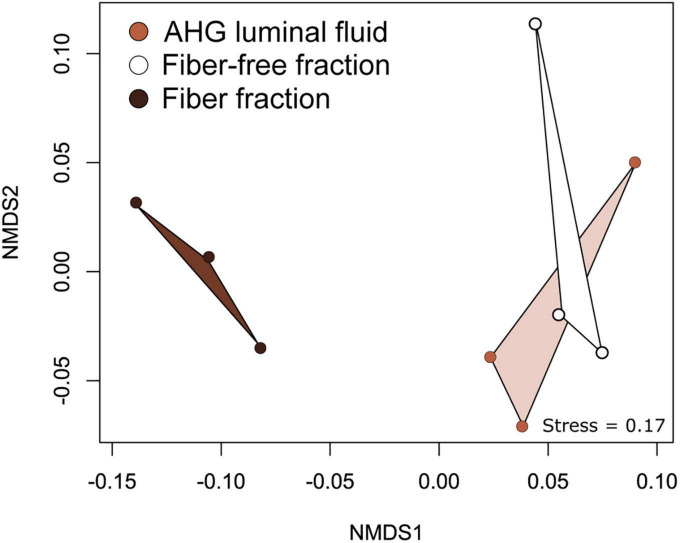
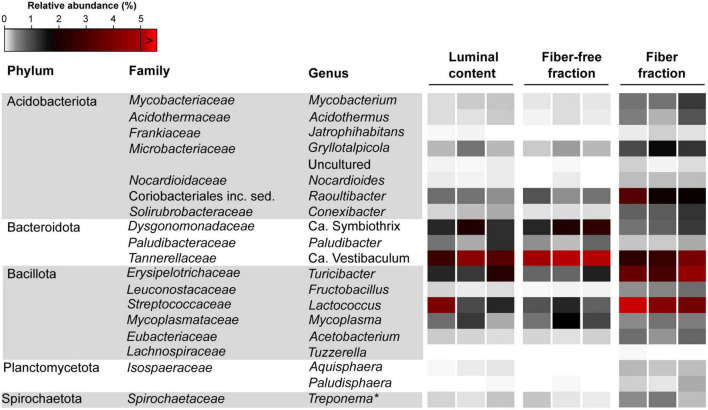
Our assays demonstrated that the anterior hindgut, which houses a majority of the bacterial load, is an important site for lignocellulose digestion. Wood particles enriched from the anterior hindgut contribute to a large proportion of the total enzyme activity. The sequencing revealed that , like termites, harbors a distinct fiber-associated microbiome, but notably, its community is enriched in insect-specific groups of and .
Our study underscores the importance of microhabitats in fostering the complex symbiotic relationships between wood-feeding insects and their microbiomes. The discovery of distinct fiber-digesting symbionts in , compared to termites, highlights the diverse evolutionary paths insects have taken to adapt to a challenging diet.
昆虫对木材的消化依赖于众多微生境的维持,每个微生境都由不同的微生物群落定殖。了解这些微生境之间的消化分工对于理解共生木材消化的生理学和进化至关重要。一个与木质纤维素消化过程直接相关的微生境是摄入植物材料的表面。一些白蚁肠道中的木颗粒被一种专门的细菌纤维消化微生物群落定殖,但这是否代表了在独立进化出以木材为食的昆虫谱系中的一种普遍策略仍是一个悬而未决的问题。
在本研究中,我们调查了与扁甲肠道中木纤维特异性相关的细菌群落。我们开发了一种基于 Percoll 的离心方法,从前肠后段分离和富集木颗粒,使我们能够获取木纤维及其相关的微生物群落。然后我们进行了酶活性测定,并使用 16S rRNA 基因的短读长和长读长扩增子测序来鉴定与纤维相关的微生物群落的组成。
我们的测定表明,容纳大部分细菌负荷的前肠后段是木质纤维素消化的重要部位。从前肠后段富集的木颗粒对总酶活性的贡献很大。测序显示,与白蚁一样,扁甲也拥有一个独特的与纤维相关的微生物群落,但值得注意的是,其群落富含昆虫特异性的 和 类群。
我们的研究强调了微生境在促进以木材为食的昆虫与其微生物群落之间复杂共生关系中的重要性。与白蚁相比,在扁甲中发现独特的纤维消化共生体,突出了昆虫为适应具有挑战性的食物所采取的多样进化路径。