Alkhalifah Ridha H, Alhaddad Mousa J, Alhashem Ali T, Alwesaibi Hussain, AlKhalaf Abdullah A, Albin Saad Abdullah, Almattar Mohammed, Alkhalaf Makarem A, Alramadhan Habib, Albaggal Mohammad
Department of Internal Medicine, Dammam Medical Complex, Dammam, SAU.
College of Clinical Pharmacy, Imam Abdulrahman Bin Faisal University, Dammam, SAU.
Cureus. 2023 Jul 12;15(7):e41769. doi: 10.7759/cureus.41769. eCollection 2023 Jul.
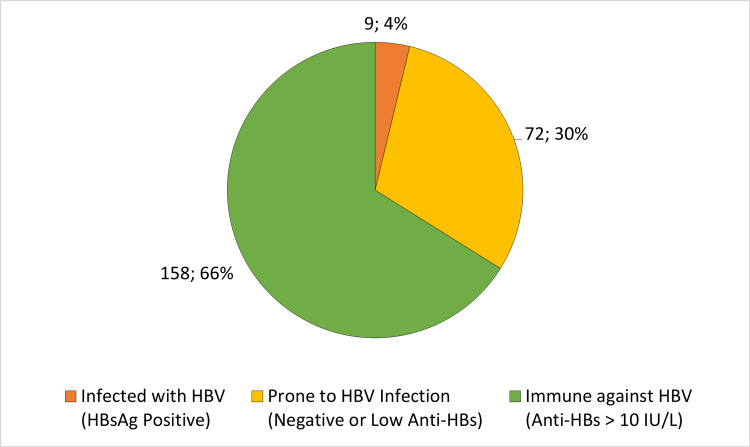
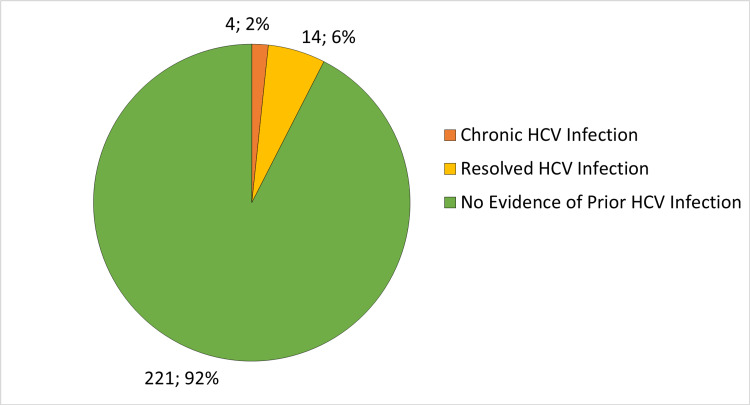
Background Hepatitis B virus (HBV), hepatitis C virus (HCV), and human immunodeficiency virus (HIV) infections are more prevalent in hemodialysis patients compared to the general population. The objective of this study was to evaluate the prevalence of HBV, HCV, and HIV infections in hemodialysis patients dialyzing regularly at Kano Kidney Center (KKC) in the Eastern Health Cluster of Saudi Arabia in 2022. Methods This retrospective study included all hemodialysis patients who were dialyzed regularly at KKC during 2022. Their electronic medical records were reviewed for the results of HBV, HCV, and HIV along with the patient's demographics, comorbid conditions, and dialysis history. The study was approved and monitored by the Institutional Review Board of Dammam Medical Complex. Results A total of 239 regular hemodialysis patients were included, consisting of 142 males and 97 females (59.41% and 40.59%, respectively), with a mean age of 52.71±15.83 years. Most of the patients were Saudis (156 patients, 65.27%) with the non-Saudi patients being composed mostly of Arabian patients. Nine patients (3.77%) tested positive for hepatitis B surface antigen (HBsAg), the serologic hallmark of HBV infection. Two patients (0.84%) had resolved HBV infections as evidenced by positive hepatitis B core antibody (anti-HBc) and hepatitis B surface antibody (anti-HBs). However, the majority (226 patients, 94.56%) were never tested for anti-HBc. Anti-HBs, which can imply long-term immunity against HBV from prior immunizations or infections, were positive in 165 patients (69.04%). A protective anti-HBs level of ≥ 10 IU/L was detected in 158 patients (66.11%) including 104 patients (43.51%) having ≥ 100 IU/L. Eighteen patients (7.53%) had reactive HCV antibodies. Four patients (1.67%) had chronic HCV infection as they had detectable HCV RNA. The remaining 14 patients (5.86%) cleared HCV either spontaneously (seven patients, 2.93%) or by medications (seven patients, 2.93%). HIV screening tests were negative in all 239 patients (100%). HBsAg-positive patients did not have any statistically significant differences from HBsAg-negative patients. On the other hand, the patients who were positive for HCV antibodies were older than the patients who were negative for HCV antibodies (60.66 vs 52.05 years on average, p-value <0.05). They also contained a statistically larger proportion of non-Saudi patients than the patients with no evidence of prior infections (61.11% vs 32.13%, p-value <0.05). Conclusions The study found that the prevalence of HBV and HCV infections among hemodialysis patients in KKC at 3.77% and 1.67%, respectively, is higher than that reported in the general population in Saudi Arabia, with non-Saudis having a higher prevalence rate of HCV infection than Saudis. However, the current prevalence rate is lower compared to the previous studies that were conducted in Saudi Arabia in the first decade of the 21st century, and there were no cases of HIV infections. Nevertheless, a significant proportion of patients had unprotective or negative anti-HBs antibody titers, indicating the need for strict vaccination protocols and monitoring of antibody titers to ensure optimal protection.
背景 与普通人群相比,乙型肝炎病毒(HBV)、丙型肝炎病毒(HCV)和人类免疫缺陷病毒(HIV)感染在血液透析患者中更为普遍。本研究的目的是评估2022年在沙特阿拉伯东部卫生集群的卡诺肾脏中心(KKC)定期进行透析的血液透析患者中HBV、HCV和HIV感染的患病率。方法 这项回顾性研究纳入了2022年期间在KKC定期进行透析的所有血液透析患者。查阅他们的电子病历,以获取HBV、HCV和HIV检测结果以及患者的人口统计学信息、合并症和透析史。该研究得到了达曼医疗中心机构审查委员会的批准和监督。结果 共纳入239例定期血液透析患者,其中男性142例,女性97例(分别占59.41%和40.59%),平均年龄为52.71±15.83岁。大多数患者为沙特人(156例,65.27%),非沙特患者主要为阿拉伯患者。9例患者(3.77%)乙肝表面抗原(HBsAg)检测呈阳性,这是HBV感染的血清学标志。2例患者(0.84%)乙肝核心抗体(抗-HBc)和乙肝表面抗体(抗-HBs)呈阳性,表明HBV感染已痊愈。然而,大多数患者(226例,94.56%)从未检测过抗-HBc。抗-HBs可意味着因既往免疫接种或感染而对HBV具有长期免疫力,165例患者(69.04%)呈阳性。158例患者(66.11%)检测到保护性抗-HBs水平≥10 IU/L,其中104例患者(43.51%)≥100 IU/L。18例患者(7.53%)丙肝抗体呈阳性。4例患者(1.67%)患有慢性丙型肝炎,因为他们检测到丙肝病毒核糖核酸(HCV RNA)。其余14例患者(5.86%)自发清除丙肝(7例,2.93%)或通过药物清除丙肝(7例,2.93%)。所有239例患者(100%)的HIV筛查试验均为阴性。HBsAg阳性患者与HBsAg阴性患者之间无统计学显著差异。另一方面,丙肝抗体呈阳性的患者比丙肝抗体呈阴性的患者年龄更大(平均60.66岁对52.05岁,p值<0.05)。他们中非沙特患者的比例在统计学上也高于无既往感染证据的患者(61.11%对32.13%,p值<0.05)。结论 该研究发现,KKC血液透析患者中HBV和HCV感染的患病率分别为3.77%和1.67%,高于沙特阿拉伯普通人群的报告患病率,非沙特人HCV感染患病率高于沙特人。然而,与21世纪第一个十年在沙特阿拉伯进行的先前研究相比,目前的患病率较低,且未发现HIV感染病例。尽管如此,相当一部分患者的抗-HBs抗体滴度无保护作用或呈阴性,这表明需要严格的疫苗接种方案并监测抗体滴度,以确保获得最佳保护。