Laboratory of Immunology, Department of Translational Physiology, Infectiology and Public Health, Faculty of Veterinary Medicine, Ghent University, Merelbeke, Belgium.
Department of Pathology, Faculty of Medicine, Emory University, Atlanta, GA, United States.
Front Immunol. 2023 Jun 29;14:1192715. doi: 10.3389/fimmu.2023.1192715. eCollection 2023.
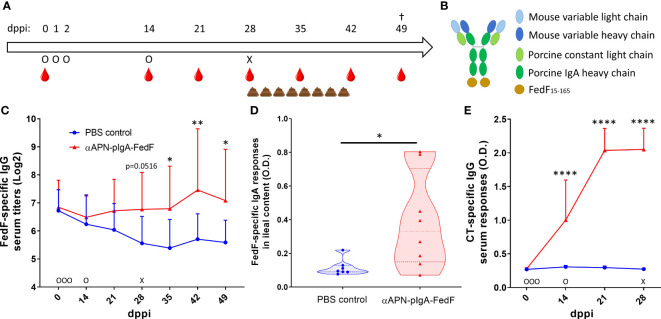
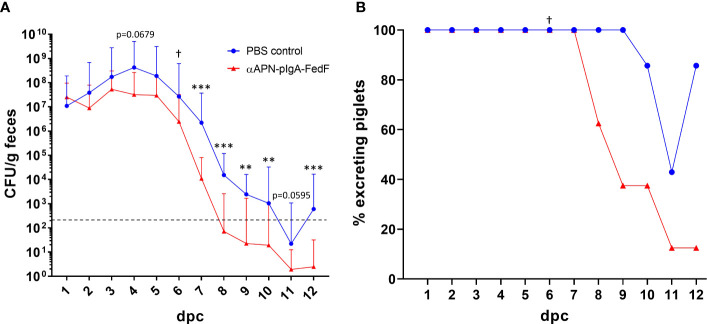
Oral subunit vaccines are an interesting alternative strategy to traditional live-attenuated or inactivated vaccines for conferring protection against gut pathogens. Despite being safer and more cost-effective, the development of oral subunit vaccines remains challenging due to barriers imposed by the gastrointestinal tract, such as digestive enzymes, a tolerogenic immune environment and the inability of larger proteins to cross the epithelial barrier. Recent advances have focused on overcoming these barriers by using potent mucosal adjuvants or pH-responsive delivery vehicles to protect antigens from degradation and promote their release in the intestinal lumen. A promising approach to allow vaccine antigens to pass the epithelial barrier is by their targeting towards aminopeptidase N (APN; CD13), an abundant membrane protein present on small intestinal enterocytes. APN is a peptidase involved in digestion, but also a receptor for several enteric pathogens. In addition, upon antibody-mediated crosslinking, APN facilitated the transport of antibody-antigen fusion constructs across the gut epithelium. This epithelial transport resulted in antigen-specific immune responses. Here, we present evidence that oral administration of APN-specific antibody-antigen fusion constructs comprising the porcine IgA Fc-domain and the FedF tipadhesin of F18-fimbriated elicited both mucosal and systemic immune responses and provided at least partial protection to piglets against a subsequent challenge infection with an F18-fimbriated STEC strain. Altogether, these findings will contribute to the further development of new oral subunit vaccines and provide a first proof-of-concept for the protective efficacy of APN-targeted vaccine antigens.
口服亚单位疫苗是一种有前途的替代策略,可以替代传统的减毒活疫苗或灭活疫苗,以提供针对肠道病原体的保护。尽管口服亚单位疫苗更安全且更具成本效益,但由于胃肠道的障碍,如消化酶、耐受免疫环境以及较大的蛋白质无法穿过上皮屏障,其开发仍然具有挑战性。最近的研究进展集中在使用有效的黏膜佐剂或 pH 响应性递药载体来克服这些障碍,以保护抗原免受降解,并促进其在肠腔中的释放。一种有前途的方法是将疫苗抗原靶向到氨肽酶 N(APN;CD13),这是一种在小肠上皮细胞上丰富表达的膜蛋白。APN 是一种参与消化的肽酶,但也是几种肠道病原体的受体。此外,在抗体介导的交联作用下,APN 促进了抗体-抗原融合构建体穿过肠道上皮的转运。这种上皮转运导致了抗原特异性免疫反应。在这里,我们提供了证据表明,口服给予包含猪 IgA Fc 结构域和 F18 菌毛 FedF 顶端粘附素的 APN 特异性抗体-抗原融合构建体可引发黏膜和系统免疫反应,并为仔猪提供了针对随后的 F18 菌毛 STEC 菌株感染的部分保护。总之,这些发现将有助于进一步开发新型口服亚单位疫苗,并为 APN 靶向疫苗抗原的保护效力提供第一个概念验证。