From the Global Surgical and Medical Support Group (GSMSG), Washington, DC (Epstein).
Department of Surgery, Jacobs School of Medicine and Biomedical Sciences, University at Buffalo - The State University of New York, Buffalo, NY (Epstein, Schwaitzberg).
J Am Coll Surg. 2023 Aug 1;237(2):364-373. doi: 10.1097/XCS.0000000000000707. Epub 2023 Apr 24.
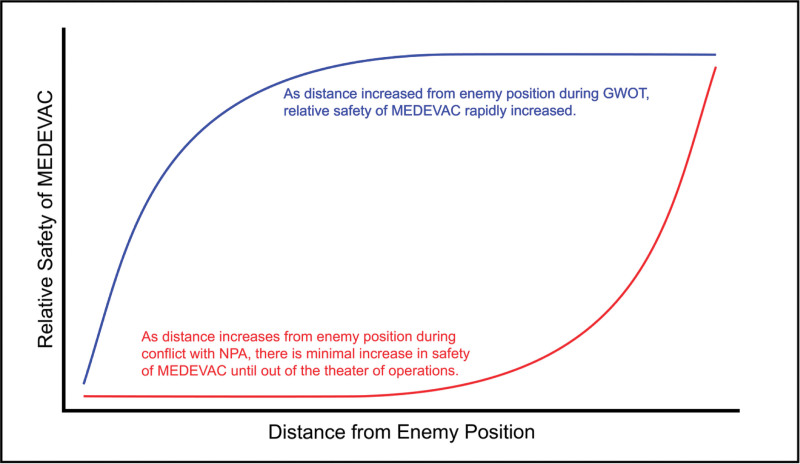
In the past 20 years of the Global War on Terror, the US has seen substantial improvements in its system of medical delivery in combat. However, throughout that conflict, enemy forces did not have parity with the weaponry, capability, or personnel of the US and allied forces. War against countries like China and Russia, who are considered near-peer adversaries in terms of capabilities, will challenge battlefield medical care in many different ways. This article reviews the experience of a medical team, Global Surgical and Medical Support Group, that has been providing assistance, training, medical support, and surgical support to Ukraine since the Russian invasion began in February 2022. The team has extensive experience in medicine, surgery, austere environments, conflict zones, and building partner nation capacities. This article compares and contrasts the healthcare systems of this war against the systems used during the Global War on Terror. The lessons learned here could help the US anticipate challenges and successfully plan for the provision of medical care in a future conflict against an adversary with capabilities close to its own.
在过去 20 年的全球反恐战争中,美国在战斗中的医疗输送系统取得了重大进展。然而,在整个冲突中,敌方在武器装备、能力或人员方面都无法与美国和盟军相媲美。与中国和俄罗斯等被认为在能力方面具有同等地位的国家作战,将以许多不同的方式挑战战场医疗护理。本文回顾了 Global Surgical and Medical Support Group 医疗团队的经验,该团队自 2022 年 2 月俄罗斯入侵开始以来一直在向乌克兰提供援助、培训、医疗支持和外科支持。该团队在医学、外科、艰苦环境、冲突地区和建设伙伴国家能力方面拥有丰富的经验。本文比较和对比了这场战争的医疗体系与全球反恐战争中使用的体系。这里总结的经验教训可以帮助美国预测未来与能力接近自身的对手发生冲突时的挑战,并成功规划医疗服务的提供。