Department of Family & Generations, International Institute for Population Sciences, Mumbai, 400088, India.
Department of Migration and Urban Studies, International Institute for Population Sciences, 400088, Mumbai, India.
BMC Emerg Med. 2023 Jul 17;23(1):76. doi: 10.1186/s12873-023-00844-4.
Postnatal care is crucial to prevent the child mortality. Despite the improvement in the PNC coverage for the neonates, it is still far away from the universal health coverage. Along with, some specific regions mostly are natural hazard prone areas of India show very under coverage of PNC for the neonates. Considering the substantial spatial variation of PNC coverage and natural hazard prevalence, present study aimed to examine spatial variation of PNC coverage and its association with natural hazard at the district level.
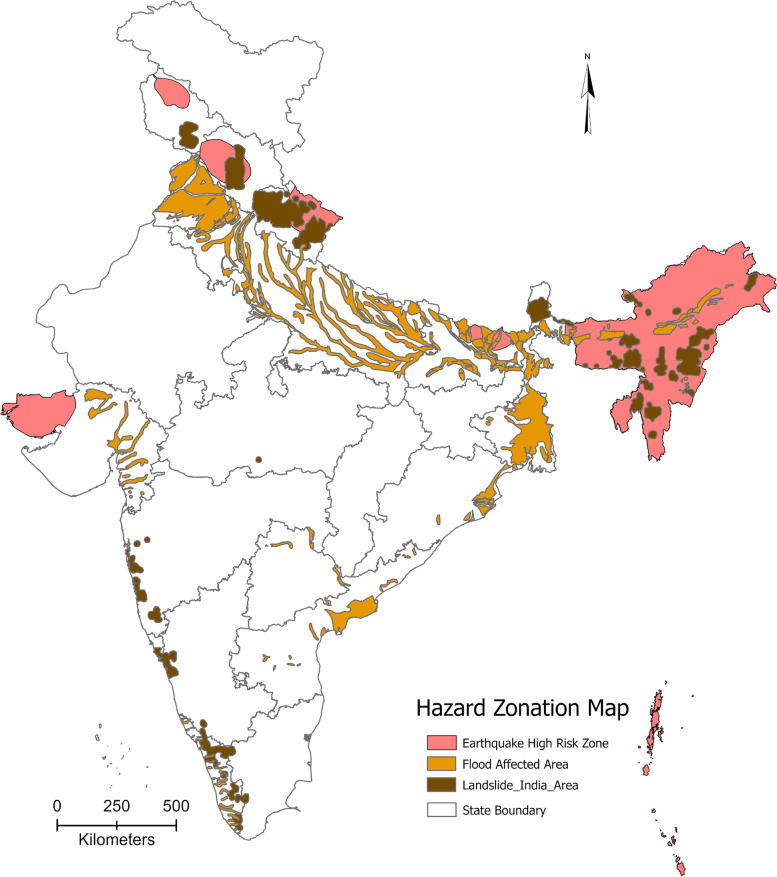
The cross-sectional exploratory study utilized National Family Health Survey, 2019-21, which included 1,76,843 children using multistage stratified sampling method to examine postnatal care within 42 days for neonates born within five years prior to the survey. Additionally, the study utilized Vulnerability Atlas of India,2019 maps to categorize regions into hazardous (flood, earthquake, and landslide) and non-hazardous areas. Spatial univariate and bivariate analyses, logistic and geographically weighted regressions were conducted using ArcGIS Pro, GeoDa, and Stata 16.0 software to identify associations between PNC coverage, hazard exposure, and spatial variation.
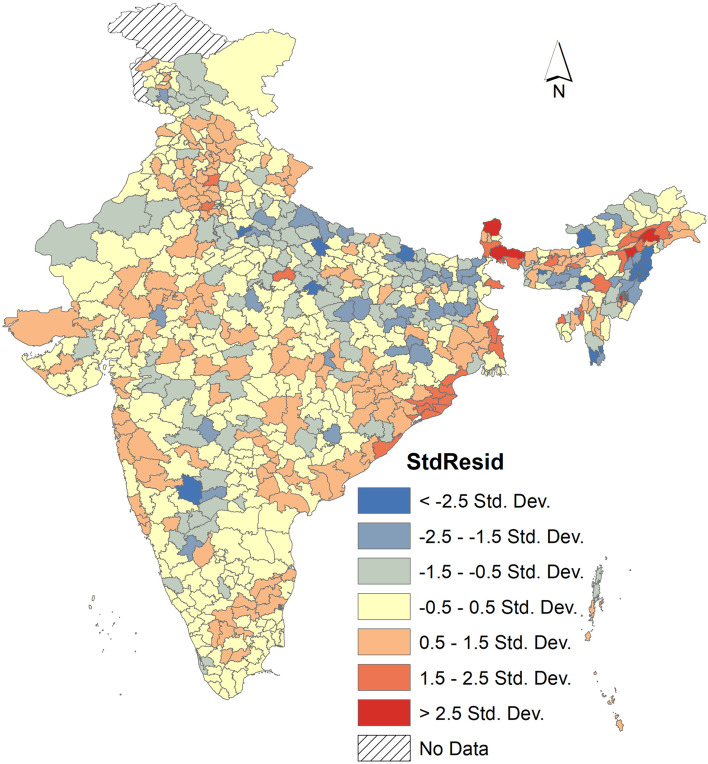
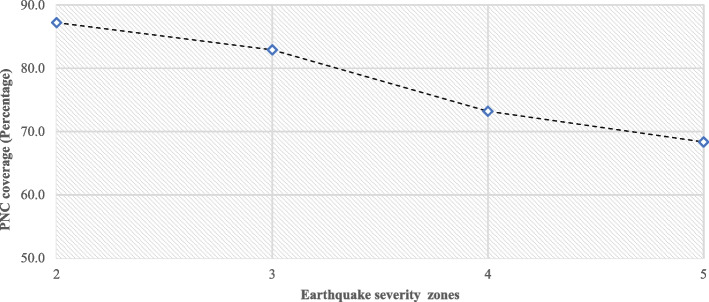
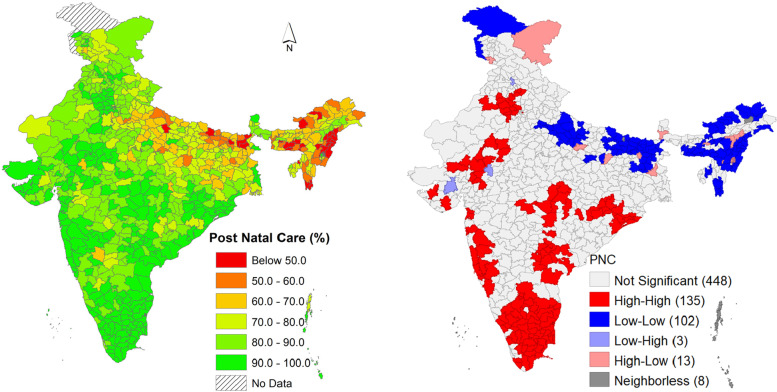
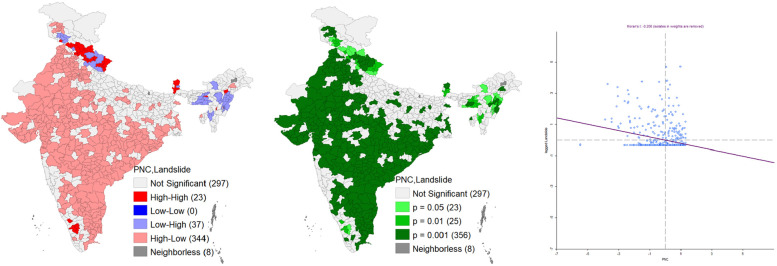
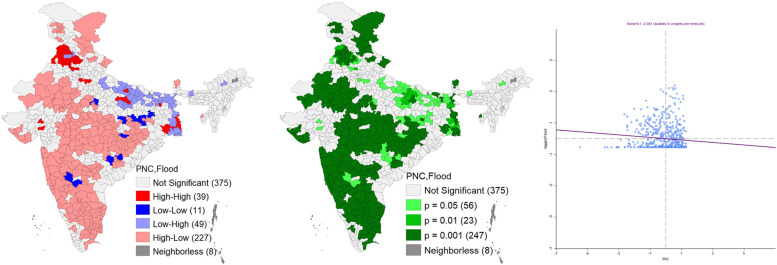
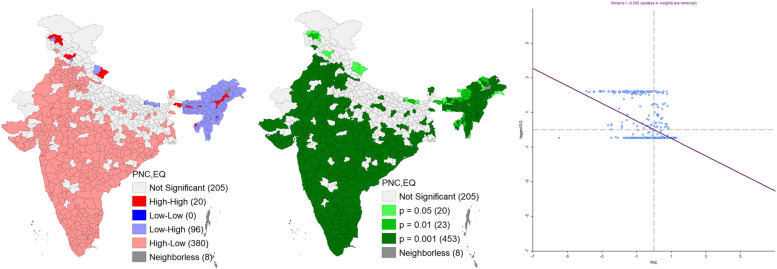
The univariate spatial analysis showed some specific regions such as north, east, and north-east region of India had a high concentration of natural hazard and low access of PNC coverage. Bivariate analysis also showed that PNC coverage was low in flood (75.9%), earthquake (68.3%), and landslide (80.6%) effected areas. Compared to the national PNC coverage (81.1%), all these natural hazards effected areas showed low coverage. Further, logic regression showed that these hazard prone areas were less (OR:0.85 for flood, 0.77 for earthquake, and 0.77 for landslide) likely to get PNC coverage than their counterparts. LISA cluster maps significantly showed low PNC and high disaster concentration in these disaster-prone areas. Geographic weighted regression results also showed similar result.
The present study elucidates notable heterogeneity in the coverage of postnatal care (PNC) services, with lower concentrations observed in disaster-prone areas. In order to enhance the accessibility and quality of PNC services in these areas, targeted interventions such as the deployment of mobile health services and fortification of health systems are recommended.
产后护理对于预防儿童死亡至关重要。尽管新生儿的 PNC 覆盖率有所提高,但仍远未达到全民健康覆盖。此外,印度的一些特定地区,主要是自然灾害多发地区,新生儿的 PNC 覆盖率非常低。考虑到 PNC 覆盖率和自然灾害流行的巨大空间差异,本研究旨在检查 PNC 覆盖率的空间变化及其与地区层面自然灾害的关系。
本横断面探索性研究利用了 2019-21 年的全国家庭健康调查,该调查采用多阶段分层抽样方法,对调查前五年内出生的 176843 名儿童进行了 42 天内新生儿的产后护理检查。此外,该研究利用 2019 年印度易受灾性地图集的地图将区域划分为危险(洪水、地震和山体滑坡)和非危险区域。利用 ArcGIS Pro、GeoDa 和 Stata 16.0 软件进行空间单变量和双变量分析、逻辑和地理加权回归,以确定 PNC 覆盖率、灾害暴露和空间变化之间的关联。
单变量空间分析显示,印度北部、东部和东北部等特定地区存在高浓度的自然灾害和低 PNC 覆盖率。双变量分析还显示,洪水(75.9%)、地震(68.3%)和山体滑坡(80.6%)受灾地区的 PNC 覆盖率较低。与全国 PNC 覆盖率(81.1%)相比,所有这些自然灾害受灾地区的覆盖率都较低。此外,逻辑回归显示,这些灾害多发地区获得 PNC 覆盖的可能性较低(洪水为 0.85,地震为 0.77,山体滑坡为 0.77)。LISA 聚类图显著显示,在这些灾害多发地区,低 PNC 和高灾害集中。地理加权回归结果也显示出类似的结果。
本研究阐明了产后护理(PNC)服务覆盖率存在显著异质性,灾害多发地区的覆盖率较低。为了提高这些地区 PNC 服务的可及性和质量,建议采取有针对性的干预措施,如部署流动医疗服务和加强卫生系统。