Scott Russo, Aubry Antonio, Cuttoli Romain Durand-de, Rachel Fisher-Foye, Lyonna Parise, Cathomas Flurin, Burnett C, Yang Yewon, Yuan Chongzhen, Lablanca Alexa, Chan Kenny, Lin Hsiao-Yun, Froemke Robert, Li Long
Icahn School of Medicine at Mount Sinai.
Icahn School of Medicine at Mt. Sinai.
Res Sq. 2023 Jul 6:rs.3.rs-3015820. doi: 10.21203/rs.3.rs-3015820/v1.
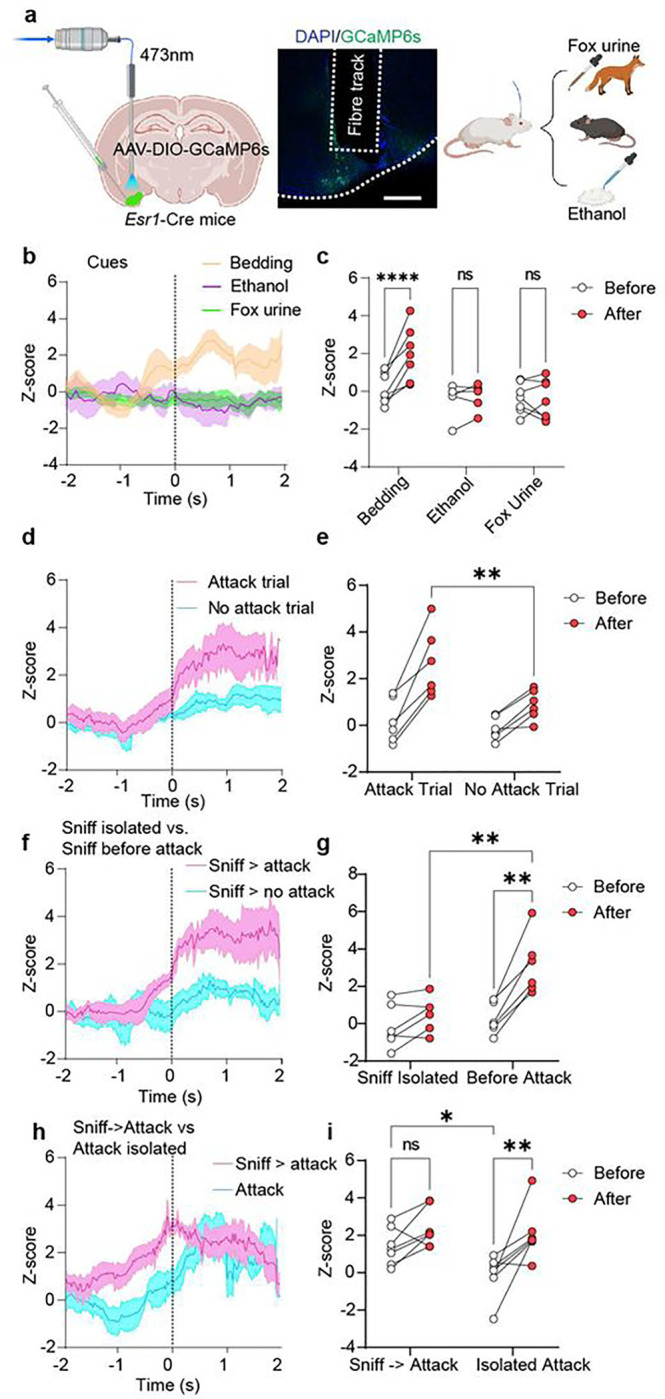
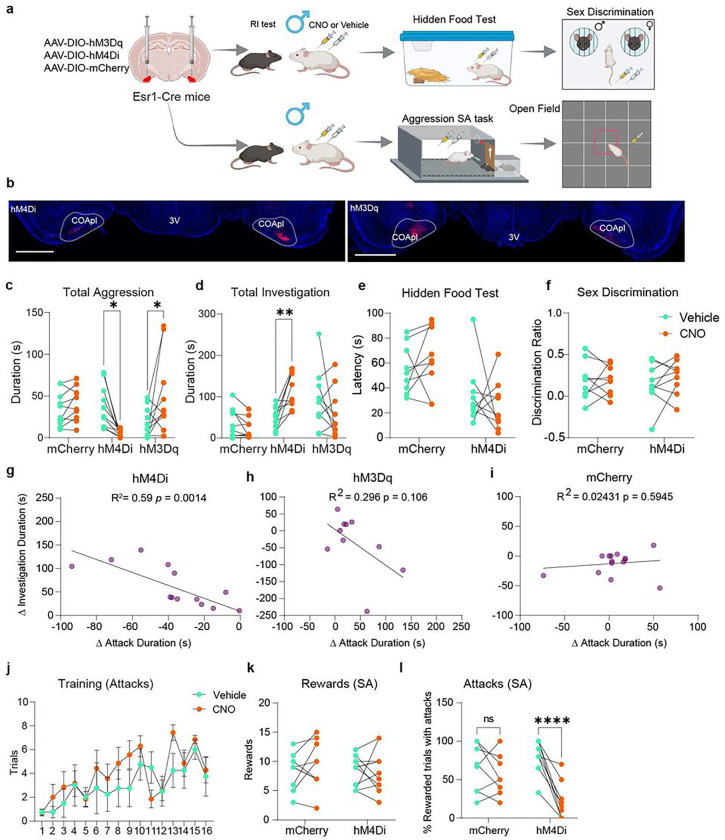
Aggression is an evolutionarily conserved behavior that controls social hierarchies and protects valuable resources like mates, food, and territory. In mice, aggressive behaviour can be broken down into an appetitive phase, which involves approach and investigation, and a consummatory phase, which involves biting, kicking, and wrestling. By performing an unsupervised weighted correlation network analysis on whole-brain c-Fos expression, we identified a cluster of brain regions including hypothalamic and amygdalar sub-regions and olfactory cortical regions highly co-activated in male, but not female aggressors (AGG). The posterolateral cortical amygdala (COApl), an extended olfactory structure, was found to be a hub region based on the number and strength of correlations with other regions in the cluster. Our data further show that estrogen receptor 1 (ESR1)-expressing cells in the COApl exhibit increased activity during attack behaviour, and during bouts of investigation which precede an attack, in male mice only. Chemogenetic or optogenetic inhibition of COApl ESR1 cells in AGG males reduces aggression and increases pro-social investigation without affecting social reward/reinforcement behavior. We further confirmed that COApl ESR1 projections to the ventrolateral portion of the ventromedial hypothalamus and central amygdala are necessary for these behaviours. Collectively, these data suggest that in aggressive males, COApl ESR1 cells respond specifically to social stimuli, thereby enhancing their salience and promoting attack behaviour.
攻击行为是一种进化上保守的行为,它控制着社会等级制度,并保护诸如配偶、食物和领地等宝贵资源。在小鼠中,攻击行为可分为一个欲求阶段(包括接近和探究)和一个 consummatory 阶段(包括撕咬、踢打和扭打)。通过对全脑 c-Fos 表达进行无监督加权相关网络分析,我们确定了一组脑区,包括下丘脑和杏仁核亚区以及嗅觉皮质区,这些脑区在雄性而非雌性攻击者(AGG)中高度共激活。基于与该簇中其他区域的相关性数量和强度,发现外侧皮质杏仁核后外侧区(COApl)是一个枢纽区域,COApl 是一个扩展的嗅觉结构。我们的数据进一步表明,仅在雄性小鼠中,COApl 中表达雌激素受体 1(ESR1)的细胞在攻击行为期间以及攻击前的探究过程中表现出活性增加。对 AGG 雄性小鼠的 COApl ESR1 细胞进行化学遗传或光遗传抑制会降低攻击性并增加亲社会探究,而不会影响社会奖励/强化行为。我们进一步证实,COApl ESR1 向腹内侧下丘脑腹外侧部分和中央杏仁核的投射对于这些行为是必需的。总体而言,这些数据表明,在具有攻击性的雄性小鼠中,COApl ESR1 细胞对社会刺激有特异性反应,从而增强其显著性并促进攻击行为。