Weng Zixiang, Huang Xianmei, Peng Shuqiang, Zheng Longhui, Wu Lixin
CAS Key Laboratory of Design and Assembly of Functional Nanostructures, Fujian Key Laboratory of Nanomaterials, Fujian Institute of Research on the Structure of Matter, Chinese Academy of Sciences, Fuzhou, 350002, PR China.
Fujian Science & Technology Innovation Laboratory for Optoelectronic Information of China, Fuzhou, Fujian, 350108, PR China.
Nat Commun. 2023 Jul 18;14(1):4303. doi: 10.1038/s41467-023-39913-4.
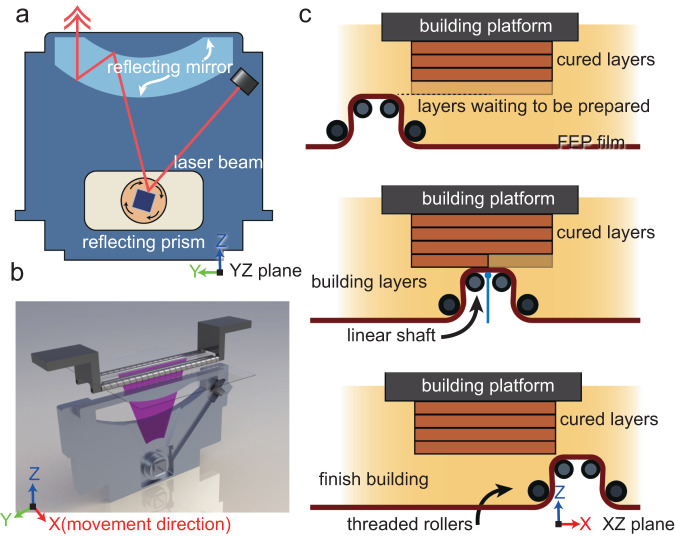
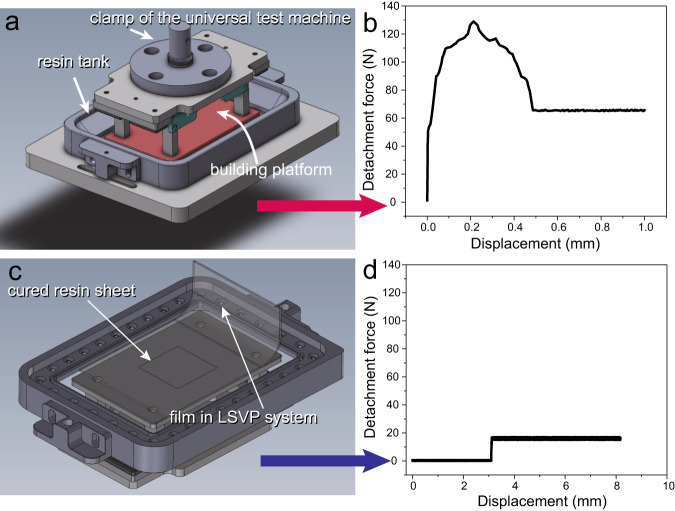
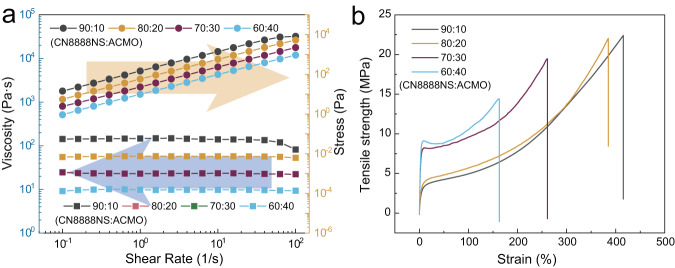
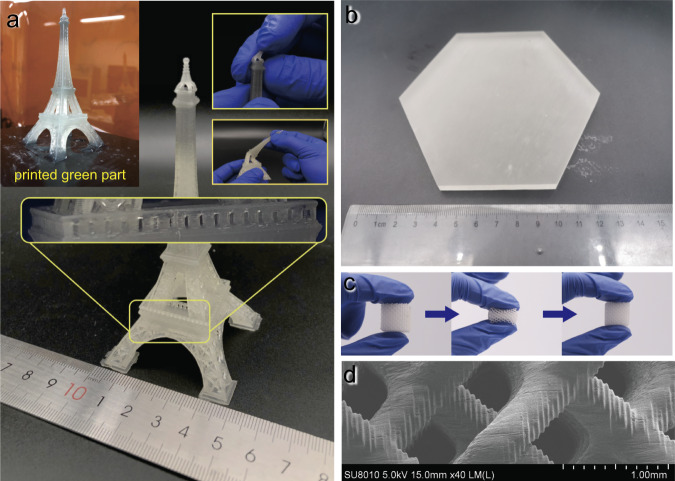
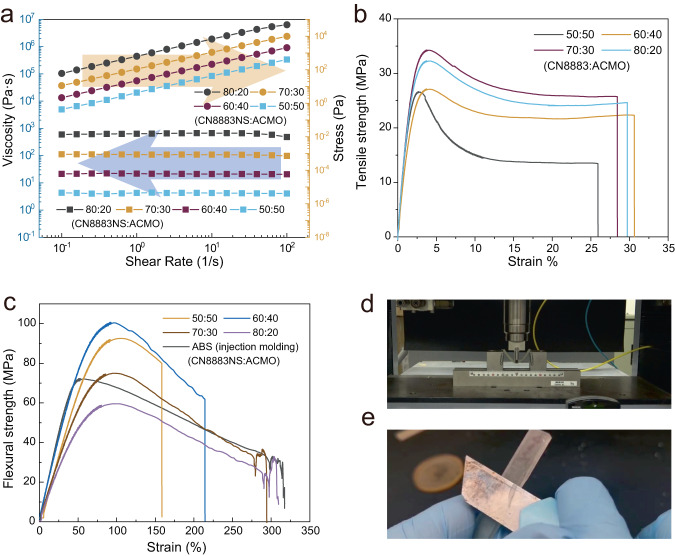
The current printing mechanism of the bottom-up vat photopolymerization 3D printing technique places a high demand on the fluidity of the UV-curable resin. Viscous high-performance acrylate oligomers are compounded with reactive diluents accordingly to prepare 3D printable UV-curable resins (up to 5000 cps of viscosity), yet original mechanical properties of the oligomers are sacrificed. In this work, an elaborated designed linear scan-based vat photopolymerization system is developed, allowing the adoption of printable UV-curable resins with high viscosity (> 600,000 cps). Briefly, this is realized by the employment of four rollers to create an isolated printing area on the resin tank, which enables the simultaneous curing of the resin and the detachment of cured part from the resin tank. To verify the applicability of this strategy, oligomer dominated UV-curable resin with great mechanical properties, but high viscosity is prepared and applied to the developed system. It is inspiring to find that high stress and strain elastomers and toughened materials could be facilely obtained. This developed vat photopolymerization system is expected to unblock the bottleneck of 3D printed material properties, and to build a better platform for researchers to prepare various materials with diversiform properties developed with 3D printing.
目前自下而上的光固化3D打印技术的打印机制对紫外光固化树脂的流动性有很高的要求。因此,将粘性高性能丙烯酸酯低聚物与反应性稀释剂混合,以制备3D可打印的紫外光固化树脂(粘度高达5000 cps),但低聚物的原始机械性能会受到牺牲。在这项工作中,开发了一种精心设计的基于线性扫描的光固化3D打印系统,允许采用高粘度(>600,000 cps)的可打印紫外光固化树脂。简而言之,这是通过使用四个滚轮在树脂槽上创建一个隔离的打印区域来实现的,这使得树脂能够同时固化,并且固化部分能够从树脂槽中分离出来。为了验证该策略的适用性,制备了具有优异机械性能但高粘度的以低聚物为主的紫外光固化树脂,并将其应用于所开发的系统。令人鼓舞的是,能够轻松获得高应力和高应变的弹性体及增韧材料。这种开发的光固化3D打印系统有望突破3D打印材料性能的瓶颈,并为研究人员搭建一个更好的平台,以便制备通过3D打印开发的具有多样性能的各种材料。