Division of Medical Sciences, Laboratory of Transcriptional Regulation, Institute of Medical Biology of Polish Academy of Sciences (IMB-PAN), 3a Tylna St., 90-364, Łódź, Poland.
Center for Research and Molecular Diagnosis of Genetic Diseases, Federal University of São Paulo, Rua Pedro de Toledo 669, 9th Floor, São Paulo, 04039032, Brazil.
Inflamm Res. 2023 Aug;72(8):1583-1601. doi: 10.1007/s00011-023-01766-4. Epub 2023 Jul 18.
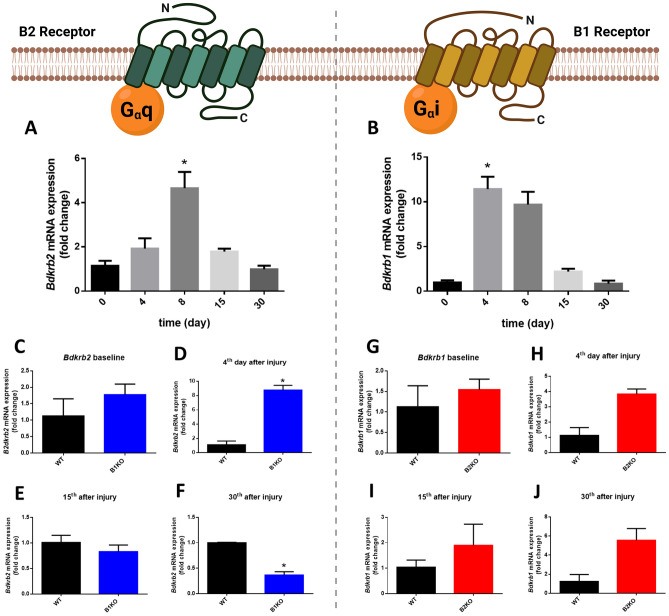
After traumatic skeletal muscle injury, muscle healing is often incomplete and produces extensive fibrosis. Bradykinin (BK) reduces fibrosis in renal and cardiac damage models through the B2 receptor. The B1 receptor expression is induced by damage, and blocking of the kallikrein-kinin system seems to affect the progression of muscular dystrophy. We hypothesized that both kinin B1 and B2 receptors could play a differential role after traumatic muscle injury, and the lack of the B1 receptor could produce more cellular and molecular substrates for myogenesis and fewer substrates for fibrosis, leading to better muscle healing.
To test this hypothesis, tibialis anterior muscles of kinin receptor knockout animals were subjected to traumatic injury. Myogenesis, angiogenesis, fibrosis, and muscle functioning were evaluated.
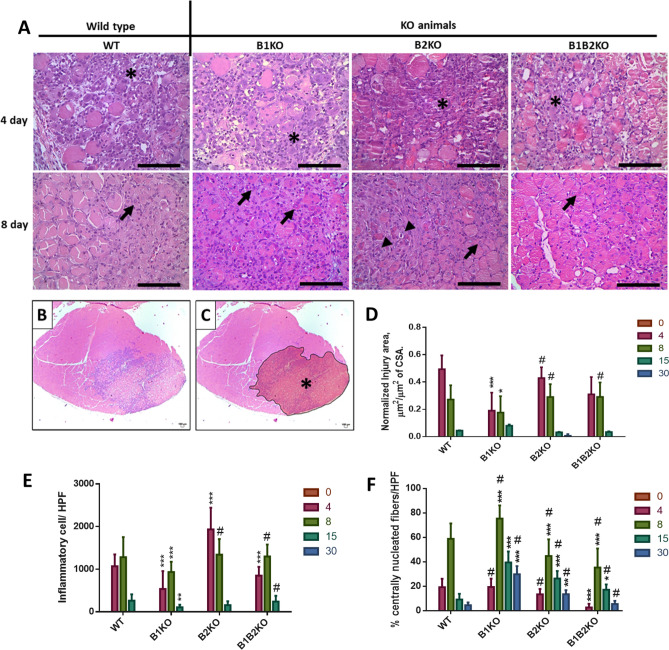
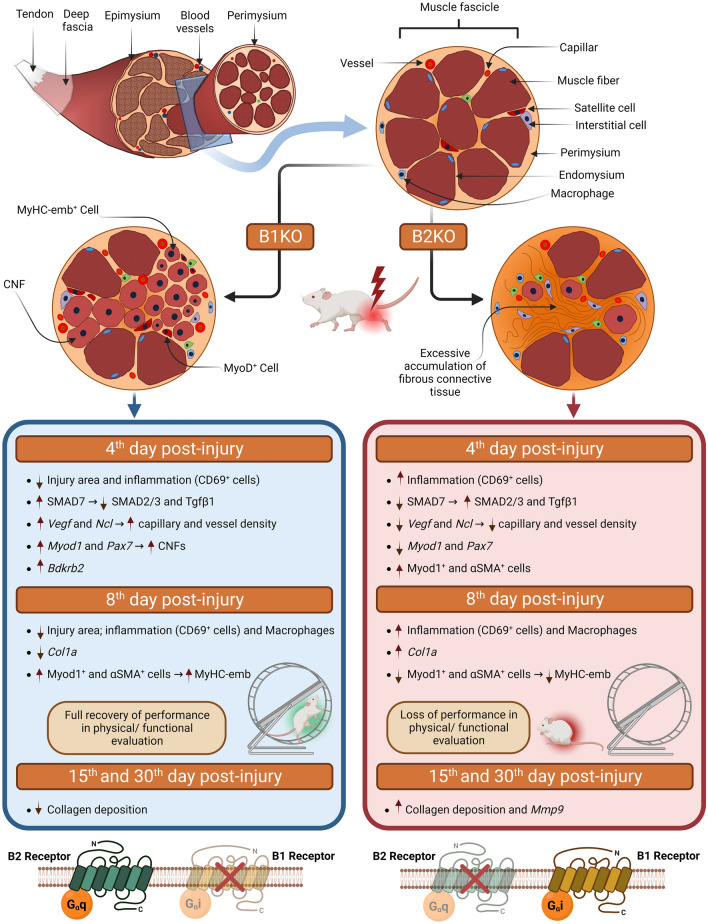
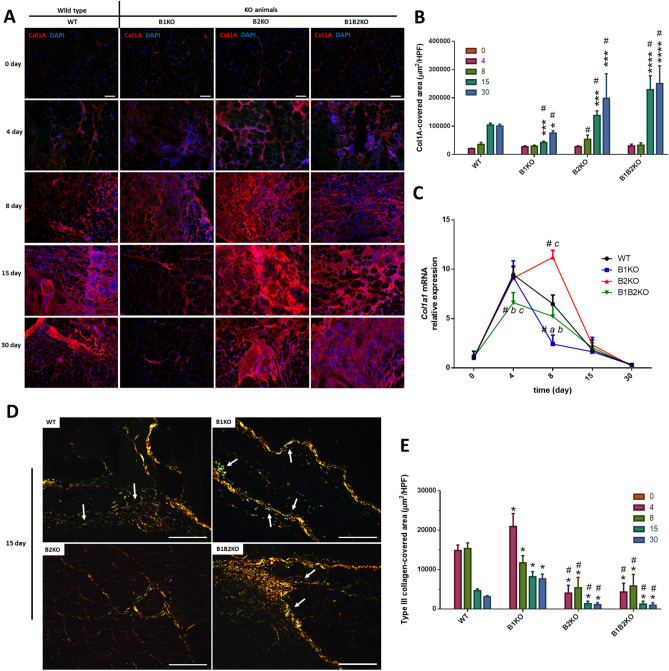
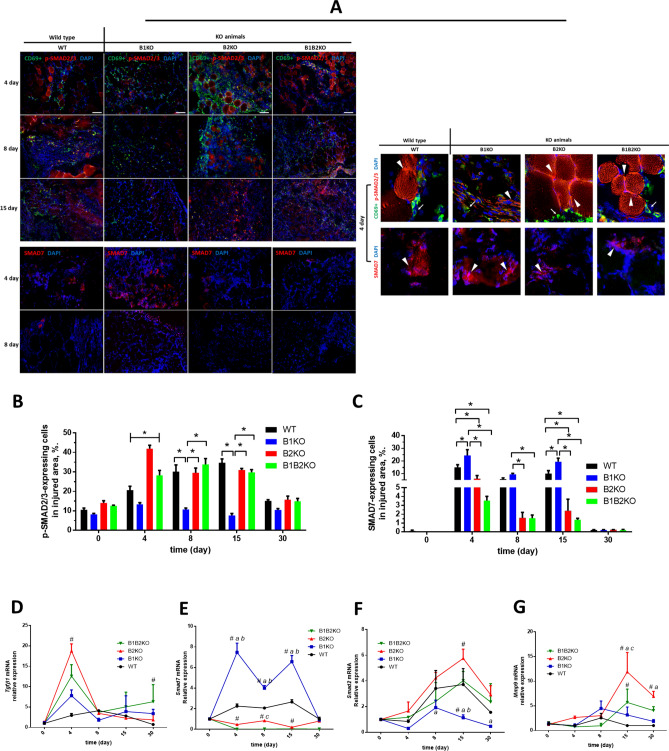
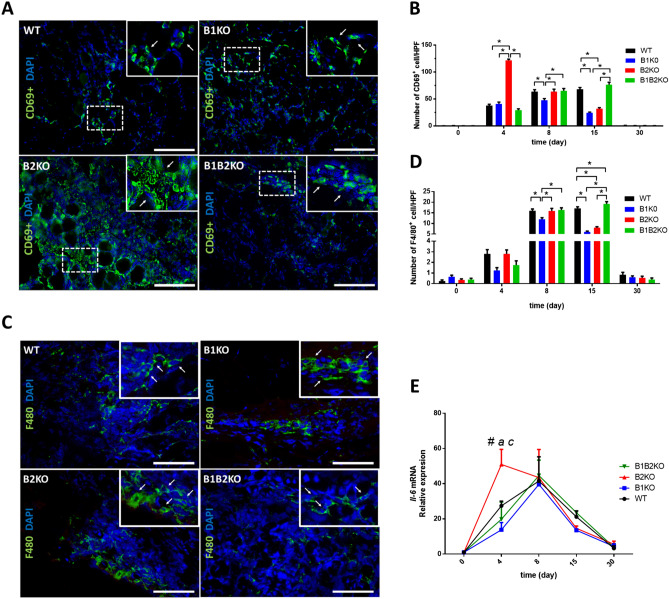
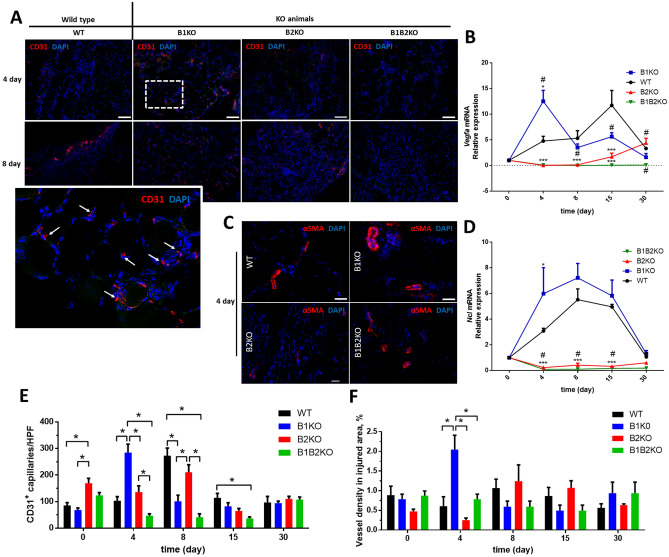
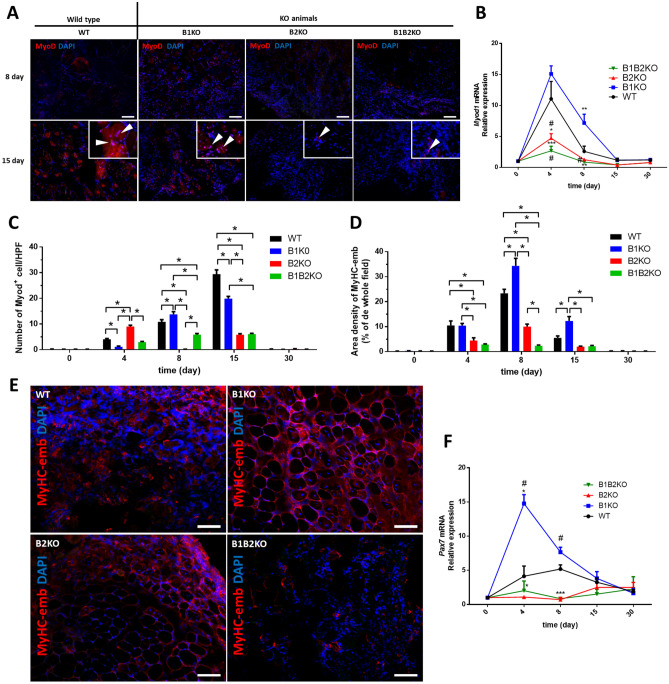
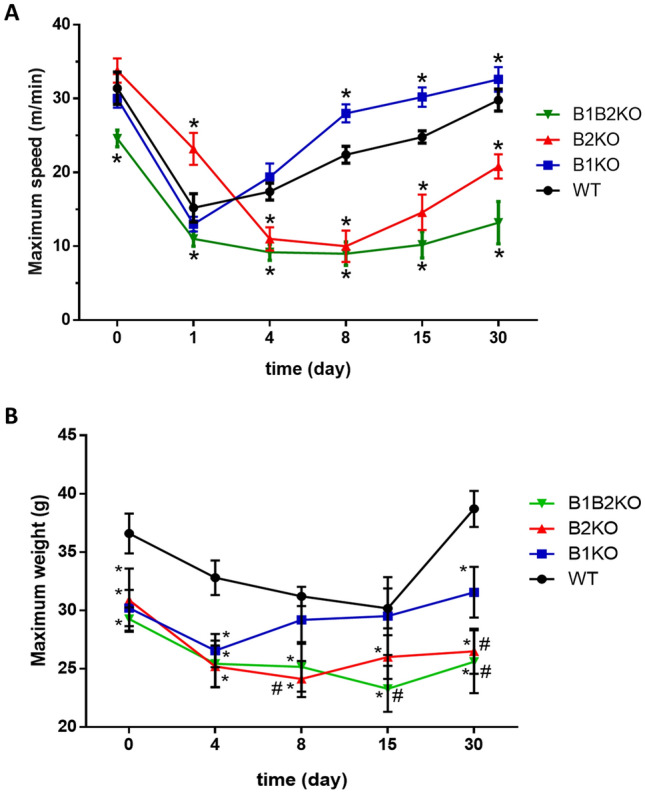
Injured B1KO mice showed a faster healing progression of the injured area with a larger amount of central nucleated fiber post-injury when compared to control mice. In addition, they exhibited higher neovasculogenic capacity, maintaining optimal tissue perfusion for the post-injury phase; had higher amounts of myogenic markers with less inflammatory infiltrate and tissue destruction. This was followed by higher amounts of SMAD7 and lower amounts of p-SMAD2/3, which resulted in less fibrosis. In contrast, B2KO and B1B2KO mice showed more severe tissue destruction and excessive fibrosis. B1KO animals had better results in post-injury functional tests compared to control animals.
We demonstrate that injured skeletal muscle tissues have a better repair capacity with less fibrosis in the presence of B2 receptor and absence of B1 receptor, including better performances in functional tests.
创伤性骨骼肌损伤后,肌肉愈合往往不完全,并产生广泛的纤维化。缓激肽(BK)通过 B2 受体减少肾和心脏损伤模型中的纤维化。B1 受体的表达是由损伤诱导的,而激肽释放酶-激肽系统的阻断似乎会影响肌肉营养不良的进展。我们假设,在创伤性肌肉损伤后,激肽 B1 和 B2 受体都可能发挥不同的作用,而 B1 受体的缺失可能会为肌肉生成产生更多的细胞和分子底物,而纤维化的底物更少,从而导致更好的肌肉愈合。
为了验证这一假设,我们对激肽受体敲除动物的胫骨前肌进行了创伤性损伤。评估了肌肉生成、血管生成、纤维化和肌肉功能。
与对照组相比,受伤的 B1KO 小鼠在受伤区域的愈合进展更快,受伤后有更多的中央核纤维。此外,它们表现出更高的新血管生成能力,为受伤后阶段保持最佳的组织灌注;具有更高水平的肌生成标志物,炎症浸润和组织破坏更少。随后,SMAD7 的含量较高,p-SMAD2/3 的含量较低,导致纤维化较少。相比之下,B2KO 和 B1B2KO 小鼠表现出更严重的组织破坏和过度纤维化。B1KO 动物在受伤后功能测试中的表现优于对照组动物。
我们证明,在 B2 受体存在和 B1 受体缺失的情况下,受伤的骨骼肌组织具有更好的修复能力,纤维化程度更低,包括在功能测试中的表现更好。