Cancer Center, Beijing LuHe Hospital, Capital Medical University, Beijing, 101149, China.
Jiangxi Province Key Laboratory of Tumor Pathogens and Molecular Pathology and Department of Pathophysiology, School of Basic Medical Sciences, Nanchang University, Nanchang, Jiangxi, China.
Cell Death Dis. 2022 Aug 5;13(8):680. doi: 10.1038/s41419-022-05142-8.
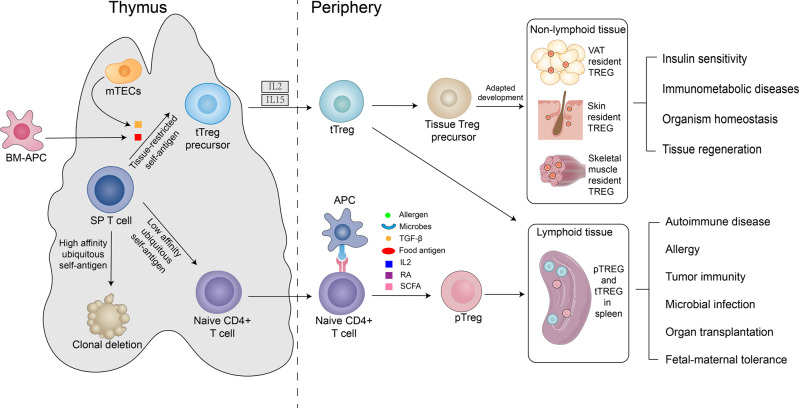
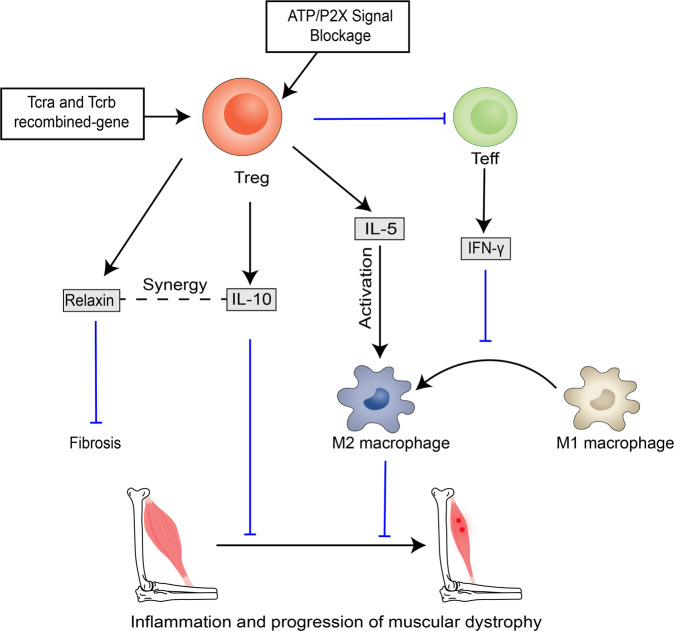
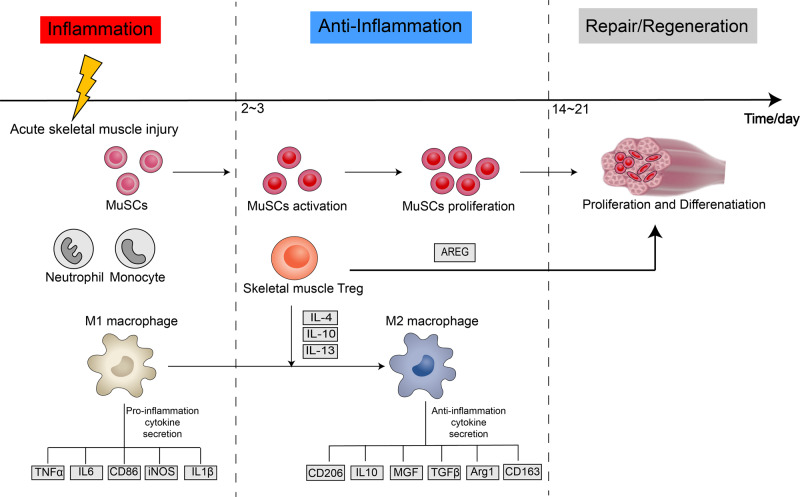
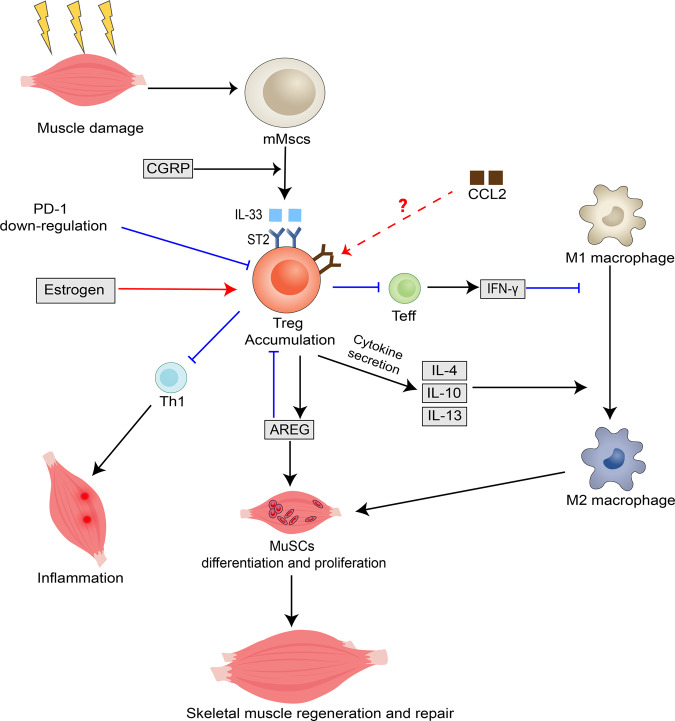
Skeletal muscle repair and regeneration after injury is a multi-stage process, involving a dynamic inflammatory microenvironment consisting of a complex network formed by the interaction of immune cells and their secreted cytokines. The homeostasis of the inflammatory microenvironment determines whether skeletal muscle repair tissues will ultimately form scar tissue or regenerative tissue. Regulatory T cells (Tregs) regulate homeostasis within the immune system and self-immune tolerance, and play a crucial role in skeletal muscle repair and regeneration. Dysregulated Tregs function leads to abnormal repair. In this review, we discuss the role and mechanisms of Tregs in skeletal muscle repair and regeneration after injury and provide new strategies for Treg immunotherapy in skeletal muscle diseases.
骨骼肌损伤后的修复和再生是一个多阶段的过程,涉及一个动态的炎症微环境,由免疫细胞及其分泌的细胞因子相互作用形成的复杂网络组成。炎症微环境的稳态决定了骨骼肌修复组织最终是形成瘢痕组织还是再生组织。调节性 T 细胞(Tregs)调节免疫系统和自身免疫耐受的内稳态,在骨骼肌修复和再生中发挥着关键作用。Tregs 功能失调会导致修复异常。在这篇综述中,我们讨论了 Tregs 在损伤后骨骼肌修复和再生中的作用和机制,并为骨骼肌疾病的 Treg 免疫治疗提供了新的策略。