• 文献检索
  • 文档翻译
  • 深度研究
  • 学术资讯
  • Suppr Zotero 插件Zotero 插件
  • 邀请有礼
  • 套餐&价格
  • 历史记录
应用&插件
Suppr Zotero 插件Zotero 插件浏览器插件Mac 客户端Windows 客户端微信小程序
定价
高级版会员购买积分包购买API积分包
服务
文献检索文档翻译深度研究API 文档MCP 服务
关于我们
关于 Suppr公司介绍联系我们用户协议隐私条款
关注我们

Suppr 超能文献

核心技术专利:CN118964589B侵权必究
粤ICP备2023148730 号-1Suppr @ 2026

文献检索

告别复杂PubMed语法,用中文像聊天一样搜索,搜遍4000万医学文献。AI智能推荐,让科研检索更轻松。

立即免费搜索

文件翻译

保留排版,准确专业,支持PDF/Word/PPT等文件格式,支持 12+语言互译。

免费翻译文档

深度研究

AI帮你快速写综述,25分钟生成高质量综述,智能提取关键信息,辅助科研写作。

立即免费体验

一名患有肺栓塞的青少年发生心脏骤停。

Cardiac Arrest in an Adolescent with Pulmonary Embolism.

作者信息

Myers Matthew, Devlin Courtney

机构信息

University of Pittsburgh Medical Center Harrisburg, Department of Emergency Medicine, Harrisburg, PA.

出版信息

J Educ Teach Emerg Med. 2021 Oct 15;6(4):S112-S137. doi: 10.21980/J8135T. eCollection 2021 Oct.

DOI:10.21980/J8135T
PMID:37465265
原文链接:https://pmc.ncbi.nlm.nih.gov/articles/PMC10332741/
Abstract

AUDIENCE

The target audience of this simulation is emergency medicine residents and medical students. The simulation is based on a real case of a 13-year-old female who presented with seizures and hypoxia and was ultimately diagnosed with pulmonary embolism. The case highlights diagnosis and management of an adolescent with new onset seizures, deterioration in status, and treatment options in pediatric cardiac arrest due to pulmonary embolism.

BACKGROUND

Pulmonary embolism (PE) is an uncommon cause of hypoxia in children making diagnosis difficult. A study looking at 23 years of admission and autopsy data on children found the incidence of clinically significant pulmonary embolism to be 25 per 100,000.1 However, when children present to the emergency department with hypoxia and altered mental status, a diagnosis of pulmonary embolism cannot be excluded. Risk factors such as use of estrogen containing oral contraceptives, immobilization, and recent surgery should raise suspicion for pulmonary embolism in the clinically deteriorating adolescent patient.2,3.

EDUCATIONAL OBJECTIVES

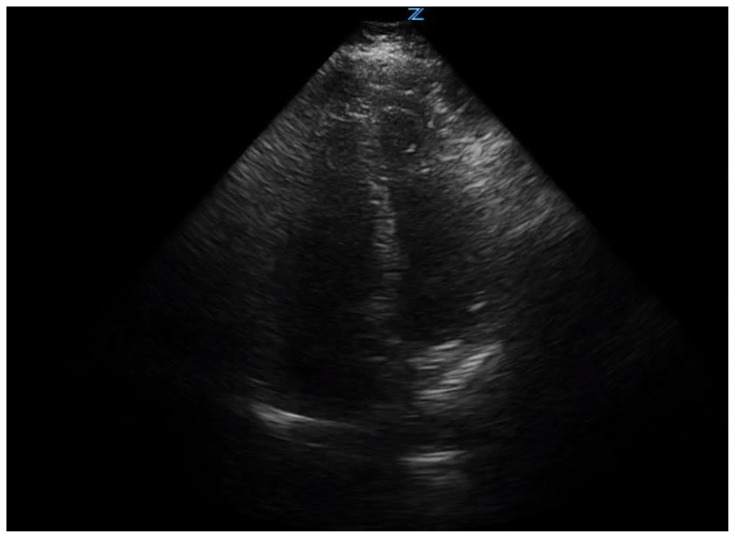
By the end of the simulation, learners will be able to:1) develop a differential diagnosis for an adolescent presenting with hypoxia and seizure-like activity2) discuss the utility of bedside ultrasound in helping to differentiate causes of hypoxia3) discuss management of cardiac arrest due to PE in the pediatric patientSecondary learning objectives include:4) discuss indications for emergent use of thrombolytics and Extracorporeal Membrane Oxygenation (ECMO) while becoming aware of institution-based limitations5) demonstrate interpersonal communication with family, nursing, pharmacy, and consultants during high stress situations.

EDUCATIONAL METHODS

This is a high-fidelity simulation that allows learners to manage the diagnosis and treatment of pulmonary embolism in an adolescent patient. Participants participated in a debriefing after the simulation.The effectiveness of this case was evaluated by surveys given to learners after debriefing. Learners gave quantitative and qualitative results of their feedback using a 1-5 rating scale and leaving written feedback. This case was performed with residents in their first and second years of training.

RESULTS

Feedback was overall positive, with many of the residents giving the case high scores on effectiveness of the simulation in their education. They enjoyed the case and reported they would feel more comfortable in a comparable situation in the future.

DISCUSSION

Pulmonary embolism is an uncommon but important diagnosis for emergency medicine physicians to consider in pediatric cardiac arrest. This case has multiple parts and was based on a real case in our emergency department in which a patient presenting with new seizure-like activity followed by cardiac arrest was ultimately diagnosed with a PE. The case was well received by our learners who felt it improved their identification of this diagnosis and its management.

TOPICS

Pulmonary embolism, oral contraceptives, altered mental status, pediatric, adolescent, cardiac arrest, ECMO, thrombolytic, hypoxia, emergency medicine, medical simulation.

https://cdn.ncbi.nlm.nih.gov/pmc/blobs/befa/10332741/9a5b2bc95434/jetem-6-4-s112f4.jpg
https://cdn.ncbi.nlm.nih.gov/pmc/blobs/befa/10332741/8b9489f7cc5b/jetem-6-4-s112f1.jpg
https://cdn.ncbi.nlm.nih.gov/pmc/blobs/befa/10332741/3fbc176fd2e6/jetem-6-4-s112f2.jpg
https://cdn.ncbi.nlm.nih.gov/pmc/blobs/befa/10332741/572d42dd7279/jetem-6-4-s112f3.jpg
https://cdn.ncbi.nlm.nih.gov/pmc/blobs/befa/10332741/9a5b2bc95434/jetem-6-4-s112f4.jpg
https://cdn.ncbi.nlm.nih.gov/pmc/blobs/befa/10332741/8b9489f7cc5b/jetem-6-4-s112f1.jpg
https://cdn.ncbi.nlm.nih.gov/pmc/blobs/befa/10332741/3fbc176fd2e6/jetem-6-4-s112f2.jpg
https://cdn.ncbi.nlm.nih.gov/pmc/blobs/befa/10332741/572d42dd7279/jetem-6-4-s112f3.jpg
https://cdn.ncbi.nlm.nih.gov/pmc/blobs/befa/10332741/9a5b2bc95434/jetem-6-4-s112f4.jpg
摘要

受众

本模拟的目标受众是急诊医学住院医师和医学生。该模拟基于一个真实病例,一名13岁女性出现癫痫发作和缺氧症状,最终被诊断为肺栓塞。该病例重点展示了对一名新发癫痫发作、病情恶化的青少年患者的诊断和管理,以及因肺栓塞导致小儿心脏骤停的治疗选择。

背景

肺栓塞(PE)是儿童缺氧的罕见原因,诊断困难。一项对23年儿童入院和尸检数据的研究发现,临床上显著肺栓塞的发病率为每10万人中有25例。然而,当儿童因缺氧和精神状态改变到急诊科就诊时,不能排除肺栓塞的诊断。诸如使用含雌激素的口服避孕药、制动和近期手术等危险因素,应使临床病情恶化的青少年患者引起对肺栓塞的怀疑。

教育目标

模拟结束时,学习者将能够:1)为出现缺氧和癫痫样活动的青少年制定鉴别诊断;2)讨论床旁超声在帮助鉴别缺氧原因方面的作用;3)讨论小儿患者因肺栓塞导致心脏骤停的管理。次要学习目标包括:4)讨论紧急使用溶栓剂和体外膜肺氧合(ECMO)的指征,同时了解基于机构的局限性;5)在高压力情况下展示与家属、护理人员、药剂师和会诊医生的人际沟通。

教育方法

这是一个高保真模拟,让学习者管理一名青少年患者肺栓塞的诊断和治疗。模拟结束后,参与者参加了一次总结汇报。通过在总结汇报后向学习者进行调查来评估该病例的有效性。学习者使用1-5评分量表给出定量和定性的反馈结果,并留下书面反馈。该病例是针对第一年和第二年培训的住院医师进行的。

结果

反馈总体积极,许多住院医师对该模拟在他们教育中的有效性给予了高分。他们喜欢这个病例,并表示在未来类似情况下会感觉更自在。

讨论

肺栓塞是急诊医学医生在小儿心脏骤停中需要考虑的一种罕见但重要的诊断。这个病例有多个部分,基于我们急诊科的一个真实病例,一名出现新发癫痫样活动随后心脏骤停的患者最终被诊断为肺栓塞。该病例受到了我们学习者的好评,他们认为这提高了他们对该诊断及其管理的识别能力。

主题

肺栓塞、口服避孕药、精神状态改变、儿科、青少年、心脏骤停、ECMO、溶栓剂、缺氧、急诊医学、医学模拟。

相似文献

1
Cardiac Arrest in an Adolescent with Pulmonary Embolism.一名患有肺栓塞的青少年发生心脏骤停。
J Educ Teach Emerg Med. 2021 Oct 15;6(4):S112-S137. doi: 10.21980/J8135T. eCollection 2021 Oct.
2
Adolescent with Diabetic Ketoacidosis, Hypothermia and Pneumomediastinum.患有糖尿病酮症酸中毒、体温过低和气纵隔的青少年。
J Educ Teach Emerg Med. 2023 Oct 31;8(4):S1-S24. doi: 10.21980/J8FP8J. eCollection 2023 Oct.
3
Extracorporeal Membrane Oxygenation (ECMO) for Refractory Cardiac Arrest.体外膜肺氧合(ECMO)用于难治性心脏骤停。
J Educ Teach Emerg Med. 2020 Oct 15;5(4):S28-S58. doi: 10.21980/J88W69. eCollection 2020 Oct.
4
Acute Pulmonary Edema and NSTEMI.急性肺水肿与非ST段抬高型心肌梗死
J Educ Teach Emerg Med. 2023 Jul 31;8(3):O1-O32. doi: 10.21980/J8CW67. eCollection 2023 Jul.
5
Pulseless Electrical Activity Cardiac Arrest.无脉电活动型心脏骤停
J Educ Teach Emerg Med. 2020 Jan 15;5(1):S1-S25. doi: 10.21980/J8Z055. eCollection 2020 Jan.
6
Managing STEMIs without a Catheterization Lab: A Simulated Scenario to Improve Emergency Clinician Recognition and Execution of Thrombolysis in the Setting of Rural STEMI Management.在没有导管室的情况下处理ST段抬高型心肌梗死:一种模拟场景,用于改善农村地区ST段抬高型心肌梗死管理中急诊临床医生对溶栓的识别和实施能力。
J Educ Teach Emerg Med. 2024 Apr 30;9(2):S55-S77. doi: 10.21980/J8K933. eCollection 2024 Apr.
7
Acute Chest Syndrome.急性胸综合征
J Educ Teach Emerg Med. 2023 Jan 31;8(1):O1-O23. doi: 10.21980/J80S8J. eCollection 2023 Jan.
8
Cardiac Tamponade.心脏压塞
J Educ Teach Emerg Med. 2020 Oct 15;5(4):S84-S107. doi: 10.21980/J81D1D. eCollection 2020 Oct.
9
3rd-Degree Atrioventricular Block.三度房室传导阻滞
J Educ Teach Emerg Med. 2022 Apr 15;7(2):O1-O28. doi: 10.21980/J8NP9S. eCollection 2022 Apr.
10
Eclampsia.子痫
J Educ Teach Emerg Med. 2020 Jul 15;5(3):O1-O27. doi: 10.21980/J8M93D. eCollection 2020 Jul.

引用本文的文献

1
High-risk pulmonary embolism in a post-operative patient.一名术后患者的高危肺栓塞
Breathe (Sheff). 2025 Jan 21;21(1):240101. doi: 10.1183/20734735.0101-2024. eCollection 2025 Jan.

本文引用的文献

1
Analysis of Risk Factors of Stroke and Venous Thromboembolism in Females With Oral Contraceptives Use.口服避孕药女性中风和静脉血栓栓塞危险因素分析
Clin Appl Thromb Hemost. 2018 Jul;24(5):797-802. doi: 10.1177/1076029617727857. Epub 2017 Sep 8.
2
Antithrombotic therapy in neonates and children: Antithrombotic Therapy and Prevention of Thrombosis, 9th ed: American College of Chest Physicians Evidence-Based Clinical Practice Guidelines.新生儿和儿童的抗血栓治疗:抗血栓治疗和血栓预防,第 9 版:美国胸科医师学会基于证据的临床实践指南。
Chest. 2012 Feb;141(2 Suppl):e737S-e801S. doi: 10.1378/chest.11-2308.
3
Thrombotic risk during oral contraceptive use and pregnancy in women with factor V Leiden or prothrombin mutation: a rational approach to contraception.
口服避孕药使用期间和有因子 V Leiden 或凝血酶原突变的女性怀孕期间的血栓形成风险:避孕的合理方法。
Blood. 2011 Aug 25;118(8):2055-61; quiz 2375. doi: 10.1182/blood-2011-03-345678. Epub 2011 Jun 9.
4
Hormonal contraception and risk of venous thromboembolism: national follow-up study.激素避孕与静脉血栓栓塞风险:全国性随访研究
BMJ. 2009 Aug 13;339:b2890. doi: 10.1136/bmj.b2890.
5
Clinical features and outcome of pulmonary embolism in children.儿童肺栓塞的临床特征与预后
Br J Haematol. 2008 Sep;142(5):808-18. doi: 10.1111/j.1365-2141.2008.07243.x. Epub 2008 Jun 17.
6
Assessment of the pulmonary embolism rule-out criteria rule for evaluation of suspected pulmonary embolism in the emergency department.急诊科疑似肺栓塞评估中肺栓塞排除标准规则的评估。
Am J Emerg Med. 2008 Feb;26(2):181-5. doi: 10.1016/j.ajem.2007.04.026.
7
Incidence of venous thromboembolism in infants and children: data from the National Hospital Discharge Survey.婴幼儿静脉血栓栓塞症的发病率:来自国家医院出院调查的数据。
J Pediatr. 2004 Oct;145(4):563-5. doi: 10.1016/j.jpeds.2004.06.021.
8
Clinical criteria to prevent unnecessary diagnostic testing in emergency department patients with suspected pulmonary embolism.预防疑似肺栓塞急诊科患者进行不必要诊断检测的临床标准。
J Thromb Haemost. 2004 Aug;2(8):1247-55. doi: 10.1111/j.1538-7836.2004.00790.x.
9
Venous thromboembolism in childhood: a prospective two-year registry in The Netherlands.儿童静脉血栓栓塞症:荷兰一项为期两年的前瞻性登记研究。
J Pediatr. 2001 Nov;139(5):676-81. doi: 10.1067/mpd.2001.118192.