Chu Alan, Yee Jennifer
The Ohio State University, Department of Emergency Medicine, Columbus, OH.
J Educ Teach Emerg Med. 2020 Oct 15;5(4):S84-S107. doi: 10.21980/J81D1D. eCollection 2020 Oct.
This simulation is designed to educate emergency medicine residents and medical students on the recognition and management of cardiac tamponade, as well as encourage providers to become familiar with their states' disclosure laws for sentinel events.
Cardiac tamponade is an emergent condition in which the accumulation of pericardial fluid and the consequent increase in hydrostatic pressure becomes severe enough to compromise the normal diastolic and systolic function of the heart, resulting in hemodynamic instability.1 The causes of cardiac tamponade are numerous because it is a potential complication of any of a number of pericardial disease processes, including infectious, inflammatory, traumatic, and malignant etiologies.1,2 Clinical presentations may vary and symptoms can be non-specific, which can lead to delayed or missed diagnoses and poor patient outcomes.3 In addition to this, the incidence of this condition is rising due to the increasing frequency of cardiac procedures performed (ie, pacemaker placement).4 Therefore, it is important for medical providers to have a high index of suspicion for the diagnosis based on patient presentation and to quickly provide necessary treatment to stabilize the patient.
By the end of this simulation session, the learner will be able to: (1) describe a diagnostic differential for dizziness (2) describe the pathophysiology of cardiac tamponade (3) describe the acute management of cardiac tamponade, including fluid bolus and pericardiocentesis (4) describe the electrocardiogram (ECG) findings of pericardial effusion (5) describe the ultrasound findings of cardiac tamponade (6) describe the indications for emergent bedside pericardiocentesis versus medical stabilization and delayed pericardiocentesis for cardiac tamponade (7) describe the procedural steps for pericardiocentesis, and (8) describe your state's laws regarding disclosure for sentinel events.
This session is conducted using high-fidelity simulation, followed by a debriefing session on evaluation and treatment of cardiac tamponade. However, it may also be run as an oral board case.
Our residents were provided an electronic survey at the completion of the debriefing session so they may rate different aspects of the simulation, as well as provide qualitative feedback on the scenario. This survey is specific to the local institution's simulation center.
Feedback was largely positive because many learners mentioned during debriefing that they are not comfortable with pericardiocentesis and have limited opportunities to practice the procedure. None of our residents were familiar with our state's or institution's disclosure laws for sentinel events.The local institution's simulation center feedback form is based on the Center of Medical Simulation's Debriefing Assessment for Simulation in Healthcare (DASH) Student Version Short Form with the inclusion of required qualitative feedback if an element was scored less than a 6 or 7.5 This session received a majority of 6 (consistently effective/very good) and 7 scores (extremely effective/outstanding).
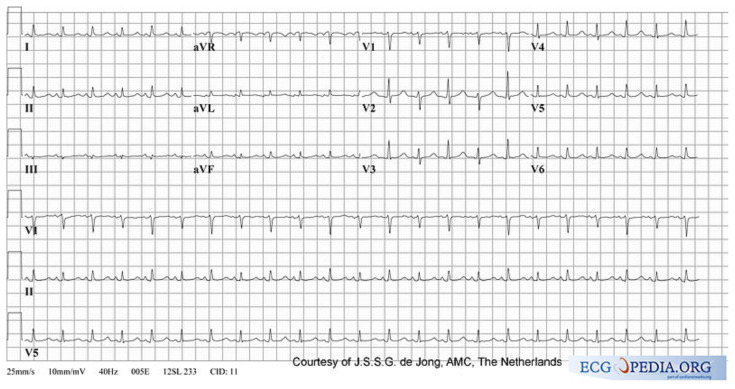
This is a potential method for educating future medical providers on the diagnosis and management of cardiac tamponade in an emergency department setting. Learners initially had a wide range of differentials for the chief complaint of dizziness. We used an ECG with low voltage but without electrical alternans. When asked to provide an ECG interpretation, low voltage was intermittently explicitly interpreted by learners. We were concerned that if we showed an ECG with electrical alternans, learners may quickly arrive at the diagnosis without focusing on the subtleties of a physical exam, including looking for jugular venous distention (JVD) or pulsus paradoxus.We did not have the patient decompensate if their international normalized ratio (INR) was not immediately reversed, given likely delay for coagulation to occur in the face of life-threatening tamponade, but this provided a robust discussion during debriefing if reversal should be emergently initiated.Many residents voiced that they were uncomfortable performing a pericardiocentesis because they only had a few opportunities to do so on human cadavers, and they appreciated the opportunity to review this.Unexpectedly, when the patient asked the learners if he should sue the cardiologist, the majority of groups told the patient that the cardiologist was not liable because tamponade is a known complication of cardiac ablation and likely reviewed this while obtaining informed consent. None of the learners were familiar with Ohio's disclosure laws for sentinel events. This identified a gap in knowledge that may be addressed in future learning sessions.Our main take-away is to continue providing low-frequency, high-acuity cases that provide the opportunity to review infrequent pathologies and procedures, as well as including patient safety and administrative learning points.
Medical simulation, cardiac tamponade, pericardial effusion, cardiac emergencies, obstructive shock, sentinel events, iatrogenic injury, medical disclosure.
本次模拟旨在培训急诊医学住院医师和医学生识别和处理心脏压塞,同时鼓励医疗人员熟悉本州关于重大事件披露的法律。
心脏压塞是一种紧急情况,心包积液的积聚以及随之而来的流体静压升高严重到足以损害心脏正常的舒张和收缩功能,导致血流动力学不稳定。心脏压塞的病因众多,因为它是多种心包疾病过程(包括感染性、炎症性、创伤性和恶性病因)中任何一种的潜在并发症。临床表现可能各不相同,症状可能不具有特异性,这可能导致诊断延迟或漏诊以及患者预后不良。此外,由于心脏手术(如起搏器植入)的频率增加,这种疾病的发病率正在上升。因此,医疗人员根据患者表现对诊断保持高度怀疑并迅速提供必要治疗以稳定患者病情非常重要。
在本次模拟课程结束时,学习者将能够:(1)描述头晕的鉴别诊断;(2)描述心脏压塞的病理生理学;(3)描述心脏压塞的急性处理方法,包括液体冲击和心包穿刺术;(4)描述心包积液的心电图表现;(5)描述心脏压塞的超声表现;(6)描述紧急床边心包穿刺术与心脏压塞的药物稳定及延迟心包穿刺术的适应证;(7)描述心包穿刺术的操作步骤;(8)描述本州关于重大事件披露的法律。
本次课程采用高保真模拟进行,随后进行关于心脏压塞评估和治疗的总结汇报。不过,它也可以作为口试病例进行。
在总结汇报结束时,我们为住院医师提供了一份电子调查问卷,以便他们对模拟的不同方面进行评分,并对模拟场景提供定性反馈。这份调查问卷是针对当地机构的模拟中心的。
反馈大多是积极的,因为许多学习者在总结汇报中提到,他们对心包穿刺术不熟练,且练习该操作的机会有限。我们的住院医师中没有人熟悉本州或本机构关于重大事件披露的法律。当地机构模拟中心的反馈表基于医疗模拟中心的医疗保健模拟总结评估(DASH)学生版简表,并在某个要素得分低于6或7时纳入所需的定性反馈。本次课程的大多数评分是6(持续有效/非常好)和7(极其有效/出色)。
这是一种在急诊科环境中培训未来医疗人员诊断和处理心脏压塞的潜在方法。学习者最初对头晕的主要症状有广泛的鉴别诊断。我们使用了低电压但无电交替的心电图。当要求对心电图进行解读时,学习者间歇性地明确解读出了低电压。我们担心,如果展示有电交替的心电图,学习者可能会迅速得出诊断,而不关注体格检查的细微之处,包括寻找颈静脉怒张(JVD)或奇脉。如果患者的国际标准化比值(INR)没有立即纠正,我们不会让患者失代偿,因为在危及生命的心包压塞情况下凝血可能会延迟发生,但这在总结汇报中引发了关于是否应紧急启动纠正措施的激烈讨论。许多住院医师表示,他们对进行心包穿刺术感到不自在,因为他们在人体尸体上进行该操作的机会很少,他们对有机会复习该操作表示感激。出乎意料的是,当患者询问学习者他是否应该起诉心脏病专家时,大多数小组告诉患者心脏病专家没有责任,因为心包压塞是心脏消融已知的并发症,并且在获得知情同意时可能已经对此进行了说明。没有学习者熟悉俄亥俄州关于重大事件披露的法律。这发现了一个知识差距,可能会在未来的学习课程中得到解决。我们的主要收获是继续提供低频、高急症的病例,提供复习罕见病理和操作的机会,以及纳入患者安全和管理学习要点。
医学模拟、心脏压塞、心包积液;心脏急症、梗阻性休克、重大事件、医源性损伤、医疗披露