School of Medicine, Foshan University, Foshan, China.
School of Life Science and Engineering, Foshan University, Foshan, China.
Virulence. 2023 Dec;14(1):2235459. doi: 10.1080/21505594.2023.2235459.
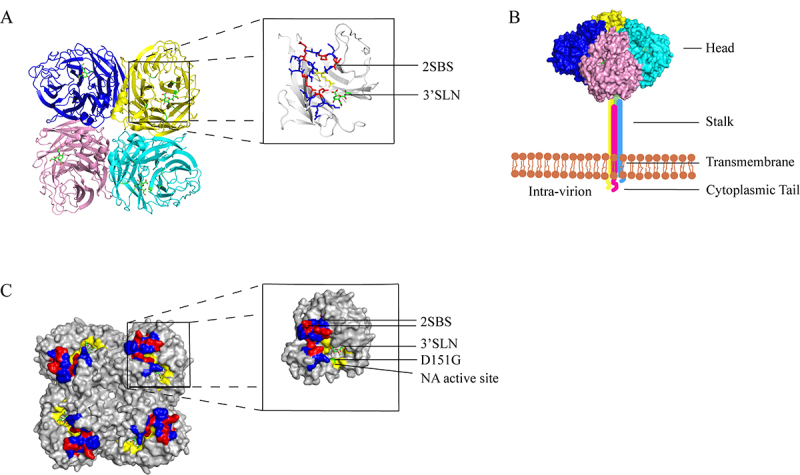
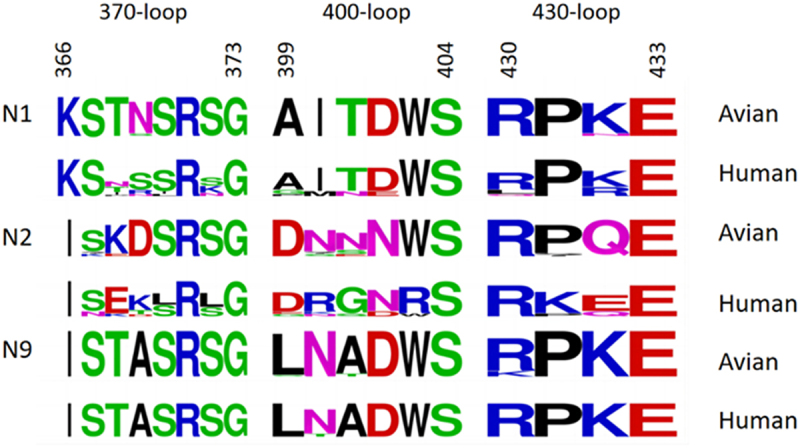
Influenza A viruses (IAVs) pose a serious risk to both human and animal health. IAVs' receptor binding characteristics account for a major portion of their host range and tissue tropism. While the function of neuraminidase (NA) in promoting the release of progeny virus is well-known, its role in the virus entry process remains poorly understood. Studies have suggested that certain subtypes of NA can act as receptor-binding proteins, either alone or in conjunction with haemagglutinin (HA). An important distinction is that NA from the avian influenza virus have a second sialic acid-binding site (2SBS) that is preserved in avian strains but missing in human or swine strains. Those observations suggest that the 2SBS may play a key role in the adaptation of the avian influenza virus to mammalian hosts. In this review, we provide an update of the recent research advances in the receptor-binding role of NA and highlight its underestimated importance during the early stages of the IAV life cycle. By doing so, we aim to provide new insights into the mechanisms underlying IAV host adaptation and pathogenesis.
甲型流感病毒(IAV)对人类和动物的健康构成严重威胁。IAV 的受体结合特性是其宿主范围和组织嗜性的主要决定因素。虽然神经氨酸酶(NA)在促进病毒子代释放方面的功能已广为人知,但它在病毒进入过程中的作用仍知之甚少。研究表明,某些亚型的 NA 可以单独或与血凝素(HA)一起作为受体结合蛋白发挥作用。一个重要的区别是,禽流感病毒的 NA 具有第二个唾液酸结合位点(2SBS),该位点在禽株中被保留,但在人或猪株中缺失。这些观察结果表明,2SBS 可能在禽流感病毒适应哺乳动物宿主方面发挥关键作用。在这篇综述中,我们提供了 NA 在受体结合作用方面的最新研究进展,并强调了其在 IAV 生命周期早期阶段被低估的重要性。通过这样做,我们旨在为 IAV 宿主适应性和发病机制的机制提供新的见解。