Department of Numerical Analysis and Scientific Computing, Simula Research Laboratory, Oslo, Norway.
PLoS Comput Biol. 2023 Jul 21;19(7):e1010996. doi: 10.1371/journal.pcbi.1010996. eCollection 2023 Jul.
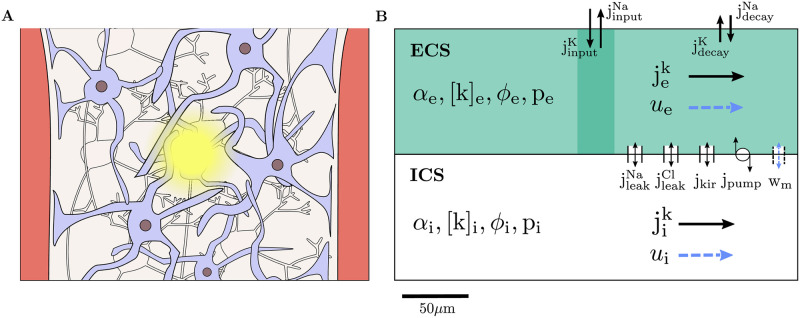
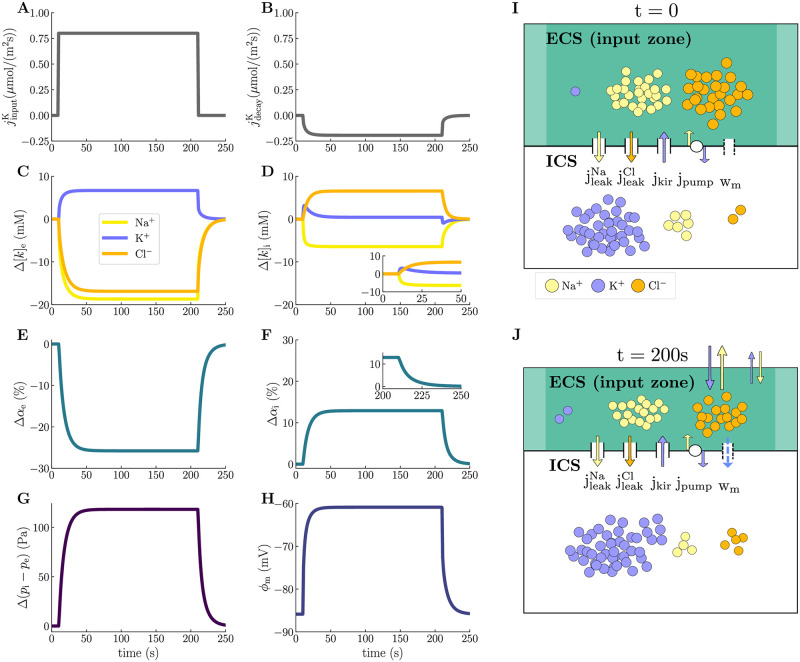
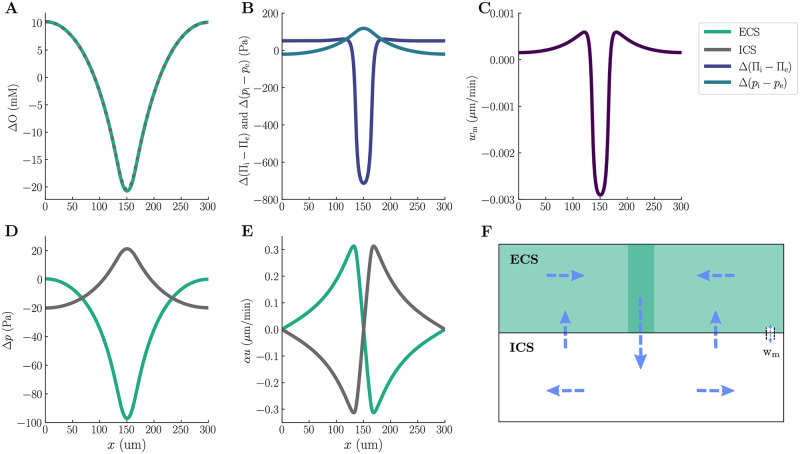
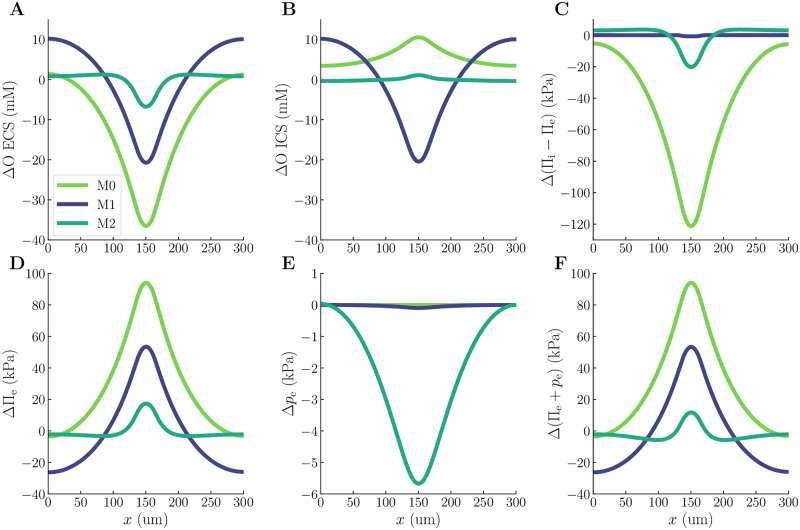
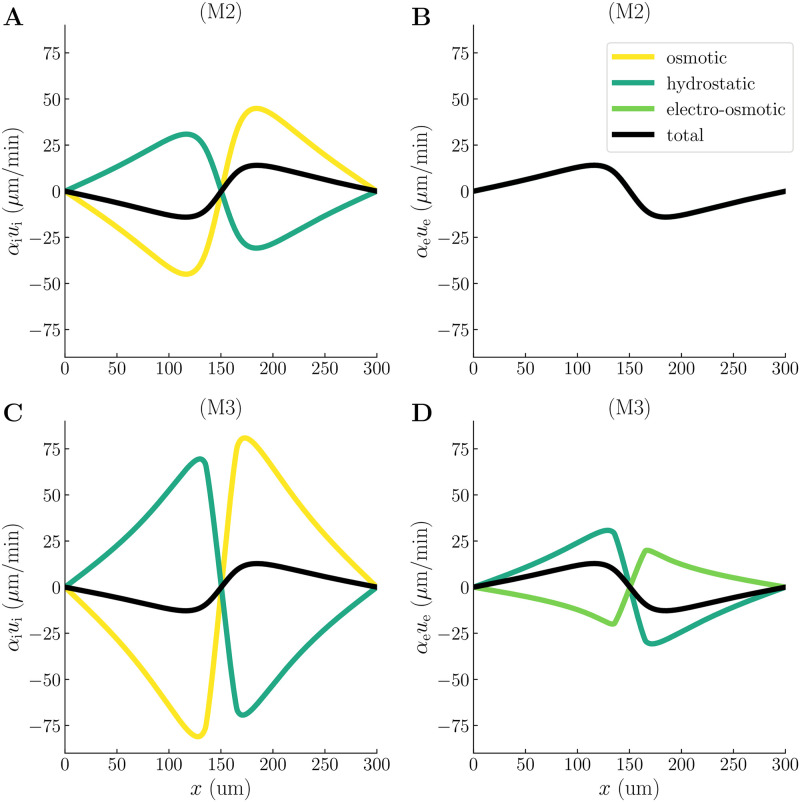
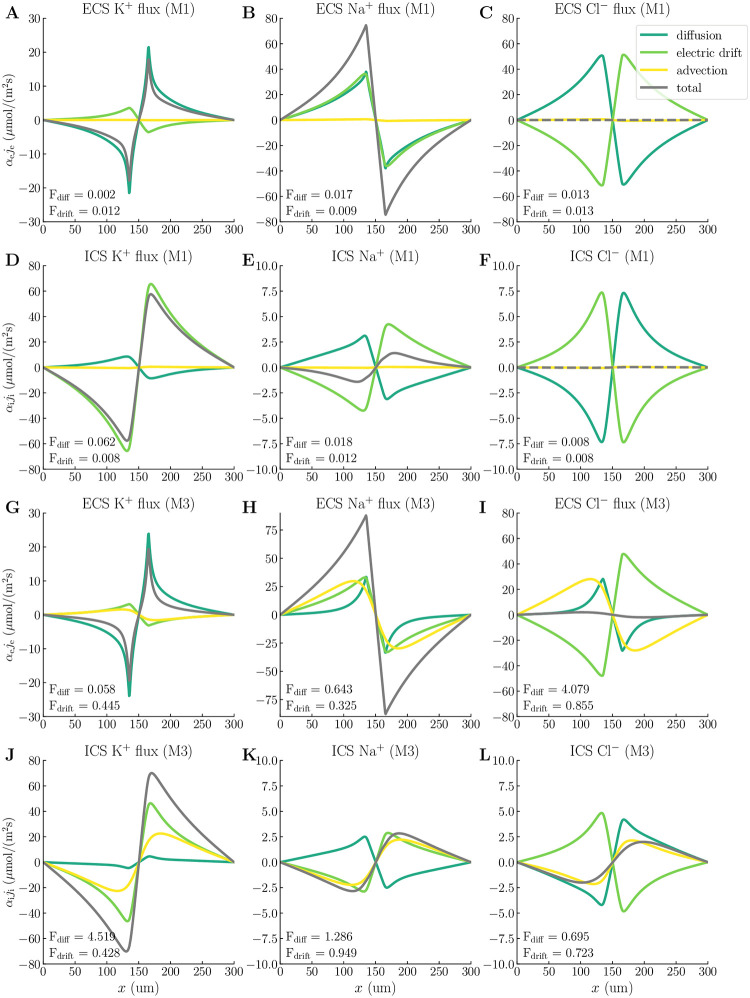
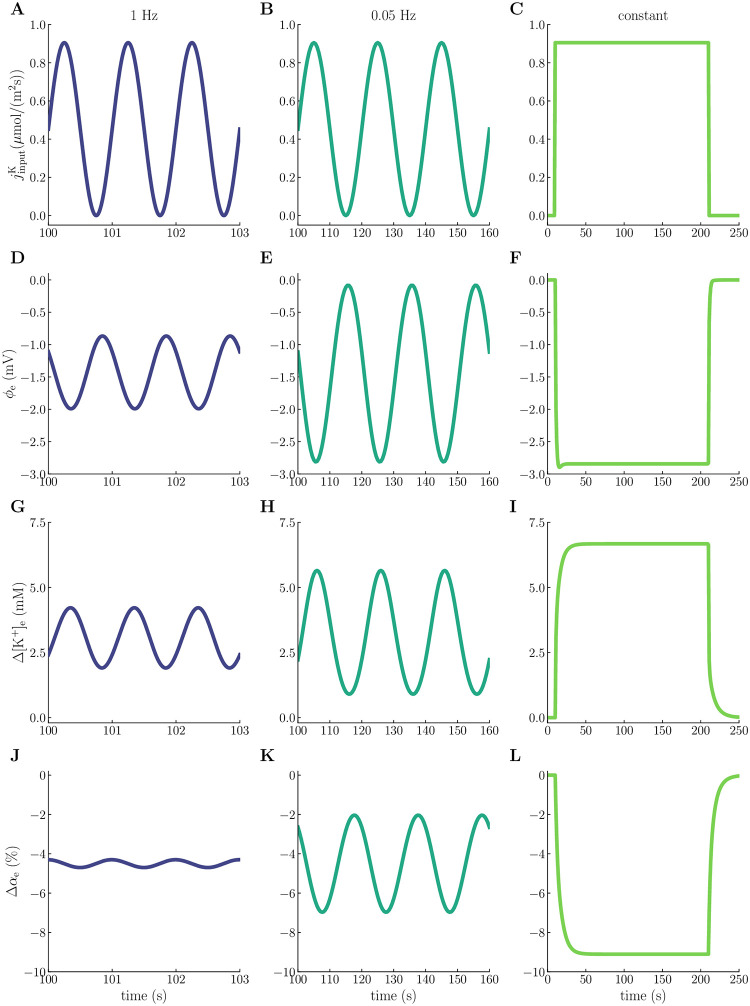
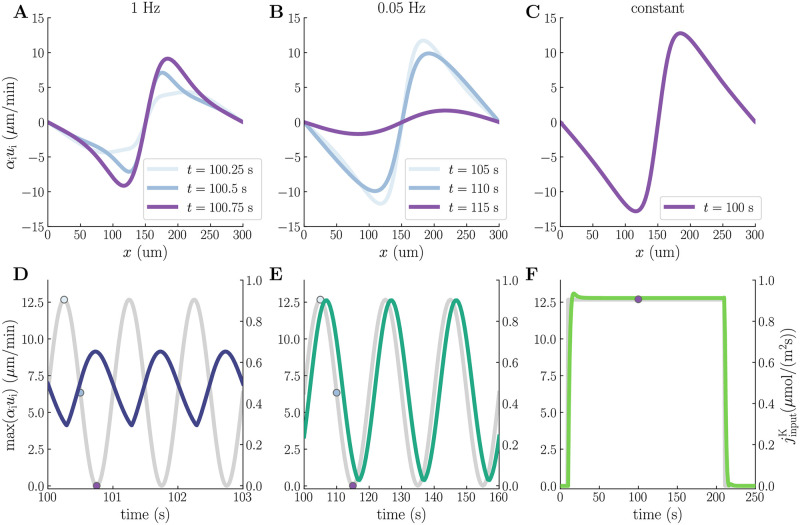
The complex interplay between chemical, electrical, and mechanical factors is fundamental to the function and homeostasis of the brain, but the effect of electrochemical gradients on brain interstitial fluid flow, solute transport, and clearance remains poorly quantified. Here, via in-silico experiments based on biophysical modeling, we estimate water movement across astrocyte cell membranes, within astrocyte networks, and within the extracellular space (ECS) induced by neuronal activity, and quantify the relative role of different forces (osmotic, hydrostatic, and electrical) on transport and fluid flow under such conditions. We find that neuronal activity alone may induce intracellular fluid velocities in astrocyte networks of up to 14μm/min, and fluid velocities in the ECS of similar magnitude. These velocities are dominated by an osmotic contribution in the intracellular compartment; without it, the estimated fluid velocities drop by a factor of ×34-45. Further, the compartmental fluid flow has a pronounced effect on transport: advection accelerates ionic transport within astrocytic networks by a factor of ×1-5 compared to diffusion alone.
化学、电气和机械因素之间的复杂相互作用是大脑功能和内稳态的基础,但电化学梯度对脑间质液流动、溶质转运和清除的影响仍未得到充分量化。在这里,通过基于生物物理建模的计算机模拟实验,我们估计了神经元活动引起的水在星形胶质细胞膜内、星形胶质细胞网络内和细胞外空间(ECS)内的跨膜运动,并量化了在这种情况下不同力(渗透、静水和电)对转运和流体流动的相对作用。我们发现,仅神经元活动就可能在星形胶质细胞网络中诱导高达 14μm/min 的细胞内液流,以及类似幅度的细胞外液流。这些速度主要由细胞内隔室中的渗透贡献主导;没有它,估计的流体速度会下降 34-45 倍。此外,隔室流体流动对转运有显著影响:与单独扩散相比,对流将离子在星形胶质细胞网络中的转运速度提高了 1-5 倍。