School of Psychology, University of Birmingham, Birmingham, UK.
Department of Experimental Psychology, University of Oxford, Oxford, UK.
Sci Rep. 2023 Jul 22;13(1):11875. doi: 10.1038/s41598-023-39070-0.
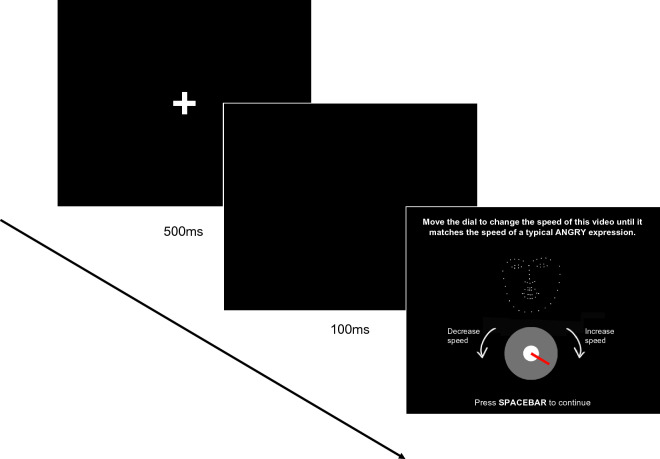
To date, studies have not yet established the mechanisms underpinning differences in autistic and non-autistic emotion recognition. The current study first investigated whether autistic and non-autistic adults differed in terms of the precision and/or differentiation of their visual emotion representations and their general matching abilities, and second, explored whether differences therein were related to challenges in accurately recognizing emotional expressions. To fulfil these aims, 45 autistic and 45 non-autistic individuals completed three tasks employing dynamic point light displays of emotional facial expressions. We identified that autistic individuals had more precise visual emotion representations than their non-autistic counterparts, however, this did not confer any benefit for their emotion recognition. Whilst for non-autistic people, non-verbal reasoning and the interaction between precision of emotion representations and matching ability predicted emotion recognition, no variables contributed to autistic emotion recognition. These findings raise the possibility that autistic individuals are less guided by their emotion representations, thus lending support to Bayesian accounts of autism.
迄今为止,研究尚未确定自闭症患者和非自闭症患者在情绪识别方面存在差异的机制。本研究首先调查了自闭症和非自闭症成年人在视觉情绪表现的精确性和/或区分度以及一般匹配能力方面是否存在差异,其次,还探讨了这些差异是否与准确识别情绪表达的挑战有关。为了实现这些目标,45 名自闭症患者和 45 名非自闭症患者完成了三项任务,任务中采用了动态光点显示的情绪面部表情。我们发现,自闭症患者的视觉情绪表现比非自闭症患者更精确,但这对他们的情绪识别没有任何帮助。而对于非自闭症患者来说,非言语推理以及情绪表现的精确性和匹配能力之间的相互作用可以预测情绪识别,而没有任何变量可以预测自闭症患者的情绪识别。这些发现提出了一种可能性,即自闭症患者较少受到情绪表现的影响,从而支持了自闭症的贝叶斯解释。