Zhang Wenjie, Gao Jia, Fan Lei, Wang Juan, He Bin, Wang Yunhua, Zhang Xiaotong, Mao Hui
Department of Orthopedics, The Second Affiliated Hospital of Nanjing Medical University, Nanjing, Jiangsu, 210011, PR China.
Department of Ultrasonic Diagnosis, The Second Affiliated Hospital of Nanjing Medical University, Nanjing, Jiangsu, 210011, PR China.
Heliyon. 2023 Jun 8;9(6):e17103. doi: 10.1016/j.heliyon.2023.e17103. eCollection 2023 Jun.
N4-acetylcytidine (ac4C) acetylation can promote target gene expression through improved mRNA stability. To explore the role of ac4C acetylation in osteosarcoma, U2OS and MG63 cell lines were treated with the -acetyltransferase 10 (NAT10) inhibitor Remodelin. Reverse transcription-polymerase chain reaction (RT-PCR) and Western blot were used to test the gene and protein expression efficiency.
The proliferation rate of osteosarcoma cells was measured by a cell counting kit-8 (CCK8) assay. The cell cycle and apoptosis were analyzed by flow cytometry. The invasiveness of osteosarcoma cells was detected by a transwell invasion assay. The ac4C acetylation of target genes was screened by acetylated RNA immunoprecipitation and sequencing (acRIP-seq).
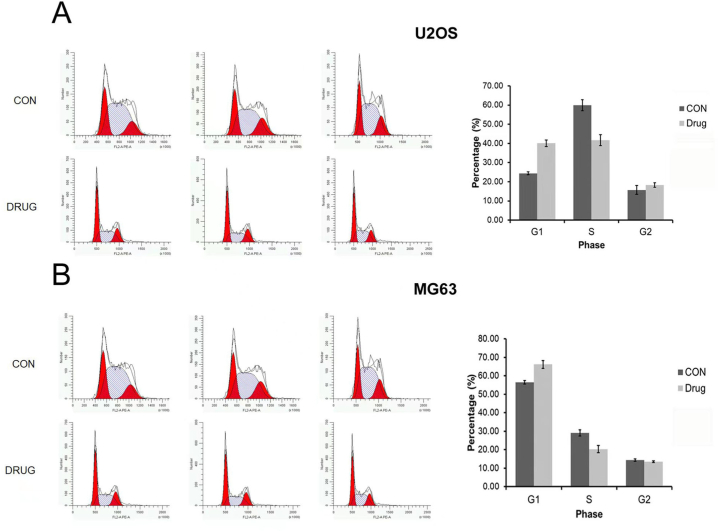
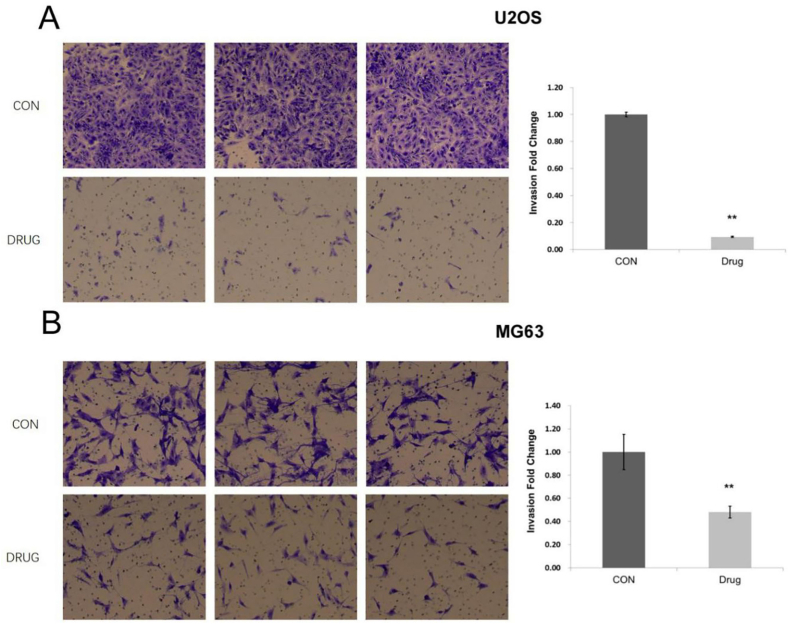
We found that when osteosarcoma cells were treated with Remodelin at the optimal concentration, their NAT10 expression and the cell proliferation was inhibited, the cells in the G1 phase increased ( < 0.05) but those in the S phase decreased, the apoptotic cells in the early and late stages increased, and the cells invasiveness decreased ( < 0.05).
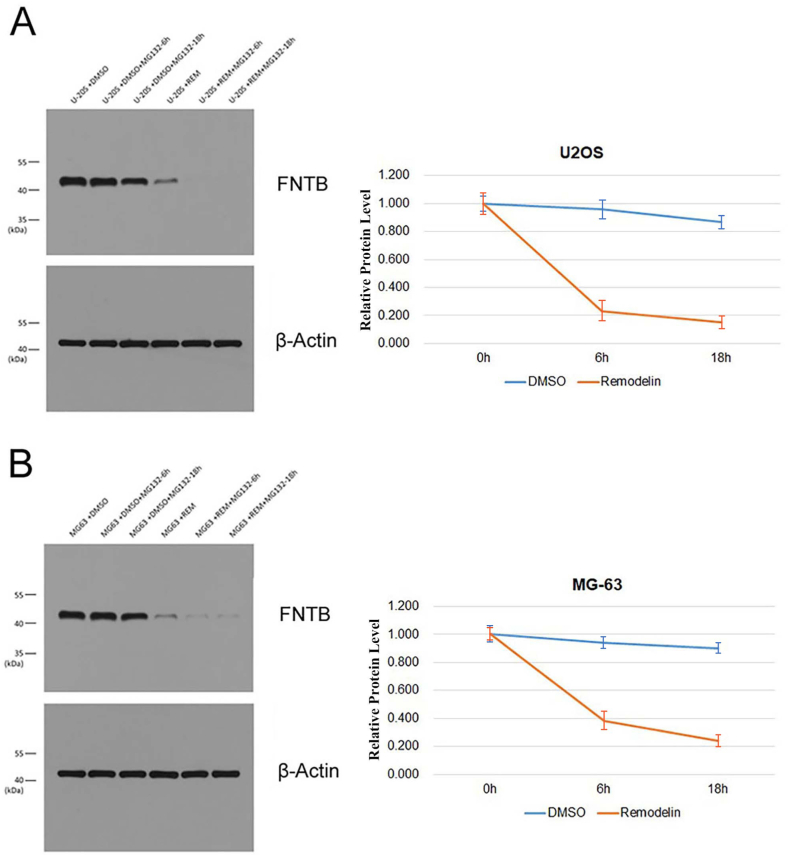
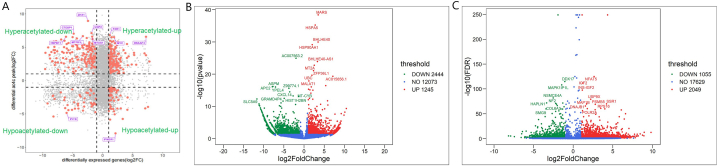
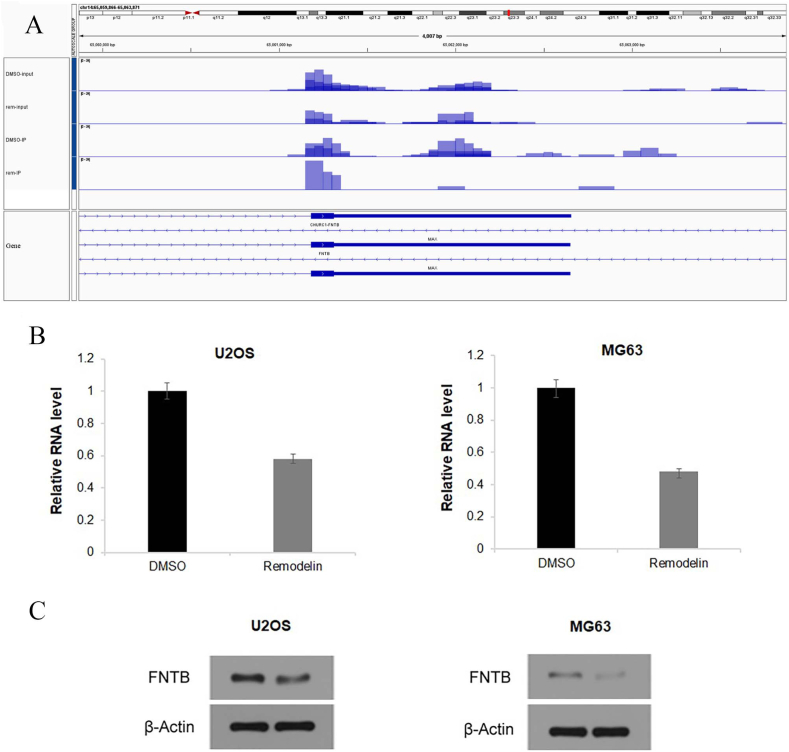
The farnesyltransferase subunit beta gene () was identified by acRIP-seq as one of the target genes of ac4C acetylation and was further verified by RT-PCR and Western blot analyses. Remodelin was demonstrated to reduce the stability and protein translation efficiency of target gene mRNA in osteosarcoma cells. In conclusion, inhibition of ac4C acetylation in osteosarcoma can block proliferation and metastasis as well as promote apoptosis and cell cycle arrest. Ac4C acetylation contributes to the stability and protein translation efficiency of the downstream target gene mRNA.
N4-乙酰胞苷(ac4C)乙酰化可通过提高mRNA稳定性促进靶基因表达。为探讨ac4C乙酰化在骨肉瘤中的作用,用N-乙酰转移酶10(NAT10)抑制剂Remodelin处理U2OS和MG63细胞系。采用逆转录-聚合酶链反应(RT-PCR)和蛋白质免疫印迹法检测基因和蛋白表达效率。
采用细胞计数试剂盒-8(CCK8)法检测骨肉瘤细胞的增殖率。通过流式细胞术分析细胞周期和凋亡情况。采用Transwell侵袭实验检测骨肉瘤细胞的侵袭能力。通过乙酰化RNA免疫沉淀测序(acRIP-seq)筛选靶基因的ac4C乙酰化情况。
我们发现,当骨肉瘤细胞用最佳浓度的Remodelin处理时,其NAT10表达和细胞增殖受到抑制,G1期细胞增多(P<0.05)而S期细胞减少,早期和晚期凋亡细胞增多,细胞侵袭能力下降(P<0.05)。
通过acRIP-seq鉴定法尼基转移酶亚基β基因(FTSB)为ac4C乙酰化的靶基因之一,并通过RT-PCR和蛋白质免疫印迹分析进一步验证。结果表明,Remodelin可降低骨肉瘤细胞中靶基因mRNA的稳定性和蛋白质翻译效率。总之,抑制骨肉瘤中的ac4C乙酰化可阻断增殖和转移,促进凋亡和细胞周期停滞。ac4C乙酰化有助于下游靶基因mRNA的稳定性和蛋白质翻译效率。