College of Life Sciences, Qingdao Agricultural University, Qingdao, China.
Department of Urology, Shenzhen University General Hospital, Shenzhen, China.
Front Endocrinol (Lausanne). 2023 Jul 5;14:1222635. doi: 10.3389/fendo.2023.1222635. eCollection 2023.
In recent years, the quality of male semen has been decreasing, and the number of male infertilities caused by asthenozoospermia is increasing year by year, and the diagnosis and treatment of patients with asthenozoospermia are gradually receiving the attention of the whole society. Due to the unknown etiology and complex pathogenesis, there is no specific treatment for asthenozoospermia. Our previous study found that the administration of chestnut polysaccharide could alter the intestinal microbiota and thus improve the testicular microenvironment, and rescue the impaired spermatogenesis process by enhancing the expression of reproduction-related genes, but its exact metabolome-related repairment mechanism of chestnut polysaccharide is still unclear.
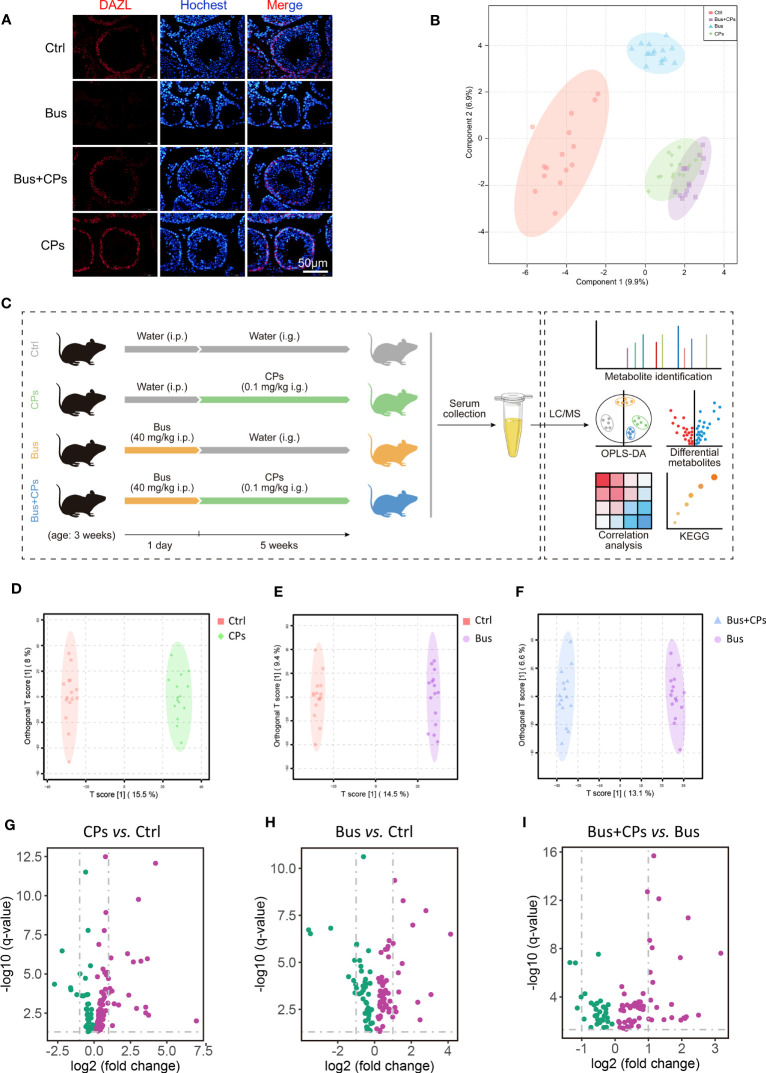
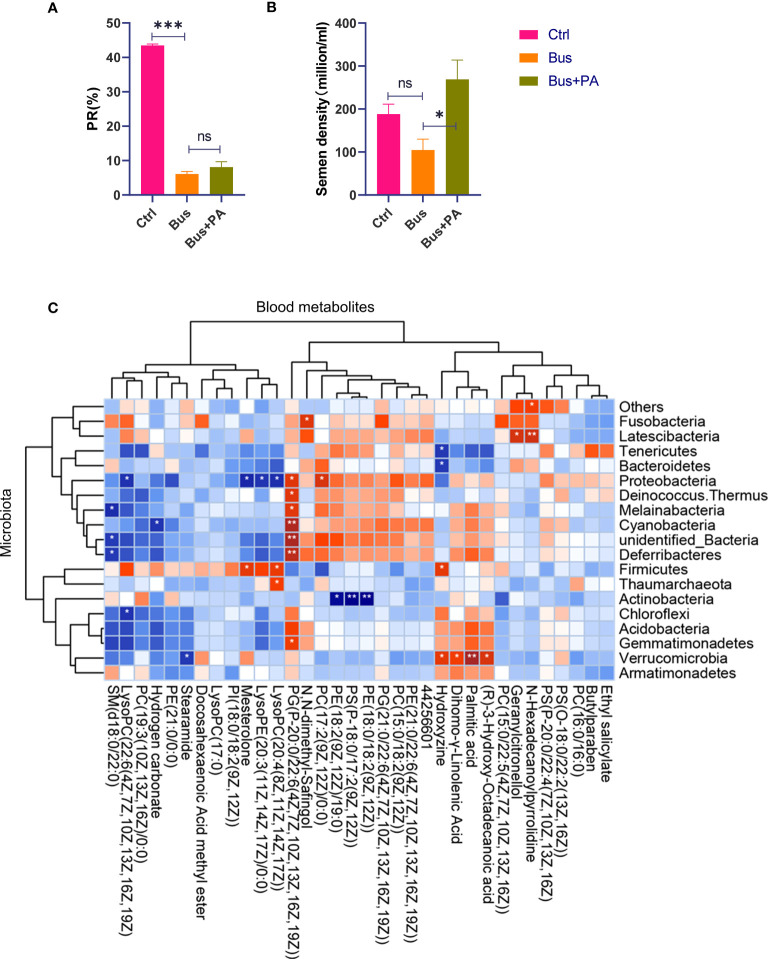
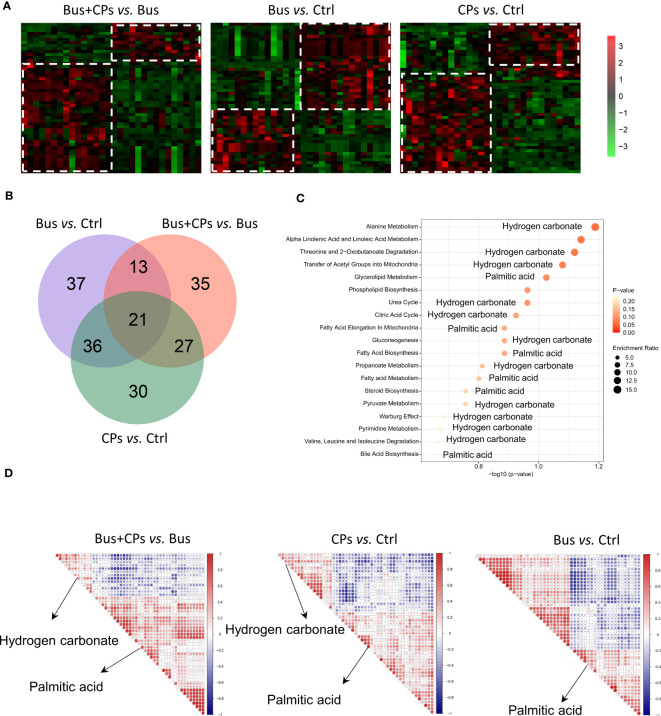
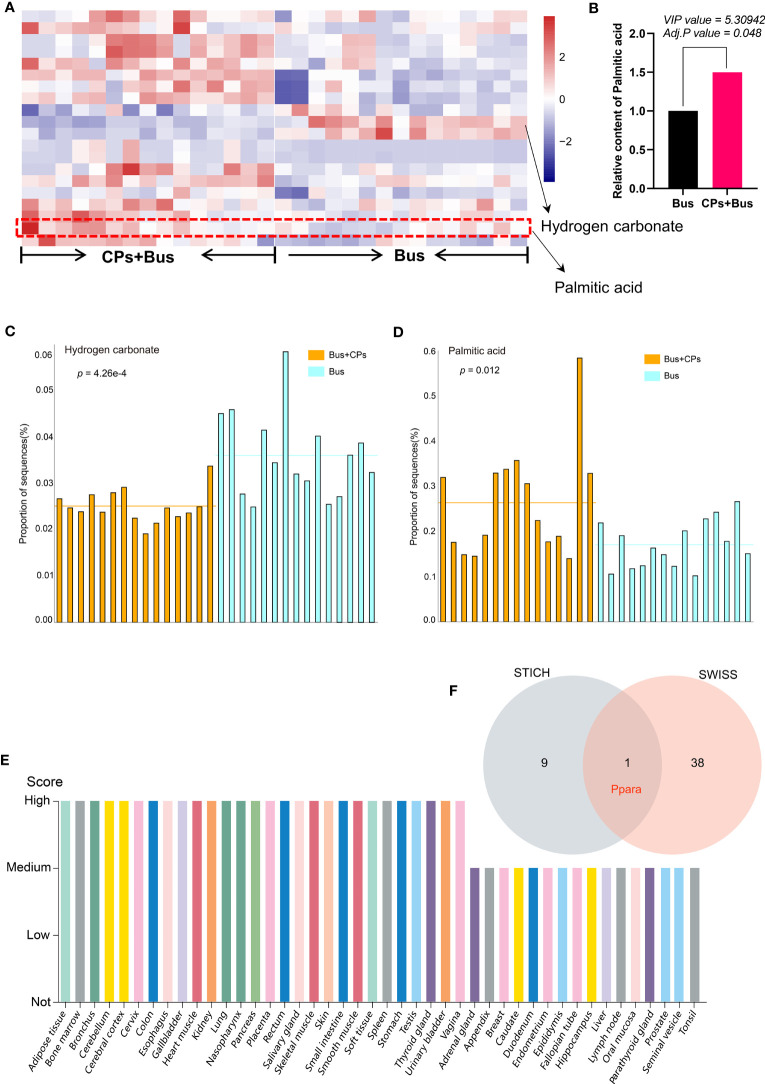
In this study, we studied the blood metabolomic changes of busulfan-induced asthenozoospermia-model mice before and after oral administration of chestnut polysaccharide with the help of metabolome, and screened two key differential metabolites (hydrogen carbonate and palmitic acid) from the set of metabolomic changes; we then analyzed the correlation between several metabolites and between different metabolites and intestinal flora by correlation analysis, and found that palmitic acid in the blood serum of mice after oral administration of chestnut polysaccharide had different degrees of correlation with various metabolites, and palmitic acid level had a significant positive correlation with the abundance of ; finally, we verified the role of palmitic acid in rescuing the damaged spermatogenesis process by using asthenozoospermia-model mice, and screened the key target gene for palmitic acid to play the rescuing effect by integrating the analysis of multiple databases.
In conclusion, this study found that chestnut polysaccharide rescued the damaged spermatogenesis in asthenozoospermia-model mice by upregulating palmitic acid level, which will provide theoretical basis and technical support for the use of chestnut polysaccharide in the treatment of asthenozoospermia.
近年来,男性精液质量下降,弱精症导致的男性不育症数量逐年增加,弱精症患者的诊断和治疗逐渐受到全社会的关注。由于病因不明,发病机制复杂,目前对弱精症尚无特效治疗方法。我们之前的研究发现,板栗多糖可以改变肠道微生物群,从而改善睾丸微环境,并通过增强与生殖相关的基因表达来挽救受损的生精过程,但板栗多糖的确切代谢组学相关修复机制仍不清楚。
在这项研究中,我们借助代谢组学研究了布硫磷诱导的弱精症模型小鼠在口服板栗多糖前后的血液代谢组学变化,并从设定的代谢组学变化中筛选出两个关键差异代谢物(碳酸氢盐和棕榈酸);然后,我们通过相关性分析分析了几种代谢物之间以及不同代谢物与肠道菌群之间的相关性,发现口服板栗多糖后小鼠血清中棕榈酸与各种代谢物均有不同程度的相关性,且棕榈酸水平与的丰度呈显著正相关;最后,我们通过弱精症模型小鼠验证了棕榈酸在挽救受损生精过程中的作用,并通过整合多个数据库的分析筛选出棕榈酸发挥挽救作用的关键靶基因。
综上所述,本研究发现板栗多糖通过上调棕榈酸水平来挽救弱精症模型小鼠受损的生精作用,为板栗多糖治疗弱精症提供了理论依据和技术支持。