Kuhns Lauren, Kroon Emese, Filbey Francesca, Cousijn Janna
Neuroscience of Addiction (NofA) Lab, Department of Psychology, University of Amsterdam, Amsterdam, The Netherlands.
The Amsterdam Brain and Cognition Center (ABC), University of Amsterdam, The Netherlands.
Addict Behav Rep. 2023 Jul 4;18:100507. doi: 10.1016/j.abrep.2023.100507. eCollection 2023 Dec.
As cannabis policies and attitudes become more permissive, it is crucial to examine how the legal and social environment influence neurocognitive mechanisms underlying cannabis use disorder (CUD). The current study aimed to assess whether cannabis approach bias, one of the mechanisms proposed to underlie CUD, differed between environments with distinct recreational cannabis policies (Amsterdam, The Netherlands (NL) and Dallas, Texas, United States of America (TX)) and whether individual differences in cannabis attitudes affect those differences.
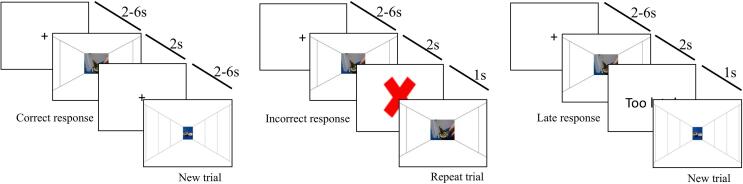
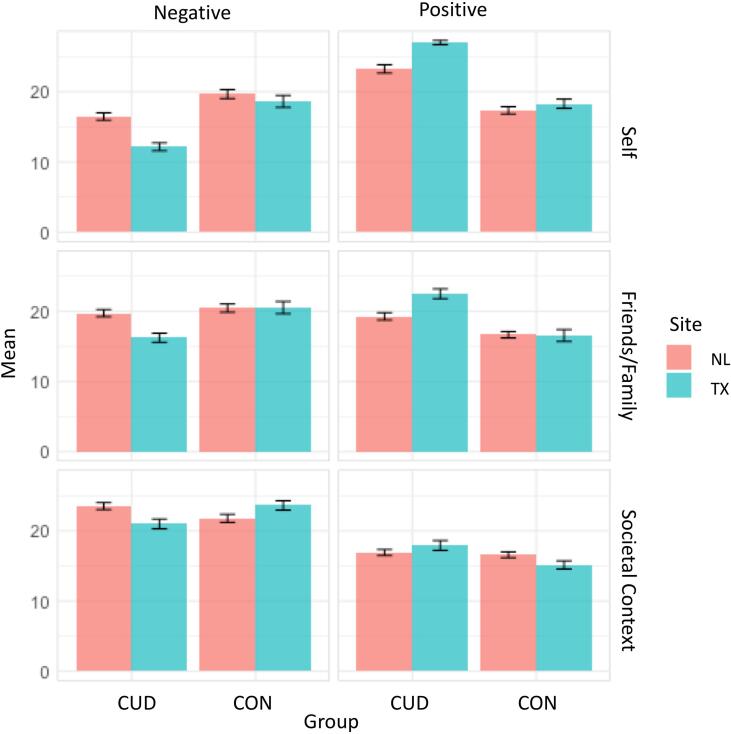
Individuals with CUD (NL-CUD: 64; TX-CUD: 48) and closely matched non-using controls (NL-CON: 50; TX-CON: 36) completed a cannabis approach avoidance task (CAAT) in a 3T MRI. The cannabis culture questionnaire was used to measure cannabis attitudes from three perspectives: personal, family/friends, and state/country attitudes.
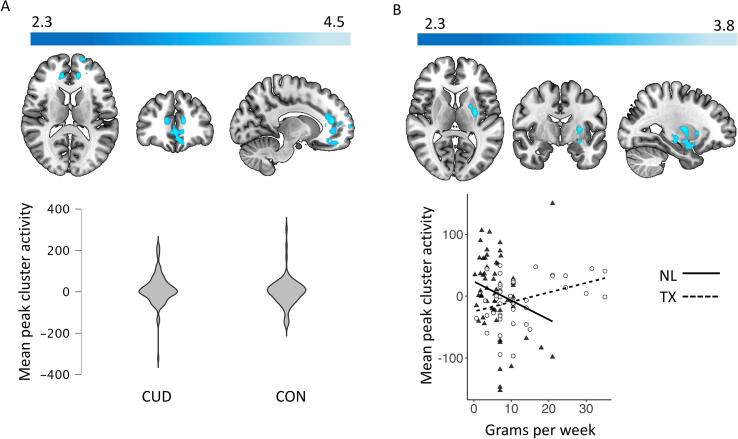
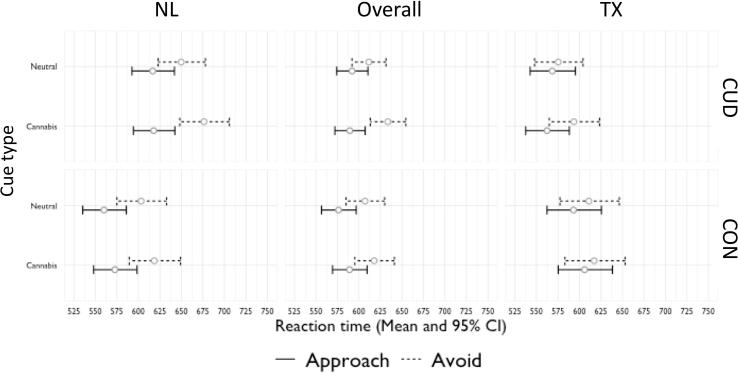
Individuals with CUD demonstrated a significant behavioral cannabis-specific approach bias. Individuals with CUD exhibited higher cannabis approach bias-related activity in clusters including the paracingulate gyrus, anterior cingulate cortex, and frontal medial cortex compared to controls, which was no longer significant after controlling for gender. Site-related differences emerged in the association between cannabis use quantity and cannabis approach bias activity in the putamen, amygdala, hippocampus, and insula, with a positive association in the TX-CUD group and a negative association in the NL-CUD group. This was not explained by site differences in cannabis attitudes.
Pinpointing the underlying mechanisms of site-related differences-including, but not limited to, differences in method of administration, cannabis potency, or patterns of substance co-use-is a key challenge for future research.
随着大麻政策和态度变得更加宽松,研究法律和社会环境如何影响大麻使用障碍(CUD)背后的神经认知机制至关重要。本研究旨在评估大麻趋近偏向(一种被认为是CUD潜在机制之一)在具有不同娱乐性大麻政策的环境(荷兰阿姆斯特丹和美国得克萨斯州达拉斯)之间是否存在差异,以及大麻态度的个体差异是否会影响这些差异。
患有CUD的个体(荷兰CUD组:64人;得克萨斯州CUD组:48人)和紧密匹配的非使用对照组(荷兰对照组:50人;得克萨斯州对照组:36人)在3T磁共振成像(MRI)中完成一项大麻趋近-回避任务(CAAT)。使用大麻文化问卷从三个角度测量大麻态度:个人、家人/朋友以及州/国家态度。
患有CUD的个体表现出显著的针对大麻的行为趋近偏向。与对照组相比,患有CUD的个体在包括扣带旁回、前扣带回皮质和额内侧皮质的脑区中表现出更高的与大麻趋近偏向相关的活动,在控制性别后这种差异不再显著。在壳核、杏仁核、海马体和脑岛中,大麻使用量与大麻趋近偏向活动之间的关联出现了与地点相关的差异,得克萨斯州CUD组呈正相关,荷兰CUD组呈负相关。这不能用不同地点的大麻态度差异来解释。
确定与地点相关差异的潜在机制——包括但不限于给药方法、大麻效力或物质共同使用模式的差异——是未来研究的一项关键挑战。