Amgen Inc, Thousand Oaks, California, USA
Amgen Inc, Thousand Oaks, California, USA.
Lupus Sci Med. 2023 Jul;10(2). doi: 10.1136/lupus-2022-000890.
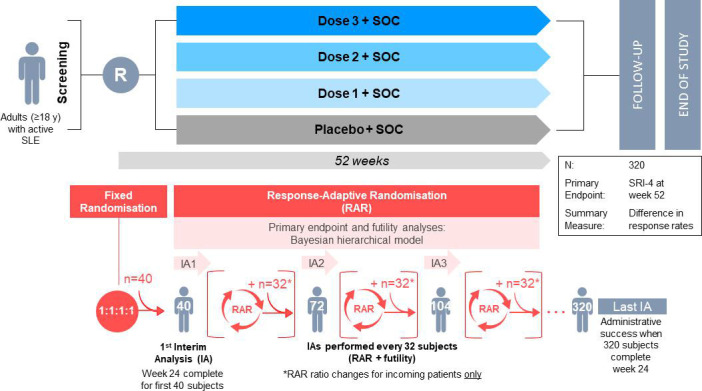
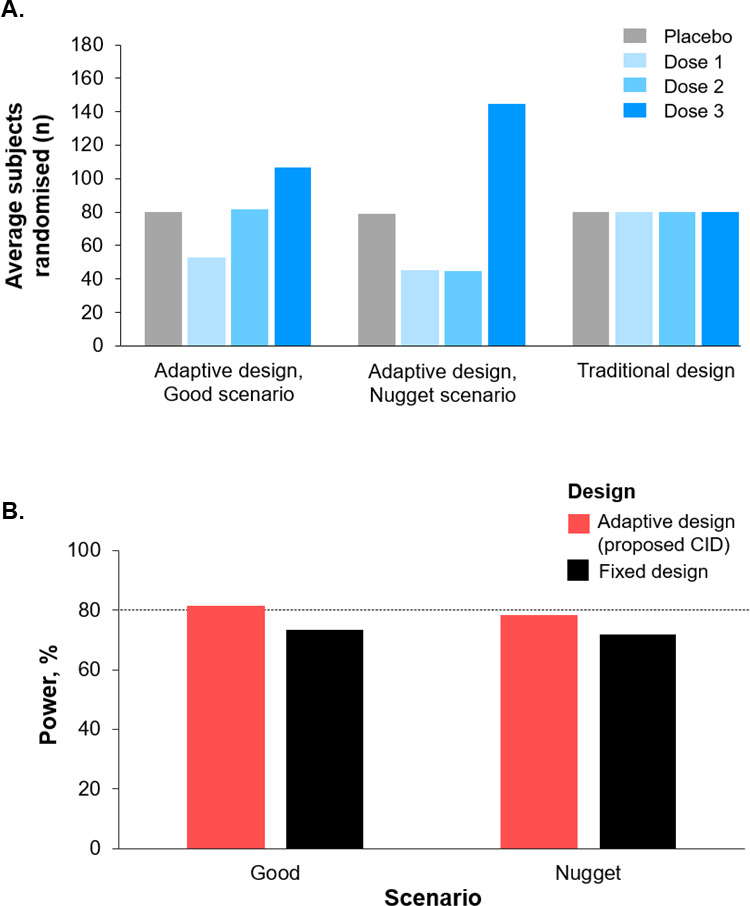
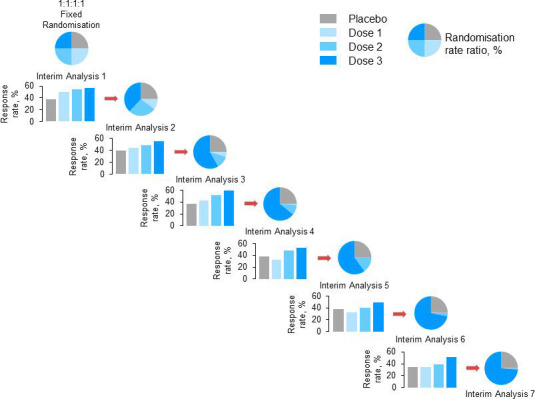
SLE is a complex autoimmune disease with considerable unmet need. Numerous clinical trials designed to investigate novel therapies are actively enrolling patients straining limited resources and creating inefficiencies that increase enrolment challenges. This has motivated investigators developing novel drugs and treatment strategies to consider innovative trial designs that aim to improve the efficiency of generating evidence; these strategies propose conducting fewer trials, involving smaller numbers of patients, while maintaining scientific rigour in safety and efficacy data collection and analysis. In this review we present the design of two innovative phase IIb studies investigating efavaleukin alfa and rozibafusp alfa for the treatment of SLE which use an adaptive study design. This design was selected as a case study, investigating efavaleukin alfa, in the Food and Drug Administration's Complex Innovative Trial Design Pilot Program. The adaptive design approach includes prospectively planned modifications at predefined interim timepoints. Interim assessments of futility allow for a trial to end early when the investigational therapy is unlikely to provide meaningful treatment benefits to patients, which can release eligible patients to participate in other-potentially more promising-trials, or seek alternative treatments. Response-adaptive randomisation allows randomisation ratios to change based on accumulating data, in favour of the more efficacious dose arm(s), while the study is ongoing. Throughout the trial the placebo arm allocation ratio is maintained constant. These design elements can improve the statistical power in the estimation of treatment effect and increase the amount of safety and efficacy data collected for the optimal dose(s). Furthermore, these trials can provide the required evidence to potentially serve as one of two confirmatory trials needed for regulatory approval. This can reduce the need for multiple phase III trials, the total patient requirements, person-exposure risk, and ultimately the time and cost of investigational drug development programmes.
SLE 是一种复杂的自身免疫性疾病,存在着巨大的未满足的需求。许多旨在研究新型疗法的临床试验正在积极招募患者,这使得有限的资源紧张,并造成效率低下,增加了招募的挑战。这促使研究人员开发新型药物和治疗策略,考虑采用旨在提高证据生成效率的创新试验设计;这些策略建议减少试验数量,减少患者人数,同时在安全性和疗效数据收集和分析方面保持科学严谨性。在这篇综述中,我们介绍了两项创新性的 IIb 期研究的设计,这些研究旨在探讨 efavaleukin alfa 和 rozibafusp alfa 治疗 SLE 的效果,它们都采用了适应性研究设计。这种设计被选为案例研究,在食品和药物管理局的复杂创新试验设计试点计划中调查 efavaleukin alfa。适应性设计方法包括在预设的中期时间点前瞻性地计划修改。无效性的中期评估允许当试验药物不太可能为患者提供有意义的治疗益处时,提前结束试验,从而使合格的患者可以参加其他可能更有前途的试验,或寻求替代治疗。基于累积数据的反应适应性随机化允许随机化比例根据数据的积累而改变,有利于更有效的剂量臂,而研究仍在进行中。在整个试验过程中,安慰剂臂的分配比例保持不变。这些设计元素可以提高治疗效果估计的统计功效,并增加为最佳剂量收集的安全性和疗效数据量。此外,这些试验可以提供所需的证据,有可能作为监管批准所需的两个确证性试验之一。这可以减少对多个 III 期试验的需求,降低总患者需求、个体暴露风险,并最终降低研究药物开发项目的时间和成本。