Unit of Otolaryngology, Department of Clinical and Experimental Medicine, University of Foggia, Via Luigi Pinto 1, 71122, Foggia, Italy.
Unit of Pathology, Department of Clinical and Experimental Medicine, University of Foggia, Foggia, Italy.
Sci Rep. 2023 Jul 26;13(1):12101. doi: 10.1038/s41598-023-39149-8.
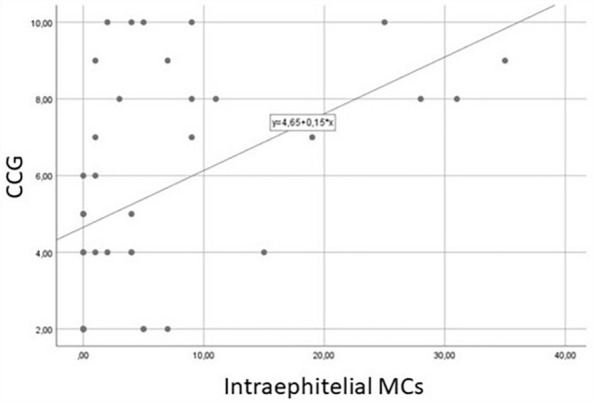
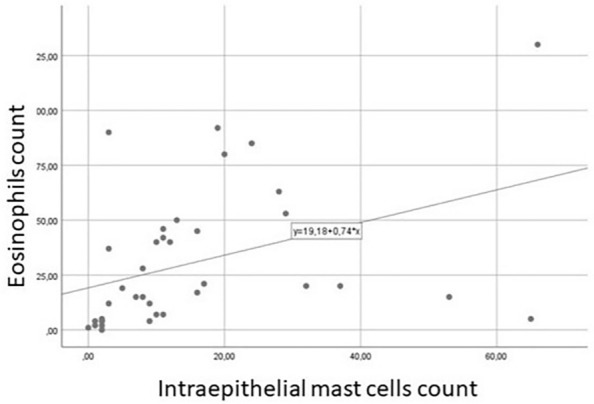
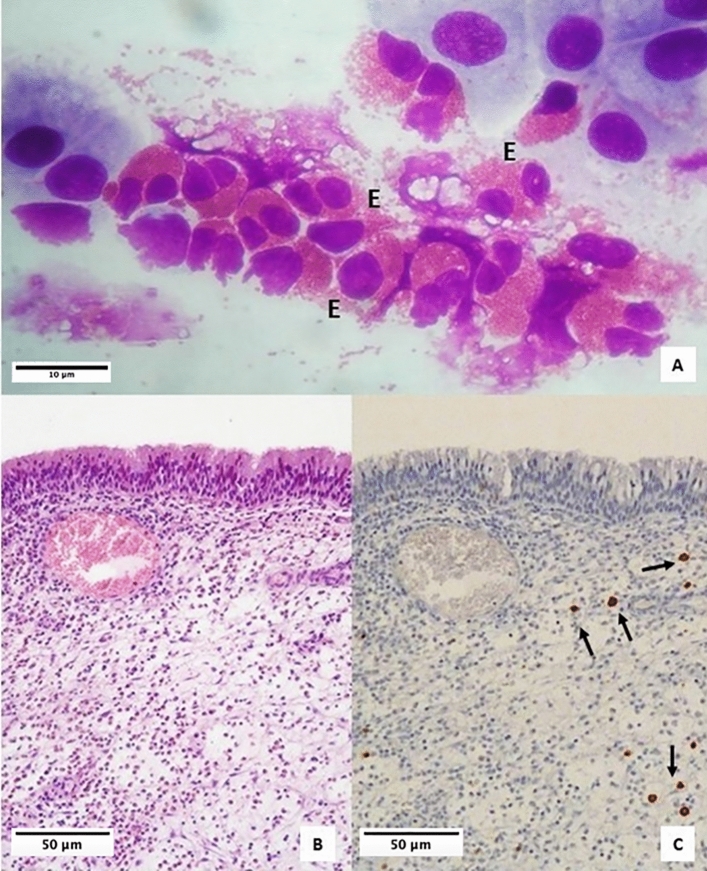
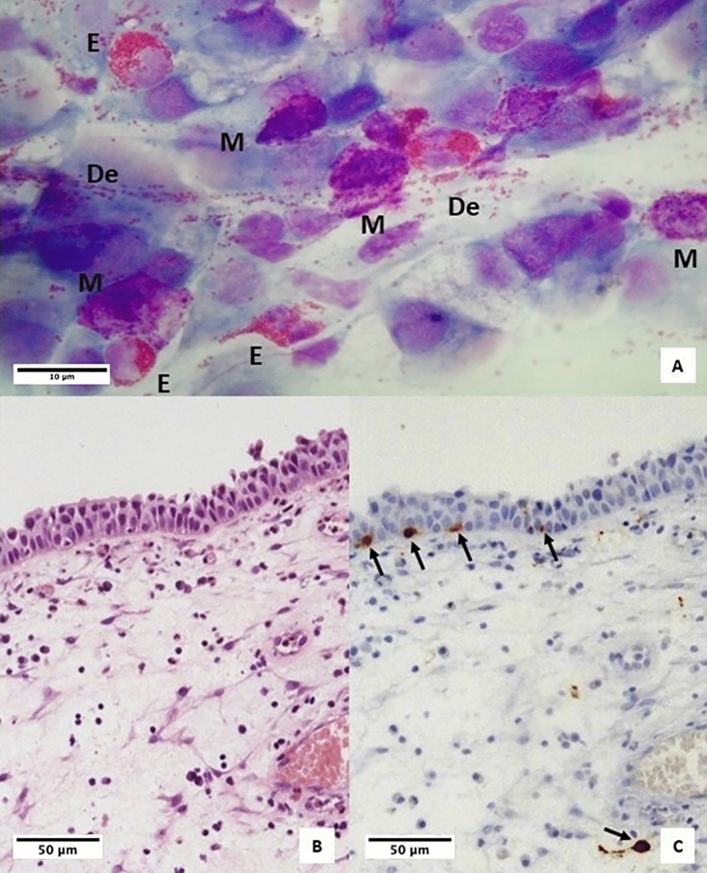
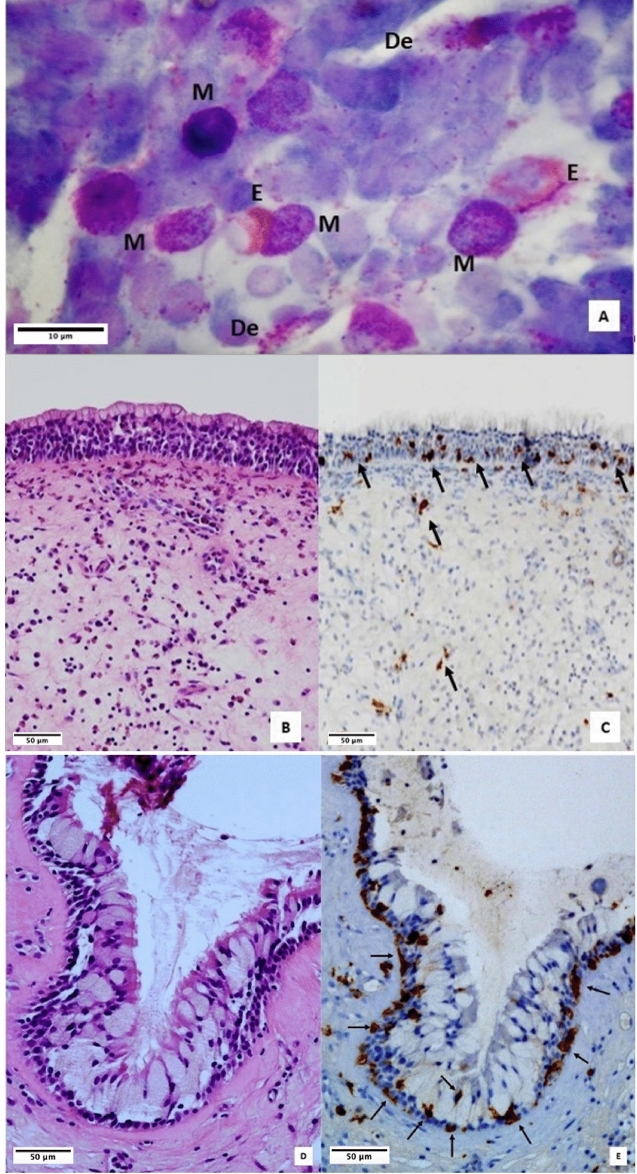
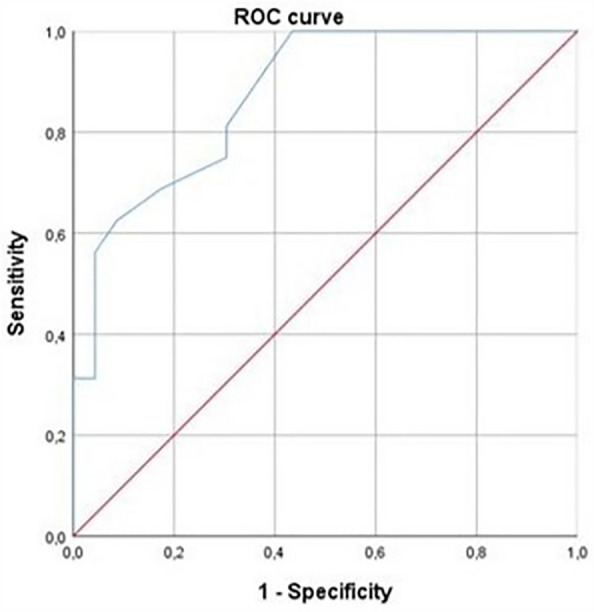
Chronic rhinosinusitis with nasal polyps (CRSwNP) is defined as a Type 2 eosinophilic disease, while CRSsNP is considered a Type 1 neutrophilic disease. Since neutrophils are also activated in eosinophilic CRSwNP, the eosinophil-neutrophil dualism has been revaluated. Among the inflammatory cells infiltrating sinus-nasal tissues, the role of mast cells (MCs) is not already recognized, although Clinical-Cytological Grading, which defines the severity of CRSwNP, attributes to mixed eosinophil-MC forms of CRSwNP a greater risk of recurrence. We aimed to examine nasal polyps from both a cytological and histopathological point of view, to evaluate the presence and localization of MCs. Cytological and histological examination of 39 samples of nasal polyps were performed. Immunohistochemistry was used to evaluate the presence of Tryptase + CD117 + MCs, which were counted both in the epithelial layer and in the lamina propria. A statistically significant correlation was found between intraepithelial MCs and CRSwNP severity (p < 0.001) and between the total eosinophil count and the total mast cell count (p < 0.001). Cytological examination and immunohistochemistry were comparable in detecting the presence of intraepithelial MCs (p = 0.002). The histological cut-off of 6 intraepithelial MCs was identified to detect severe CRSwNP (p < 0.001). MCs have been shown to be located in the lamina propria of almost all eosinophilic nasal polyps without significantly affecting their severity. Intraepithelial MCs are associated with greater severity of CRSwNP. Histopathological criteria of the eosinophil-MC form of CRSwNP in addition to the eosinophilic one, should be defined to guarantee patients effective and tailored treatments.
伴有鼻息肉的慢性鼻-鼻窦炎(CRSwNP)被定义为 2 型嗜酸性粒细胞疾病,而 CRSsNP 被认为是 1 型中性粒细胞疾病。由于嗜酸性粒细胞性 CRSwNP 中也存在中性粒细胞的激活,因此重新评估了嗜酸性粒细胞-中性粒细胞二元论。在浸润鼻窦-鼻腔组织的炎症细胞中,肥大细胞(MCs)的作用尚未得到认可,尽管定义 CRSwNP 严重程度的临床细胞学分级将混合嗜酸性粒细胞-MC 形式的 CRSwNP 归因于更高的复发风险。我们旨在从细胞学和组织病理学的角度检查鼻息肉,以评估 MCs 的存在和定位。对 39 个鼻息肉样本进行了细胞学和组织学检查。使用免疫组织化学评估 Tryptase+CD117+MCs 的存在,在上皮层和固有层中均对其进行了计数。上皮内 MCs 与 CRSwNP 严重程度之间(p<0.001)和总嗜酸性粒细胞计数与总肥大细胞计数之间(p<0.001)存在统计学显著相关性。细胞学检查和免疫组织化学在检测上皮内 MCs 的存在方面具有可比性(p=0.002)。确定上皮内 6 个 MCs 的组织学截点以检测严重的 CRSwNP(p<0.001)。已经表明,MCs 位于几乎所有嗜酸性鼻息肉的固有层中,但对其严重程度没有显著影响。上皮内 MCs 与 CRSwNP 的严重程度相关。除了嗜酸性粒细胞外,还应定义 CRSwNP 的嗜酸性粒细胞-MC 形式的组织学标准,以保证为患者提供有效和个体化的治疗。