Kubiak Adam
Faculty of Chemistry, Adam Mickiewicz University, Uniwersytetu Poznanskiego 8, 61614, Poznan, Poland.
Sci Rep. 2023 Jul 26;13(1):12075. doi: 10.1038/s41598-023-39342-9.
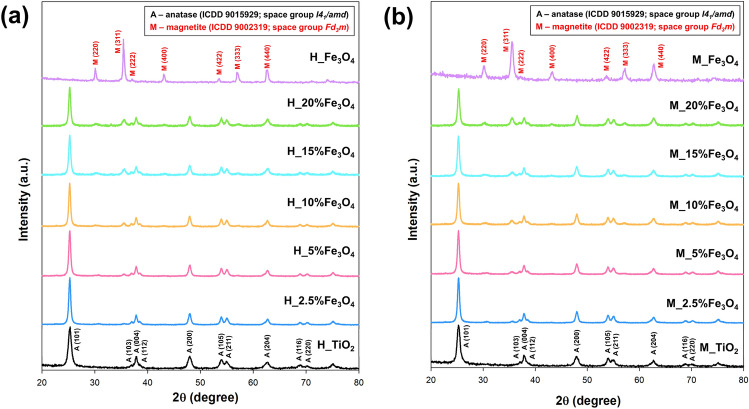
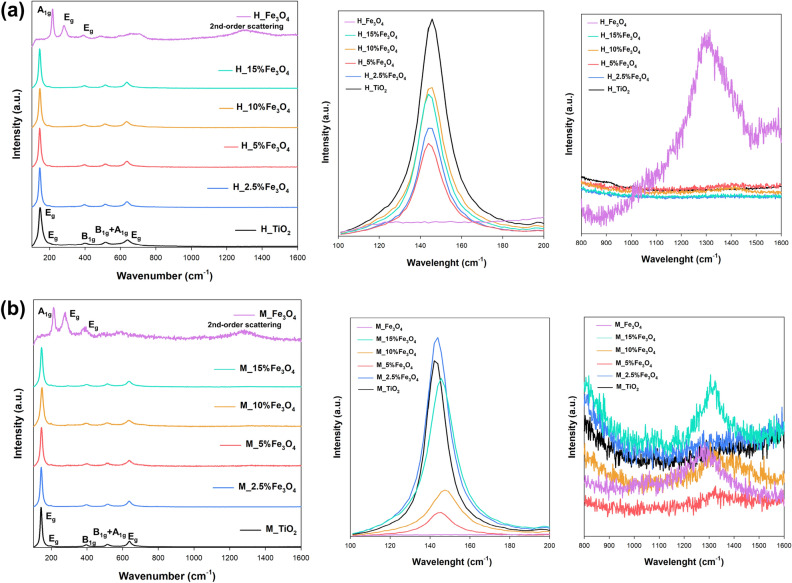
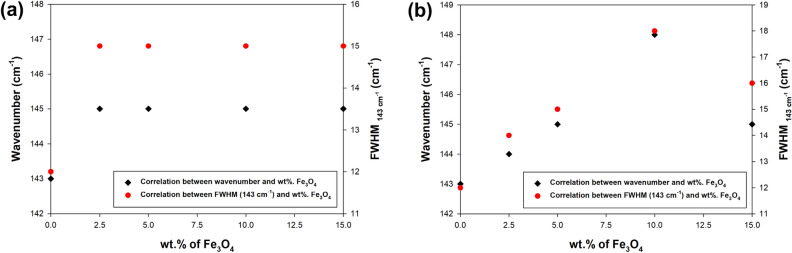
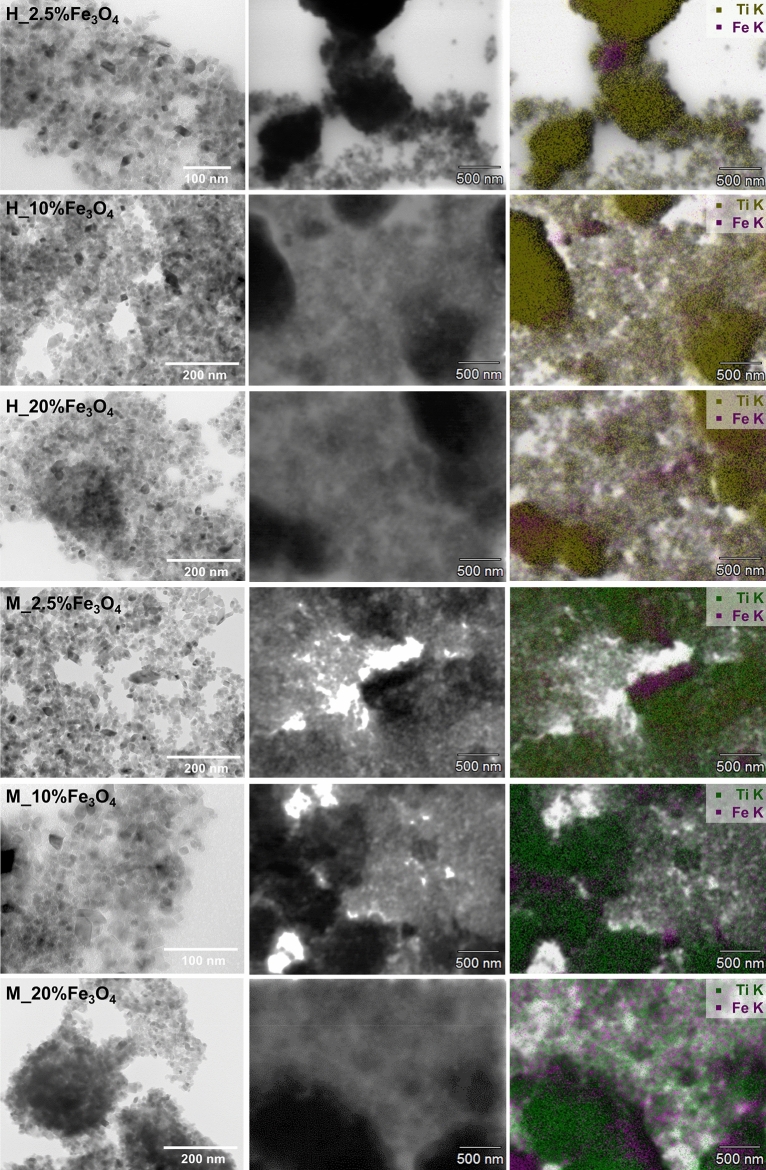
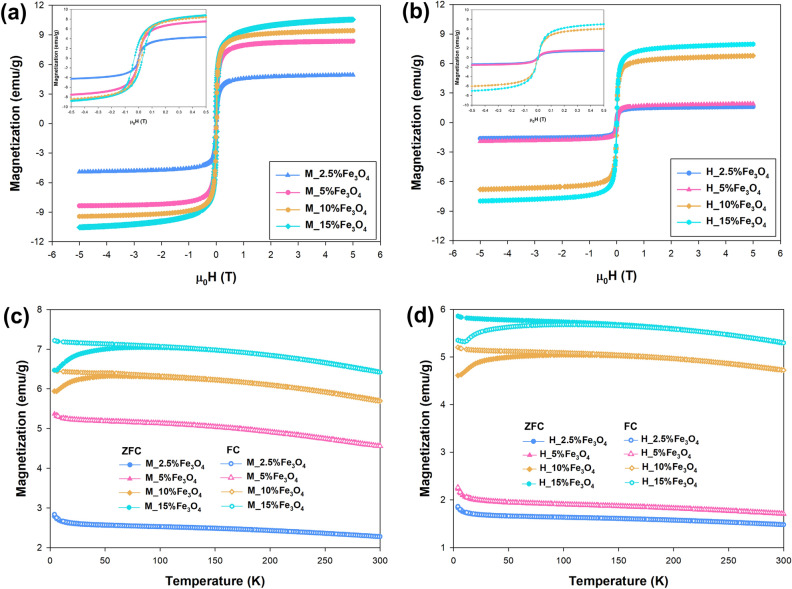
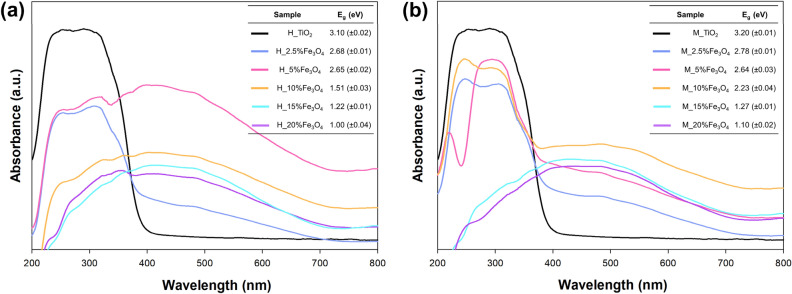
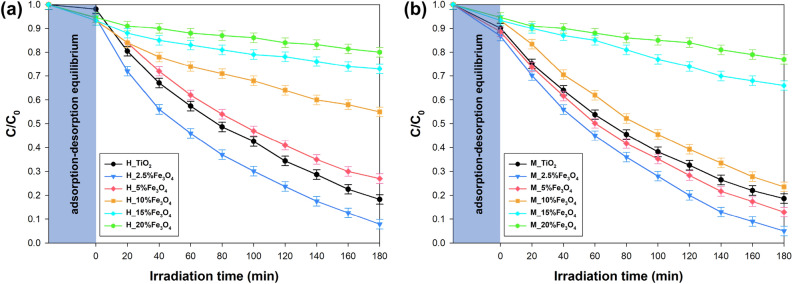
This study focused on a direct comparison of conventional hydrothermal and microwave treatment during the synthesis of TiO-FeO photocatalyst, which is an effective catalyst for decomposing metronidazole. The photocatalyst underwent various characterization analyses, including X-ray diffraction, Raman spectroscopy, transmission electron microscopy, energy dispersive X-ray, and diffuse reflectance spectroscopy. The Raman spectroscopy analysis revealed that the materials obtained through the conventional hydrothermal treatment consisted of separate phases of anatase and magnetite. On the other hand, the materials synthesized using the microwave process showed a noticeable shift in the E band (143 cm) and its half-width towards higher wavenumbers. This shift is likely due to the introduction of Fe ions into the TiO lattice. Additionally, both conventional hydrothermal and microwave synthesis routes produced TiO-FeO systems with superparamagnetic properties, as demonstrated by SQUID magnetic measurements. The TEM analysis revealed that the materials synthesized using the microwave process exhibited higher homogeneity, with no noticeable large aggregates observed. Finally, this work proposed a convenient LED photoreactor that effectively utilized the photo-oxidative properties of TiO-FeO photocatalysts to remove metronidazole. Combining photoactive TiO-FeO catalysts with an energy-efficient LED reactor resulted in a low electrical energy per order (E).
本研究聚焦于在TiO-FeO光催化剂合成过程中对传统水热法和微波处理进行直接比较,TiO-FeO是一种分解甲硝唑的有效催化剂。对该光催化剂进行了各种表征分析,包括X射线衍射、拉曼光谱、透射电子显微镜、能量色散X射线和漫反射光谱。拉曼光谱分析表明,通过传统水热法获得的材料由锐钛矿和磁铁矿的分离相组成。另一方面,使用微波法合成的材料在E带(143 cm)及其半高宽向更高波数处有明显位移。这种位移可能是由于Fe离子引入TiO晶格所致。此外,如超导量子干涉仪磁测量所示,传统水热法和微波合成路线均产生了具有超顺磁性质的TiO-FeO体系。透射电子显微镜分析表明,使用微波法合成的材料表现出更高的均匀性,未观察到明显的大聚集体。最后,这项工作提出了一种便捷的LED光反应器,该反应器有效利用了TiO-FeO光催化剂的光氧化性能来去除甲硝唑。将光活性TiO-FeO催化剂与节能LED反应器相结合,得到了较低的每阶电能(E)。