Key Laboratory of Neuroregeneration of Jiangsu and Ministry of Education, Co-Innovation Center of Neuroregeneration, NMPA Key Laboratory for Research and Evaluation of Tissue Engineering Technology Products, Department of Neurology, Affiliated Hospital of Nantong University, Nantong University, Nantong, 226001, Jiangsu, People's Republic of China.
Department of Clinical Medicine, Medical College, Nantong University, Nantong, Jiangsu, 226001, People's Republic of China.
J Transl Med. 2023 Jul 26;21(1):503. doi: 10.1186/s12967-023-04369-z.
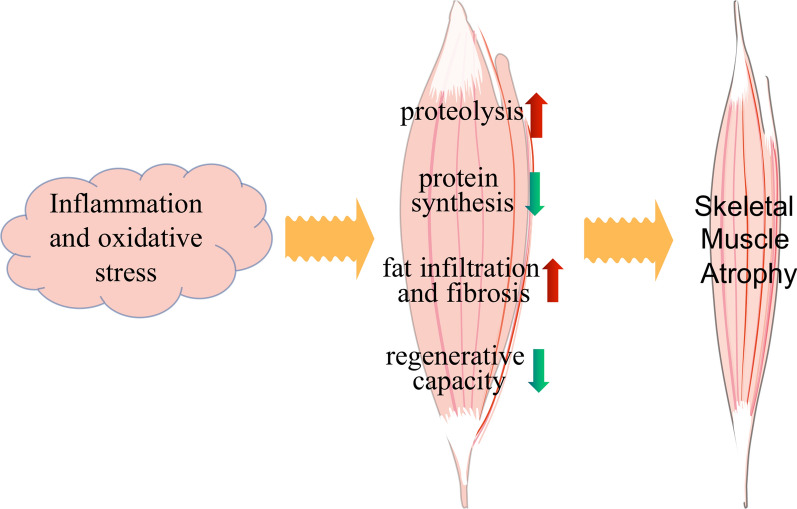
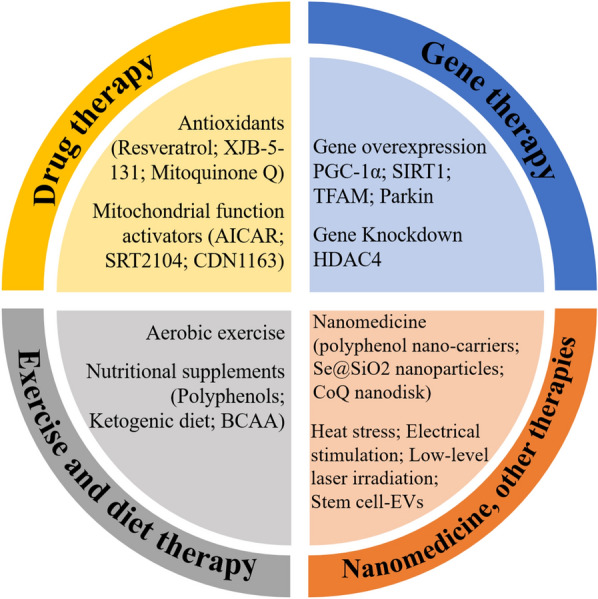
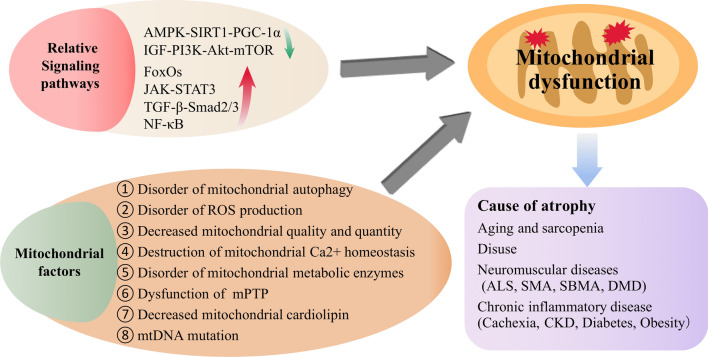
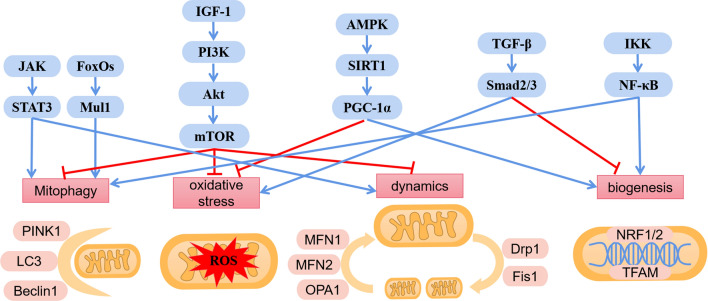
Mitochondria play important roles in maintaining cellular homeostasis and skeletal muscle health, and damage to mitochondria can lead to a series of pathophysiological changes. Mitochondrial dysfunction can lead to skeletal muscle atrophy, and its molecular mechanism leading to skeletal muscle atrophy is complex. Understanding the pathogenesis of mitochondrial dysfunction is useful for the prevention and treatment of skeletal muscle atrophy, and finding drugs and methods to target and modulate mitochondrial function are urgent tasks in the prevention and treatment of skeletal muscle atrophy. In this review, we first discussed the roles of normal mitochondria in skeletal muscle. Importantly, we described the effect of mitochondrial dysfunction on skeletal muscle atrophy and the molecular mechanisms involved. Furthermore, the regulatory roles of different signaling pathways (AMPK-SIRT1-PGC-1α, IGF-1-PI3K-Akt-mTOR, FoxOs, JAK-STAT3, TGF-β-Smad2/3 and NF-κB pathways, etc.) and the roles of mitochondrial factors were investigated in mitochondrial dysfunction. Next, we analyzed the manifestations of mitochondrial dysfunction in muscle atrophy caused by different diseases. Finally, we summarized the preventive and therapeutic effects of targeted regulation of mitochondrial function on skeletal muscle atrophy, including drug therapy, exercise and diet, gene therapy, stem cell therapy and physical therapy. This review is of great significance for the holistic understanding of the important role of mitochondria in skeletal muscle, which is helpful for researchers to further understanding the molecular regulatory mechanism of skeletal muscle atrophy, and has an important inspiring role for the development of therapeutic strategies for muscle atrophy targeting mitochondria in the future.
线粒体在维持细胞内稳态和骨骼肌健康方面发挥着重要作用,线粒体损伤可导致一系列病理生理变化。线粒体功能障碍可导致骨骼肌萎缩,其导致骨骼肌萎缩的分子机制较为复杂。了解线粒体功能障碍的发病机制有助于预防和治疗骨骼肌萎缩,寻找针对和调节线粒体功能的药物和方法是预防和治疗骨骼肌萎缩的紧迫任务。在这篇综述中,我们首先讨论了正常线粒体在骨骼肌中的作用。重要的是,我们描述了线粒体功能障碍对骨骼肌萎缩的影响及其涉及的分子机制。此外,我们还研究了不同信号通路(AMPK-SIRT1-PGC-1α、IGF-1-PI3K-Akt-mTOR、FoxOs、JAK-STAT3、TGF-β-Smad2/3 和 NF-κB 通路等)和线粒体因子在调节线粒体功能障碍中的作用。接下来,我们分析了不同疾病引起的肌肉萎缩中线粒体功能障碍的表现。最后,我们总结了靶向调节线粒体功能对骨骼肌萎缩的预防和治疗作用,包括药物治疗、运动和饮食、基因治疗、干细胞治疗和物理治疗。这篇综述对于全面了解线粒体在骨骼肌中的重要作用具有重要意义,有助于研究人员进一步了解骨骼肌萎缩的分子调控机制,并为未来针对线粒体的肌肉萎缩治疗策略的发展具有重要的启发作用。