Neurobiology Division, Medical Research Council Laboratory of Molecular Biology, Cambridge, UK.
School of Biological Sciences, University of East Anglia, Norwich, UK.
Nat Aging. 2023 Aug;3(8):938-947. doi: 10.1038/s43587-023-00467-1. Epub 2023 Jul 27.
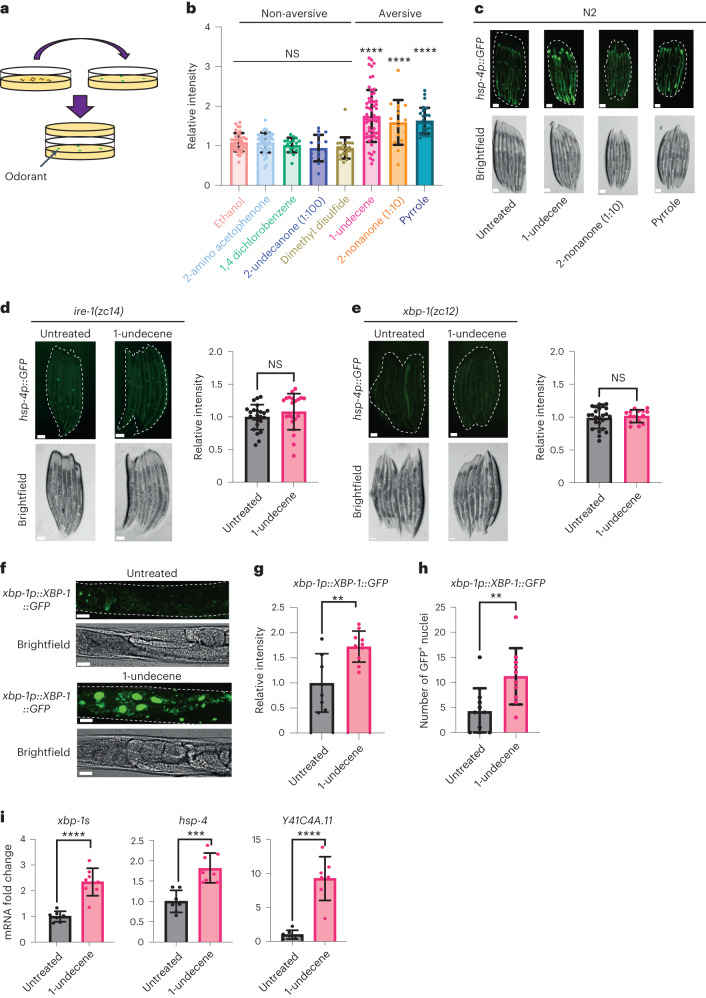
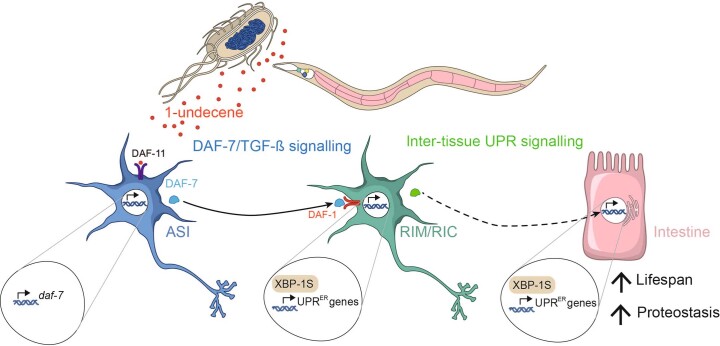
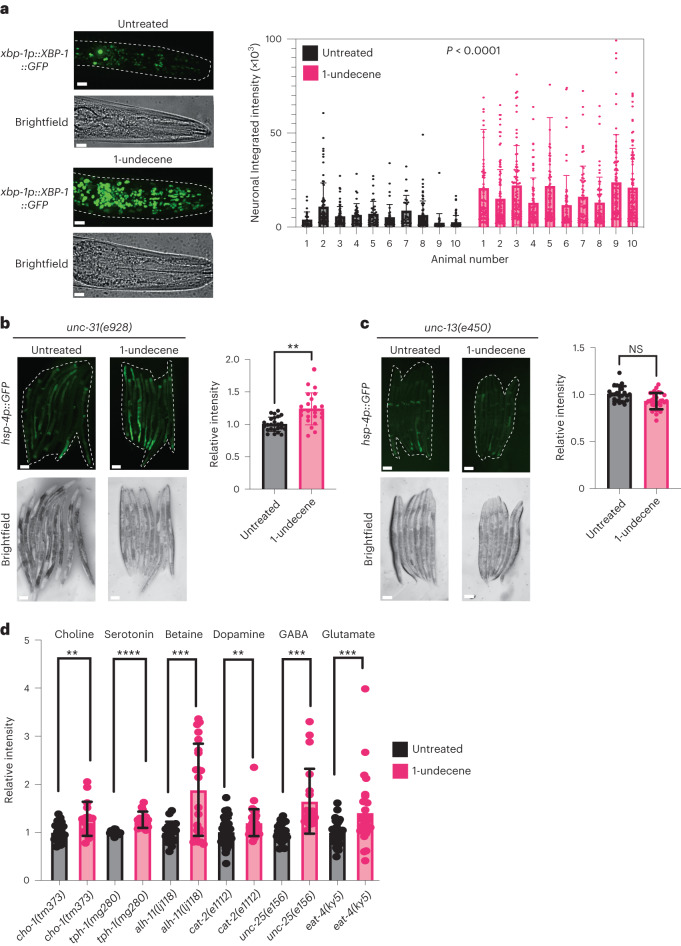
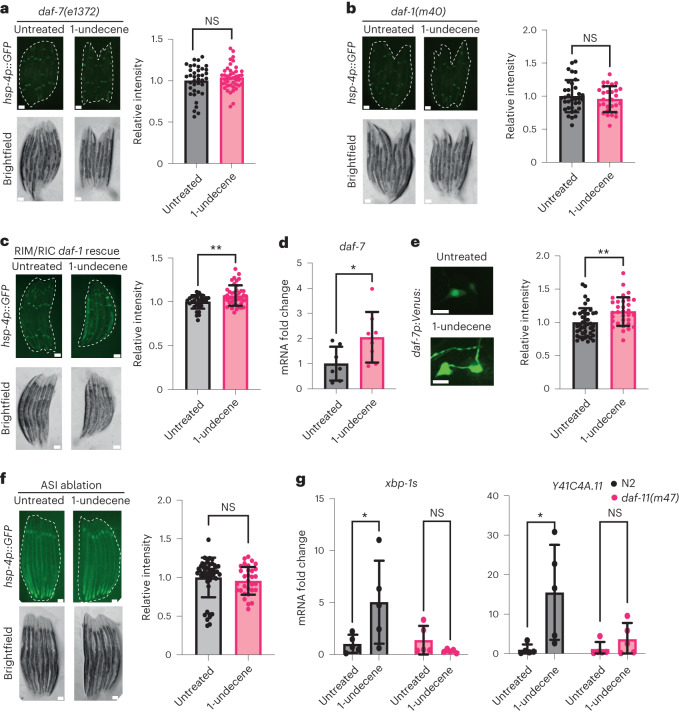
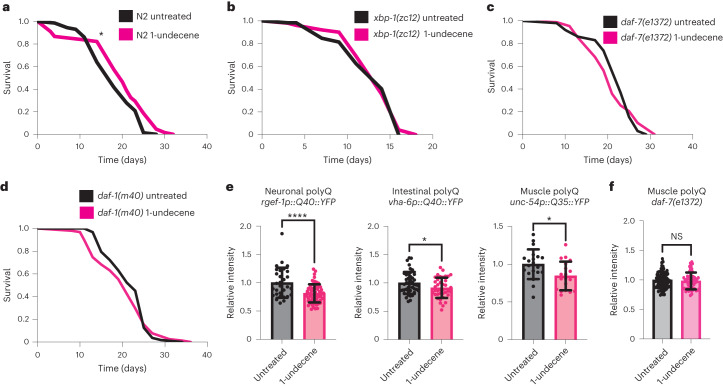
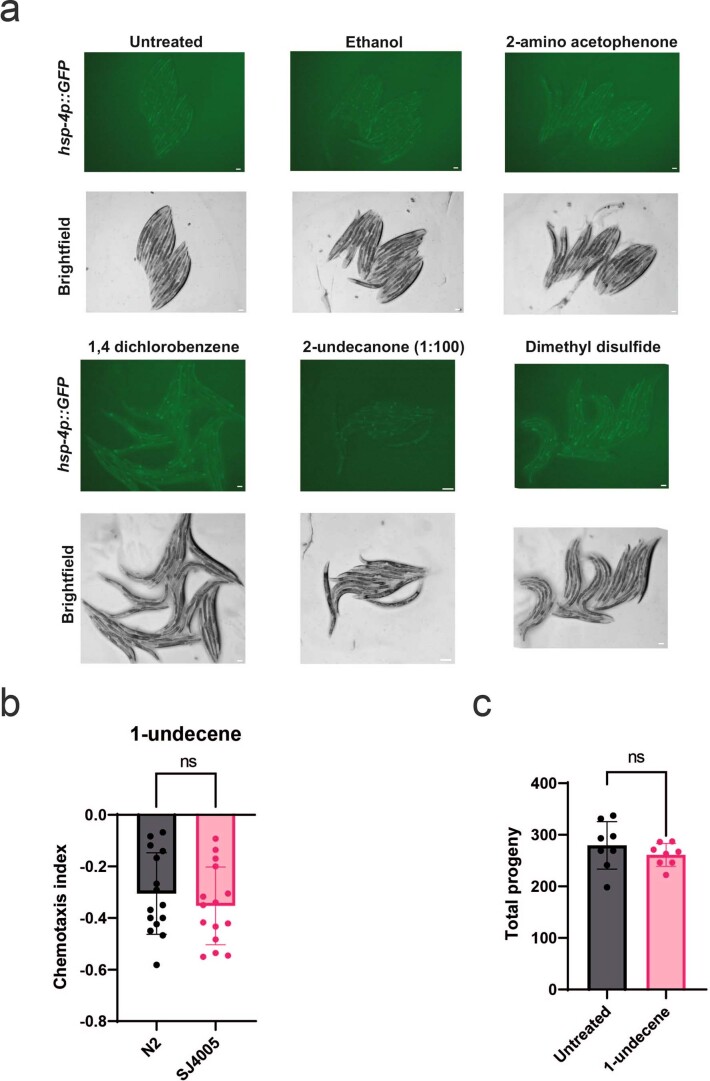
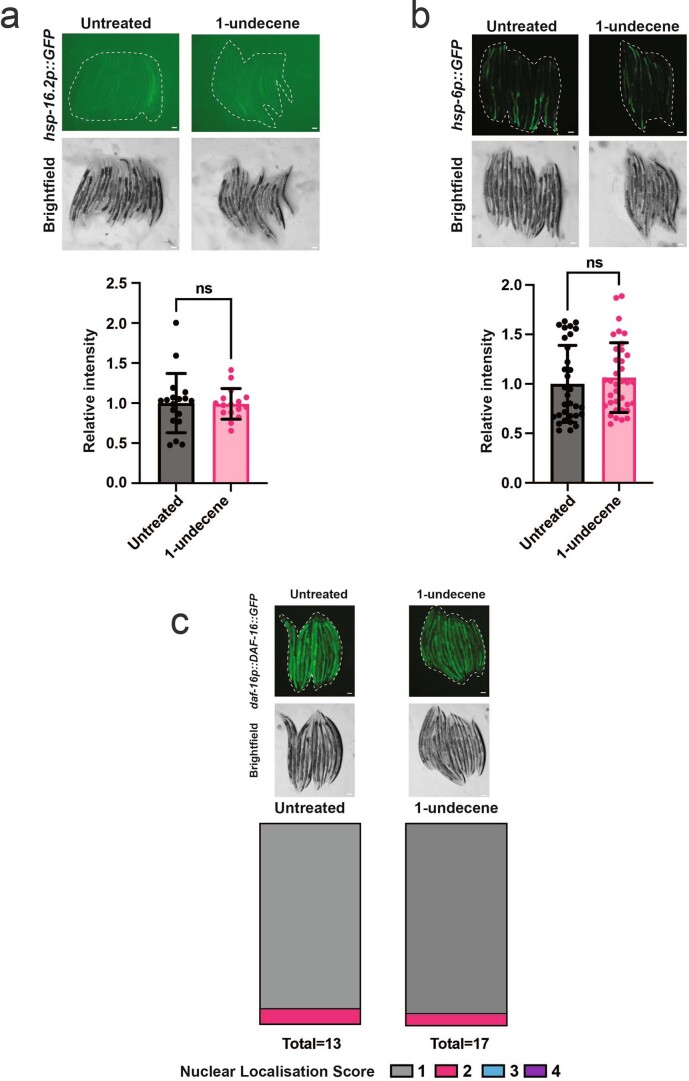
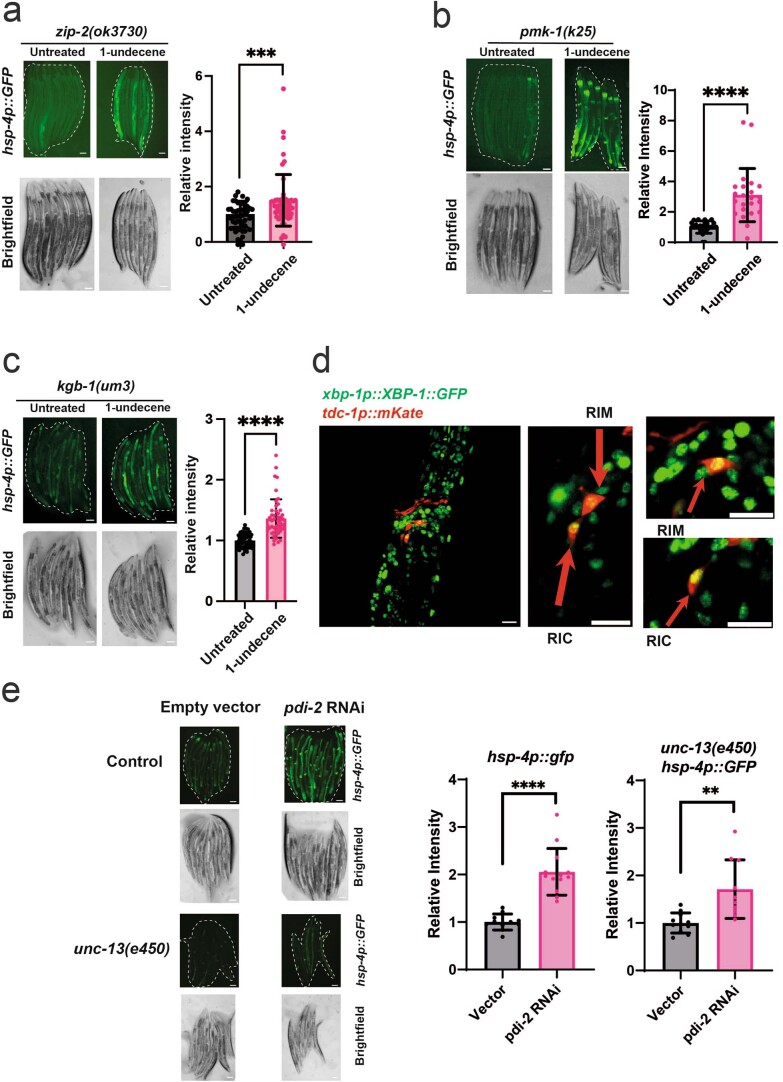
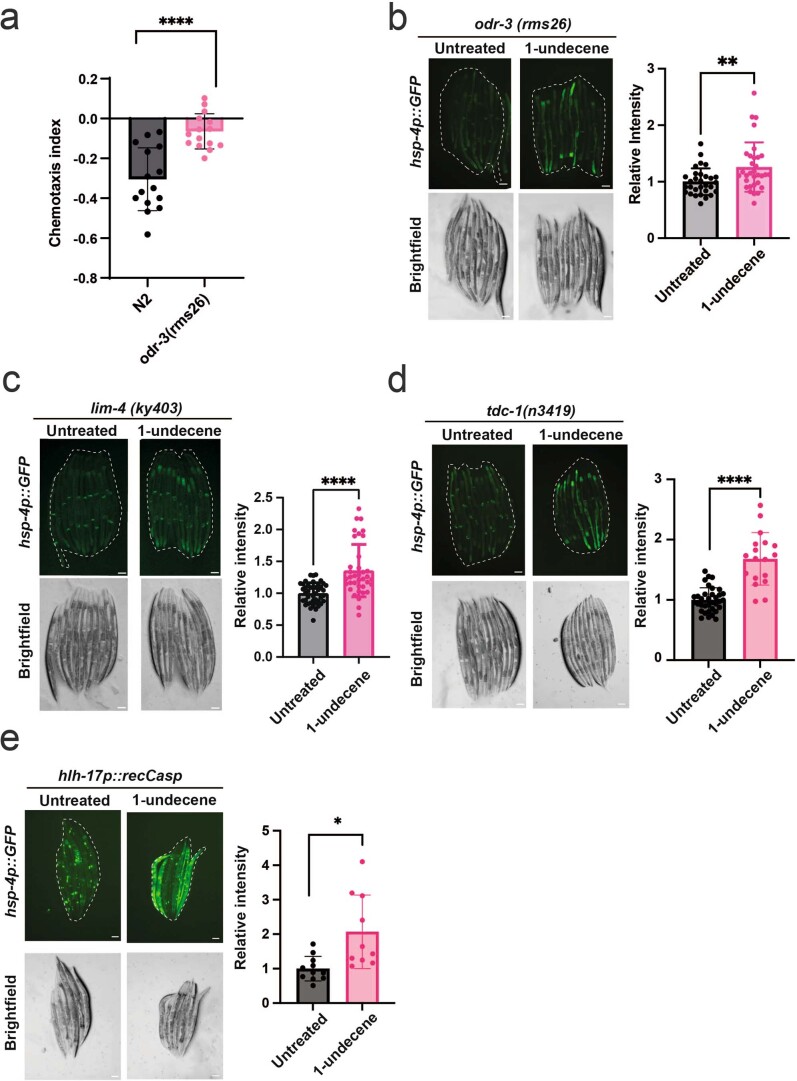
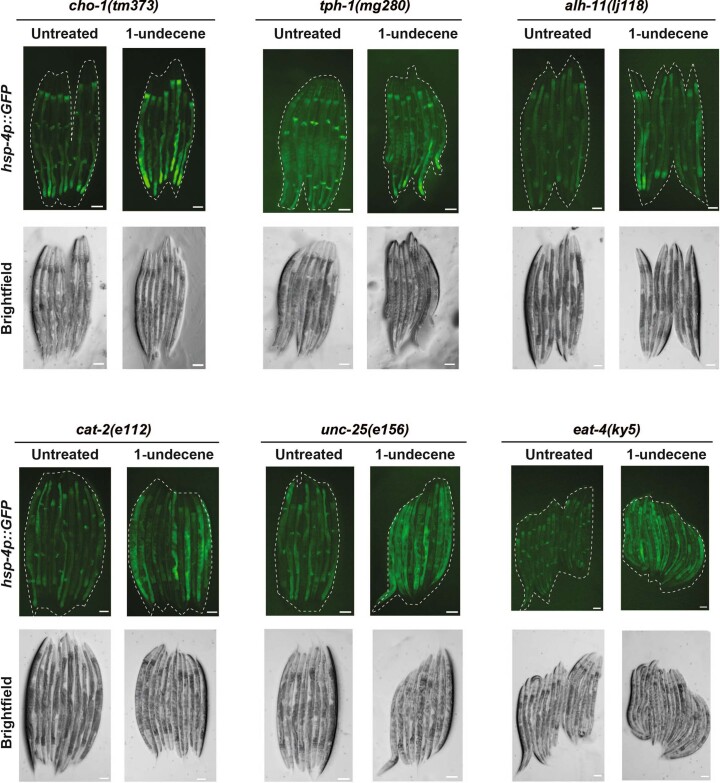
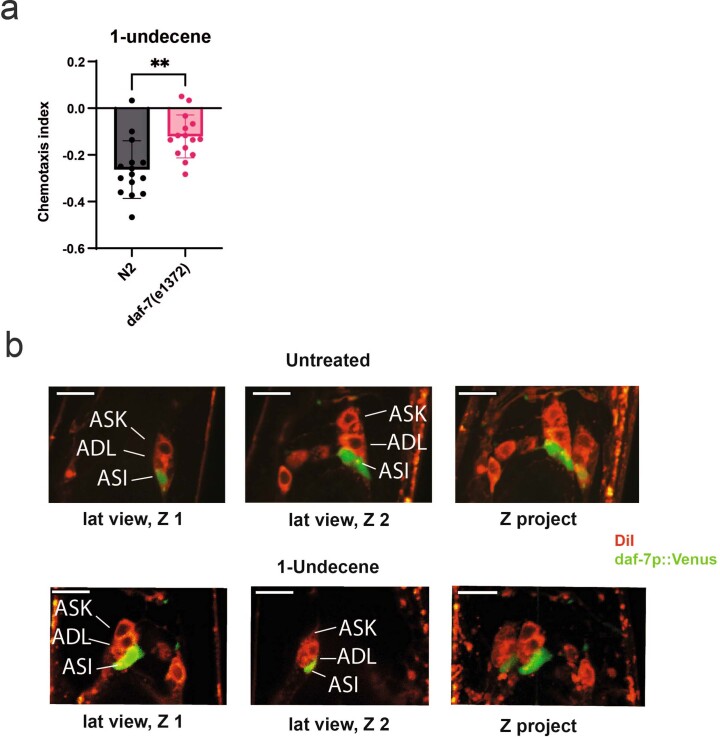
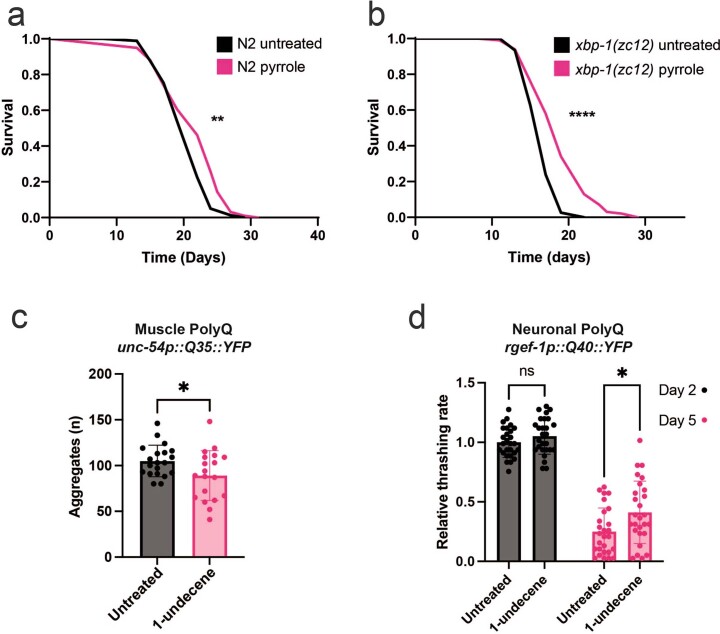
Animals rely on chemosensory cues to survive in pathogen-rich environments. In Caenorhabditis elegans, pathogenic bacteria trigger aversive behaviors through neuronal perception and activate molecular defenses throughout the animal. This suggests that neurons can coordinate the activation of organism-wide defensive responses upon pathogen perception. In this study, we found that exposure to volatile pathogen-associated compounds induces activation of the endoplasmic reticulum unfolded protein response (UPR) in peripheral tissues after xbp-1 splicing in neurons. This odorant-induced UPR activation is dependent upon DAF-7/transforming growth factor beta (TGF-β) signaling and leads to extended lifespan and enhanced clearance of toxic proteins. Notably, rescue of the DAF-1 TGF-β receptor in RIM/RIC interneurons is sufficient to significantly recover UPR activation upon 1-undecene exposure. Our data suggest that the cell non-autonomous UPR rewires organismal proteostasis in response to pathogen detection, pre-empting proteotoxic stress. Thus, chemosensation of particular odors may be a route to manipulation of stress responses and longevity.
动物依赖化学感觉线索在富含病原体的环境中生存。在秀丽隐杆线虫中,致病性细菌通过神经元感知触发厌恶行为,并在整个动物体内激活分子防御。这表明神经元可以在感知病原体后协调激活全身防御反应。在这项研究中,我们发现,神经元中 xbp-1 剪接后,暴露于挥发性病原体相关化合物会诱导外周组织内质网未折叠蛋白反应 (UPR) 的激活。这种气味诱导的 UPR 激活依赖于 DAF-7/转化生长因子 β (TGF-β) 信号传导,并导致寿命延长和毒性蛋白清除增强。值得注意的是,在 RIM/RIC 中间神经元中拯救 DAF-1 TGF-β 受体足以在 1-十一烯暴露时显著恢复 UPR 的激活。我们的数据表明,细胞非自主性 UPR 响应病原体检测重新布线了机体的蛋白质稳态,预先阻止了蛋白质毒性应激。因此,特定气味的化学感觉可能是操纵应激反应和延长寿命的途径。