Seidu Zakaria, Lamptey Helena, Lopez-Perez Mary, Whittle Nora Owusuwaa, Oppong Stephen Kwesi, Kyei-Baafour Eric, Pobee Abigail Naa Adjorkor, Adjei George Obeng, Hviid Lars, Ofori Michael F
Immunology Department, Noguchi Memorial Institute for Medical Research, College of Health Sciences, University of Ghana, Accra, Ghana.
West Africa Centre for Cell Biology of Infectious Pathogens, Department of Biochemistry, Cell and Molecular Biology, University of Ghana, Accra, Ghana.
Parasite Epidemiol Control. 2023 Jul 20;22:e00317. doi: 10.1016/j.parepi.2023.e00317. eCollection 2023 Aug.
The surge in malaria cases and deaths in recent years, particularly in Africa, despite the widespread implementation of malaria-control measures could be due to inefficiencies in malaria control and prevention measures in malaria-endemic communities. In this context, this study provides the malaria situation report among children in three Municipalities in Northern Ghana, where Seasonal Malaria Chemotherapy (SMC) is implemented by Ghana Health Service (GHS).
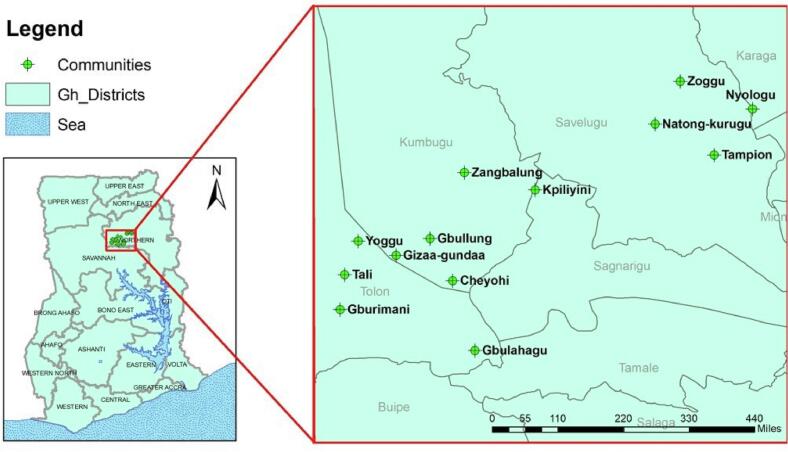
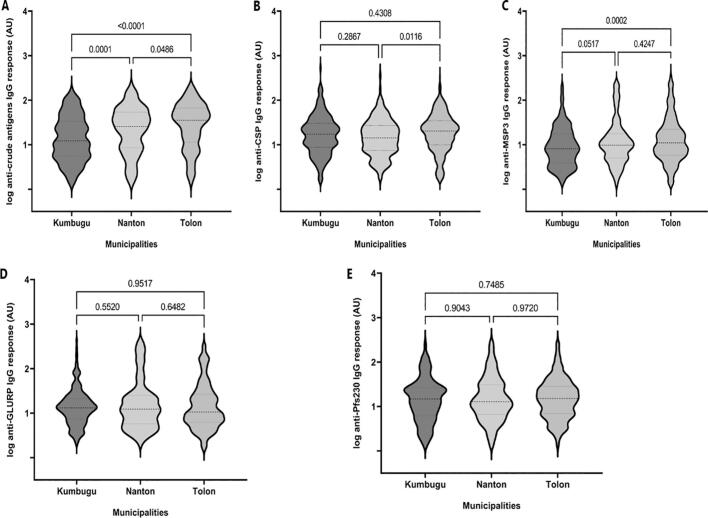
A cross-sectional household survey was carried out to assess the malaria knowledge, attitudes, and practices (KAP) and malaria prevalence in 394 households in 13 rural communities in the Kumbugu, Nanton and Tolon Municipalities, Northern Region, Ghana. This was followed by screening for infection with anti-HRP2 RDT and PCR among children 1-17 years in the households. Plasma levels of IgG specific for crude antigen (3D7) and four recombinant malaria antigens (CSP, GLURP, MSP3, and Pfs230) were assessed by ELISA. The malaria and parasitaemia data were converted into frequency and subgroup proportions and disaggregated by study sites and demographic information of the participants. The ELISA data was converted to arbitrary units (AU) and similarly compared across study sites and demographic information.
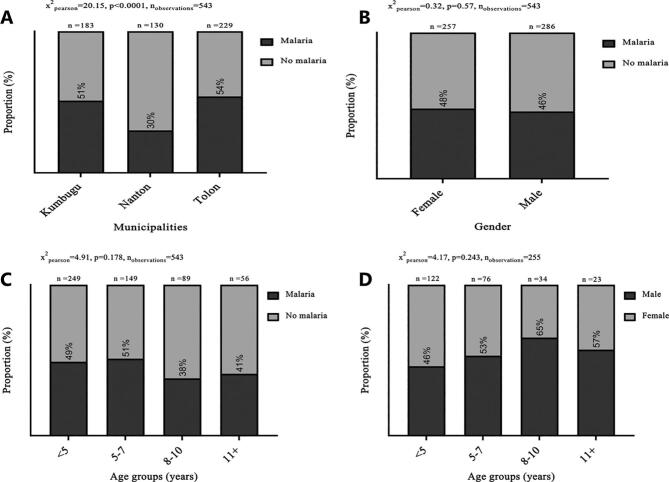
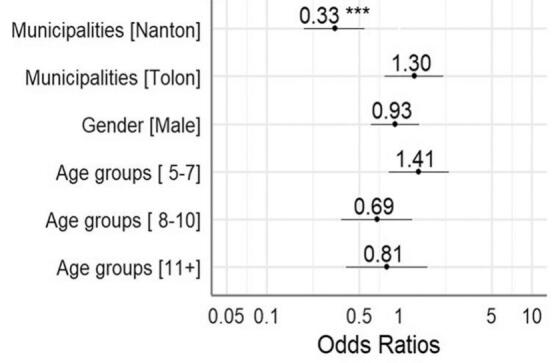
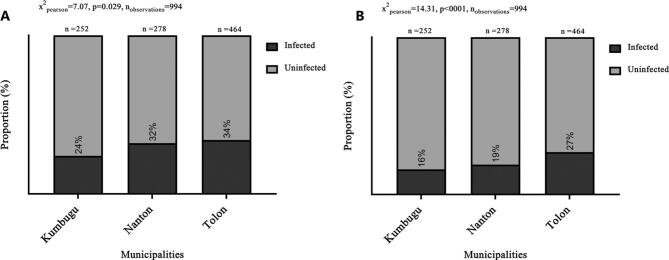
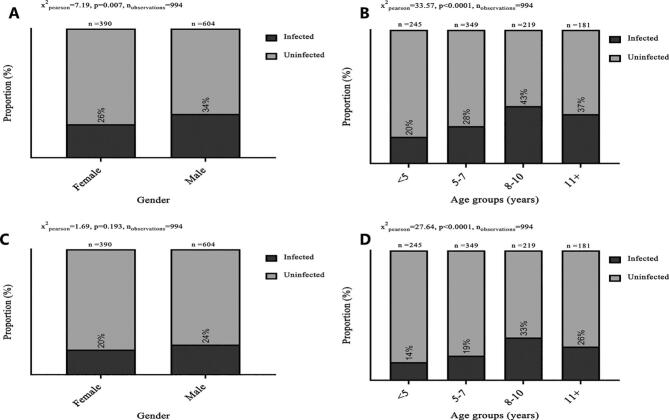
The infection rate and frequency of malaria were high in the study areas with significant age-dependent and inter-community differences, which were reflected by differences in plasma levels of -specific IgG. Over 60% of households reported the use of bed nets and indoor insecticide sprays/coils, and 14% mentioned bush clearing around homes (14%) as malaria preventive measures. Community health centres were the preferred place for households (88%) to seek malaria treatment but over-the-counter drug stores were the major source (66%) of their antimalarials. Overall, malaria preventive and treatment practices were sub-optimal.
infection and malaria are still high in the studied communities, indicating that preventive and control measures against the disease in the region remain inadequate. Efforts to ensure high SMC compliance and to improve preventative and treatment practices thus seem cost-beneficial "low-hanging fruits" in the fight against malaria in the Northern Region of Ghana.
尽管广泛实施了疟疾控制措施,但近年来疟疾病例和死亡人数仍在激增,尤其是在非洲,这可能是由于疟疾流行社区的疟疾控制和预防措施效率低下所致。在此背景下,本研究提供了加纳北部三个市儿童的疟疾情况报告,加纳卫生服务局(GHS)在这些地区实施了季节性疟疾化疗(SMC)。
开展了一项横断面家庭调查,以评估加纳北部昆布古、南顿和托隆市13个农村社区394户家庭的疟疾知识、态度和行为(KAP)以及疟疾流行情况。随后,对这些家庭中1至17岁的儿童进行抗-HRP2快速诊断试验(RDT)和聚合酶链反应(PCR)检测以筛查感染情况。通过酶联免疫吸附测定(ELISA)评估针对粗抗原(3D7)和四种重组疟疾抗原(CSP、GLURP、MSP3和Pfs230)的IgG血浆水平。将疟疾和寄生虫血症数据转换为频率和亚组比例,并按研究地点和参与者的人口统计学信息进行分类。ELISA数据转换为任意单位(AU),并同样按研究地点和人口统计学信息进行比较。
研究地区的疟疾感染率和发病率很高,存在显著的年龄依赖性和社区间差异,这反映在特异性IgG血浆水平的差异上。超过60%的家庭报告使用蚊帐和室内杀虫剂喷雾/蚊香,14%的家庭提到在家周围清理灌木丛(14%)作为疟疾预防措施。社区卫生中心是家庭寻求疟疾治疗的首选场所(88%),但非处方药店是他们购买抗疟药的主要来源(66%)。总体而言,疟疾预防和治疗措施并不理想。
研究社区的疟疾感染和发病率仍然很高,这表明该地区针对该疾病的预防和控制措施仍然不足。因此,在加纳北部地区抗击疟疾的斗争中,确保高SMC依从性以及改善预防和治疗措施的努力似乎是具有成本效益的“低垂果实”。