Hao Guangshan, Conzen-Dilger Catharina, Schmidt Tobias Philip, Harder Ekaterina, Schöps Malte, Clauser Johanna Charlotte, Schubert Gerrit Alexander, Lindauer Ute
Translational Neurosurgery and Neurobiology, Department of Neurosurgery, Medical Faculty, RWTH Aachen University, Aachen, Germany.
Department of Neurosurgery, Liaocheng People's Hospital, Liaocheng, Shandong, China.
Front Cell Neurosci. 2023 Jul 12;17:1115385. doi: 10.3389/fncel.2023.1115385. eCollection 2023.
Elevated intracranial pressure (ICP) and blood components are the main trigger factors starting the complex pathophysiological cascade following subarachnoid hemorrhage (SAH). It is not clear whether they independently contribute to tissue damage or whether their impact cannot be differentiated from each other. We here aimed to establish a rat intracranial hypertension model that allows distinguishing the effects of these two factors and investigating the relationship between elevated ICP and hypoperfusion very early after SAH.
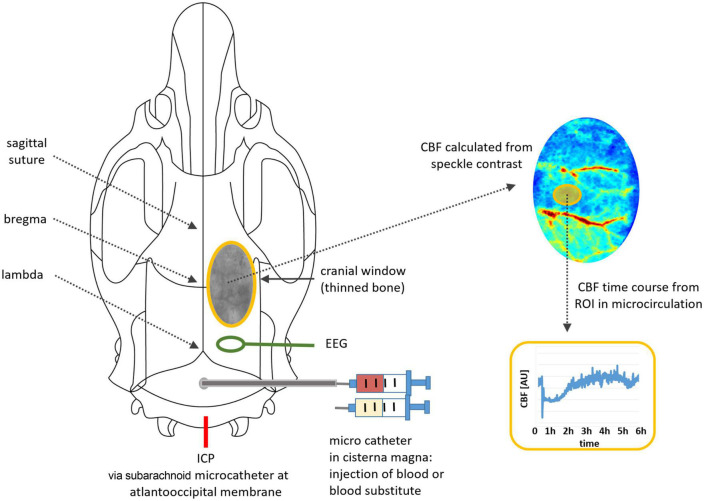
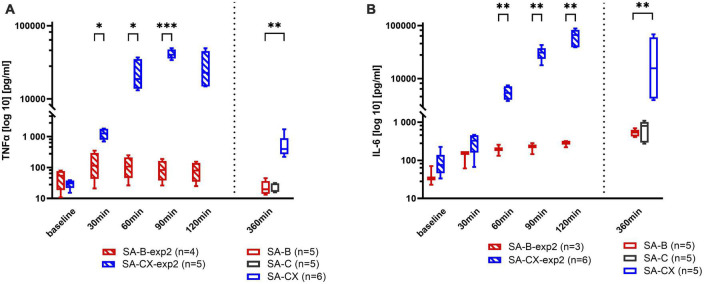
Blood or four different types of fluids [gelofusine, silicone oil, artificial cerebrospinal fluid (aCSF), aCSF plus xanthan (CX)] were injected into the cisterna magna in anesthetized rats, respectively. Arterial blood pressure, ICP and cerebral blood flow (CBF) were continuously measured up to 6 h after injection. Enzyme-linked immunosorbent assays were performed to measure the pro-inflammatory cytokines interleukin 6 (IL-6) and tumor necrosis factor α (TNF-α) in brain cortex and peripheral blood.
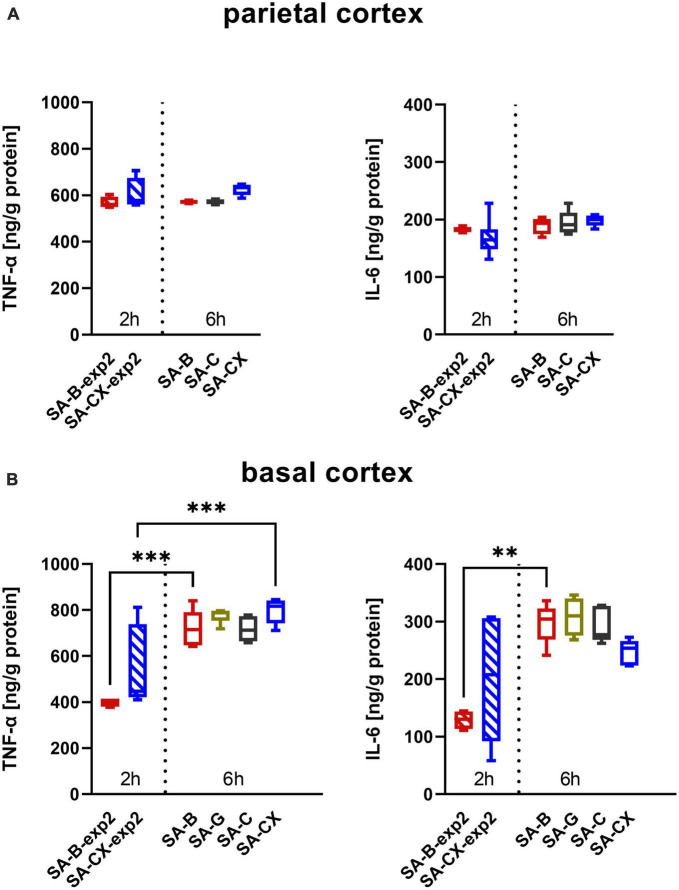
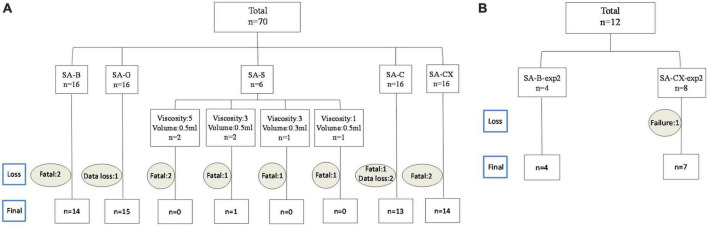
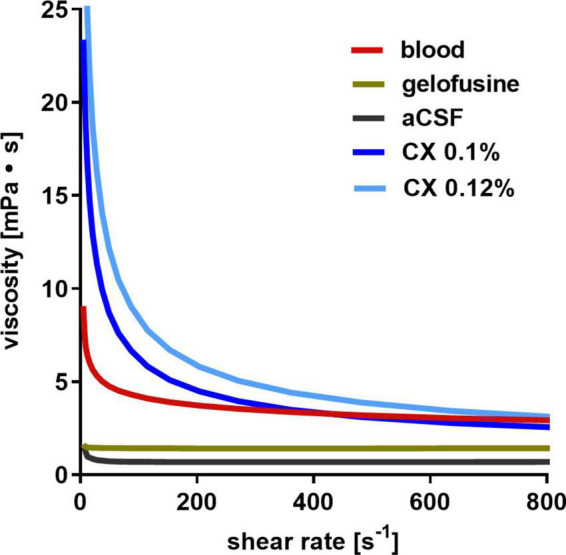
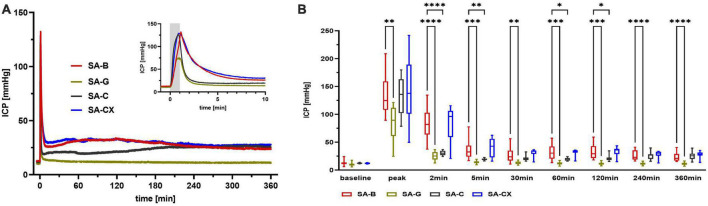
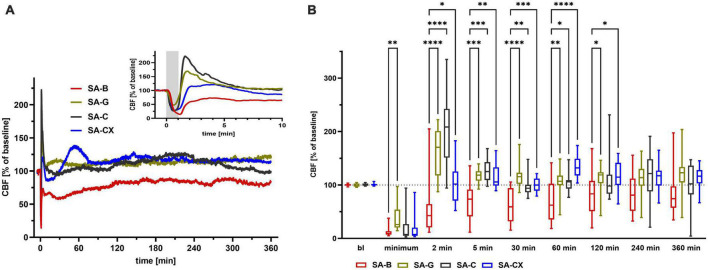
Silicone oil injection caused deaths of almost all animals. Compared to blood, gelofusine resulted in lower peak ICP and lower plateau phase. Artificial CSF reached a comparable ICP peak value but failed to reach the ICP plateau of blood injection. Injection of CX with comparable viscosity as blood reproduced the ICP course of the blood injection group. Compared with the CBF course after blood injection, CX induced a comparable early global ischemia within the first minutes which was followed by a prompt return to baseline level with no further hypoperfusion despite an equal ICP course. The inflammatory response within the tissue did not differ between blood or blood-substitute injection. The systemic inflammation was significantly more pronounced in the CX injection group compared with the other fluids including blood.
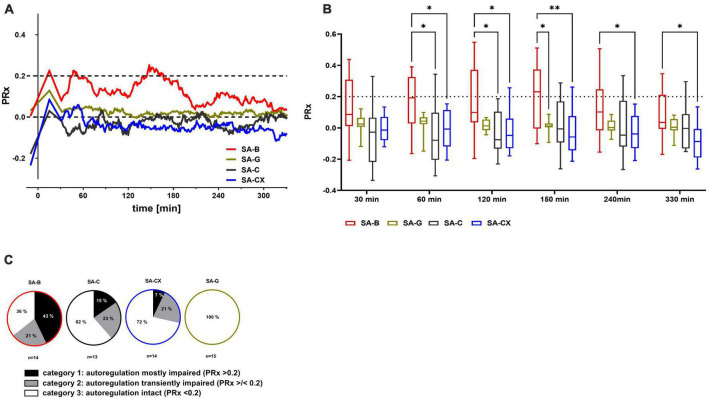
By cisterna magna injection of blood substitution fluids, we established a subarachnoid space occupying rat model that exactly mimicked the course of ICP in the first 6 h following blood injection. Fluids lacking blood components did not induce the typical prolonged hypoperfusion occurring after blood-injection in this very early phase. Our study strongly suggests that blood components rather than elevated ICP play an important role for early hypoperfusion events in SAH.
颅内压(ICP)升高和血液成分是蛛网膜下腔出血(SAH)后启动复杂病理生理级联反应的主要触发因素。目前尚不清楚它们是否独立导致组织损伤,或者它们的影响是否无法相互区分。我们的目的是建立一种大鼠颅内高压模型,以区分这两个因素的影响,并研究SAH后早期ICP升高与灌注不足之间的关系。
分别将血液或四种不同类型的液体[琥珀酰明胶、硅油、人工脑脊液(aCSF)、aCSF加黄原胶(CX)]注入麻醉大鼠的枕大池。在注射后持续6小时连续测量动脉血压、ICP和脑血流量(CBF)。进行酶联免疫吸附测定以测量脑皮质和外周血中的促炎细胞因子白细胞介素6(IL-6)和肿瘤坏死因子α(TNF-α)。
注射硅油导致几乎所有动物死亡。与血液相比,琥珀酰明胶导致的ICP峰值较低,平台期也较低。人工脑脊液达到了相当的ICP峰值,但未能达到注射血液后的ICP平台期。注射与血液粘度相当的CX再现了血液注射组的ICP过程。与注射血液后的CBF过程相比,CX在最初几分钟内引起了相当的早期全脑缺血,随后迅速恢复到基线水平,尽管ICP过程相同,但没有进一步的灌注不足。血液或血液替代品注射后组织内的炎症反应没有差异。与包括血液在内的其他液体相比,CX注射组的全身炎症明显更明显。
通过枕大池注射血液替代液,我们建立了一种蛛网膜下腔占位大鼠模型,该模型精确模拟了注射血液后最初6小时内的ICP过程。缺乏血液成分的液体在这个非常早期阶段不会诱导出血液注射后典型的长时间灌注不足。我们的研究强烈表明,血液成分而非ICP升高在SAH早期灌注不足事件中起重要作用。