Department of Genetics, University of Alabama at Birmingham, Birmingham, AL, USA; HudsonAlpha Institute for Biotechnology, Huntsville, AL, USA.
HudsonAlpha Institute for Biotechnology, Huntsville, AL, USA.
J Autoimmun. 2023 Sep;139:103089. doi: 10.1016/j.jaut.2023.103089. Epub 2023 Jul 26.
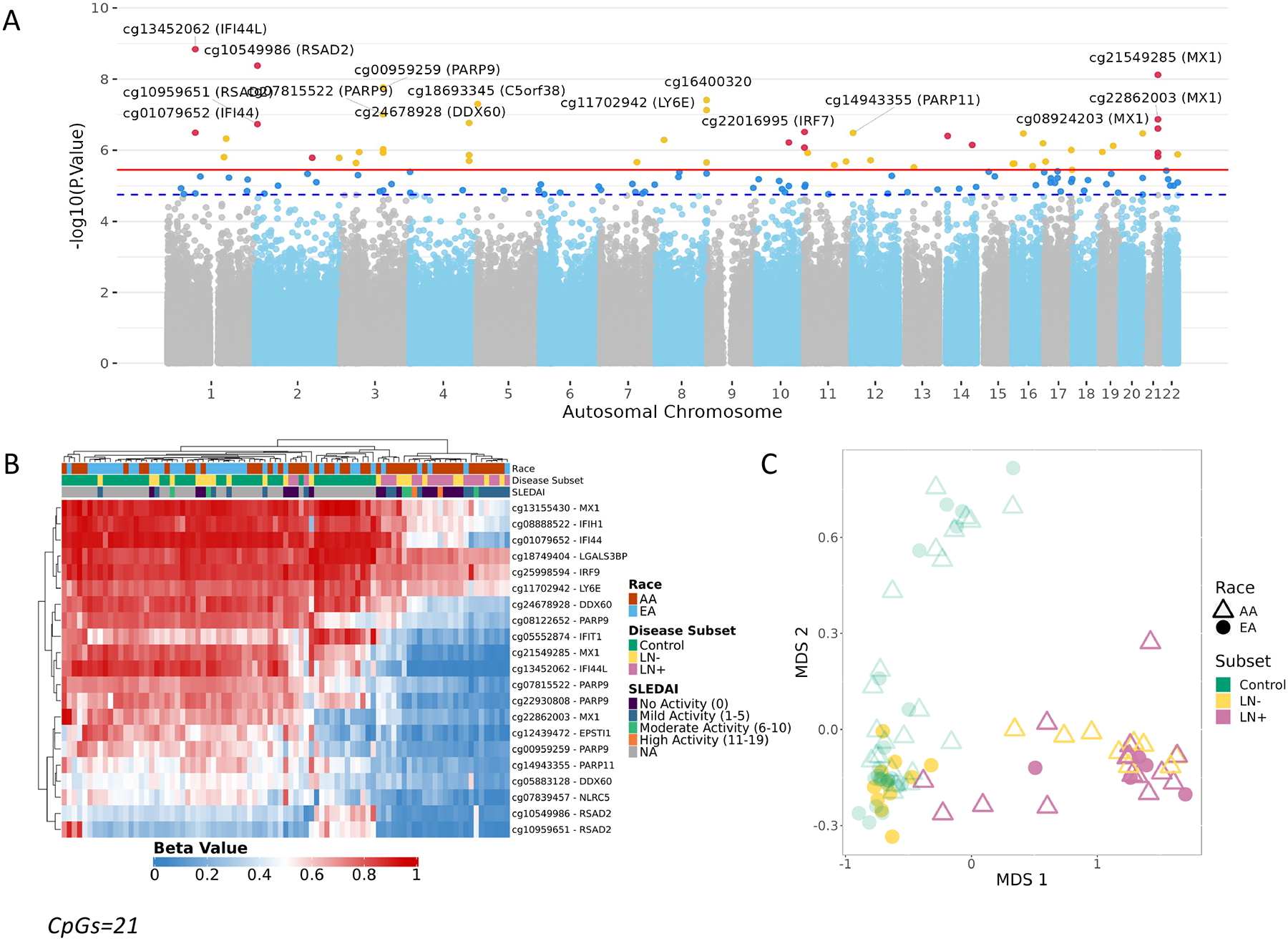
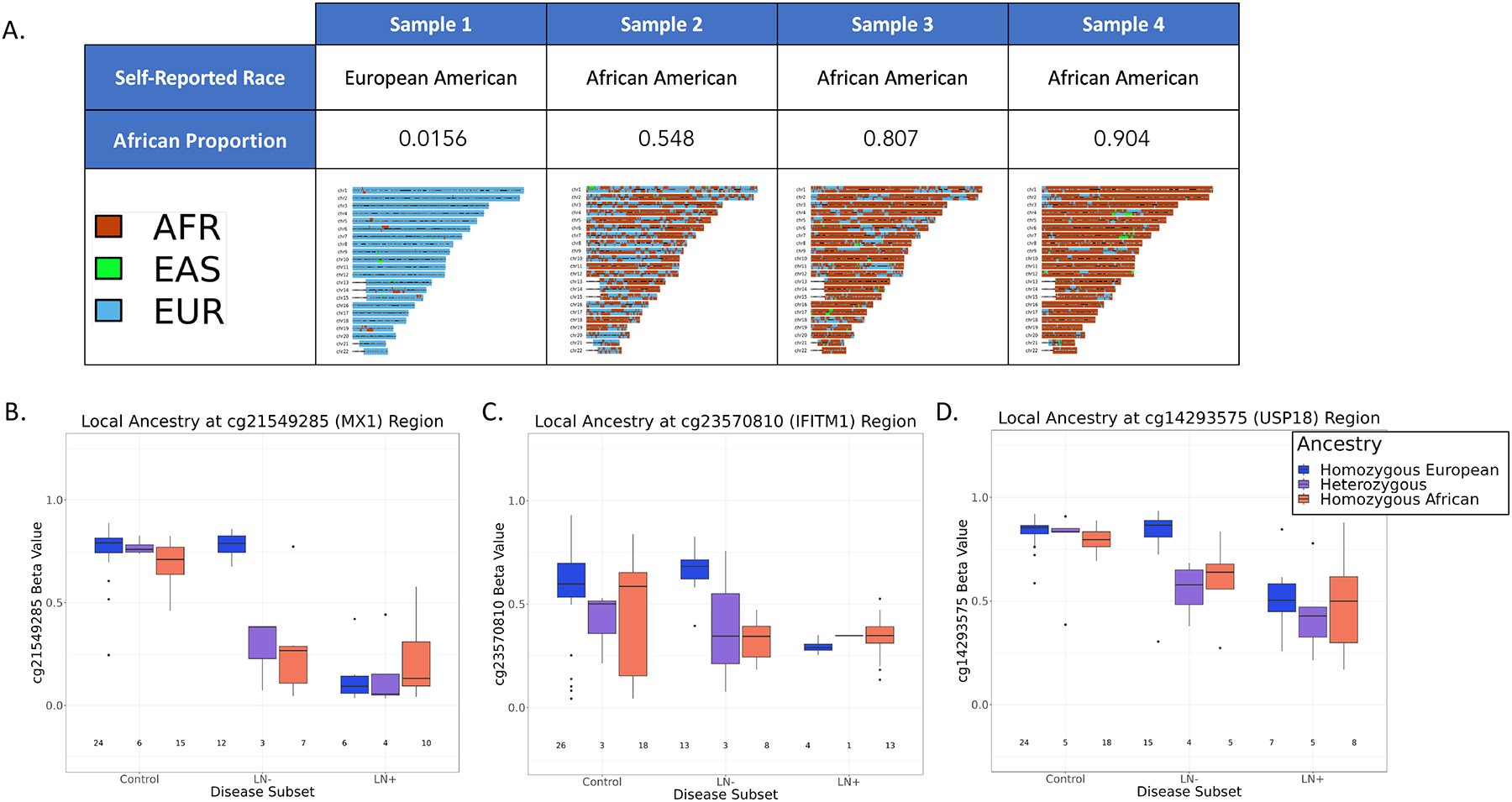
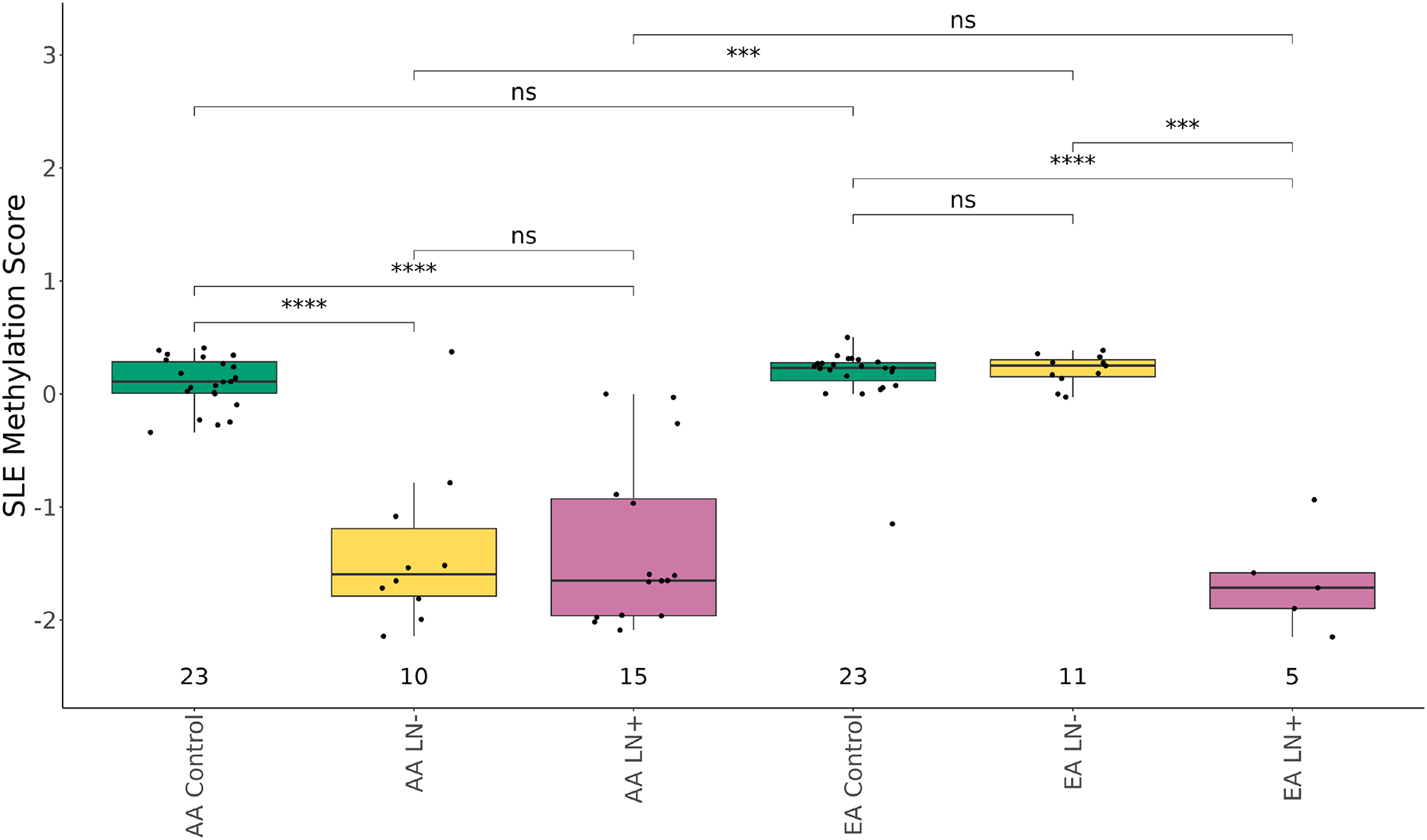
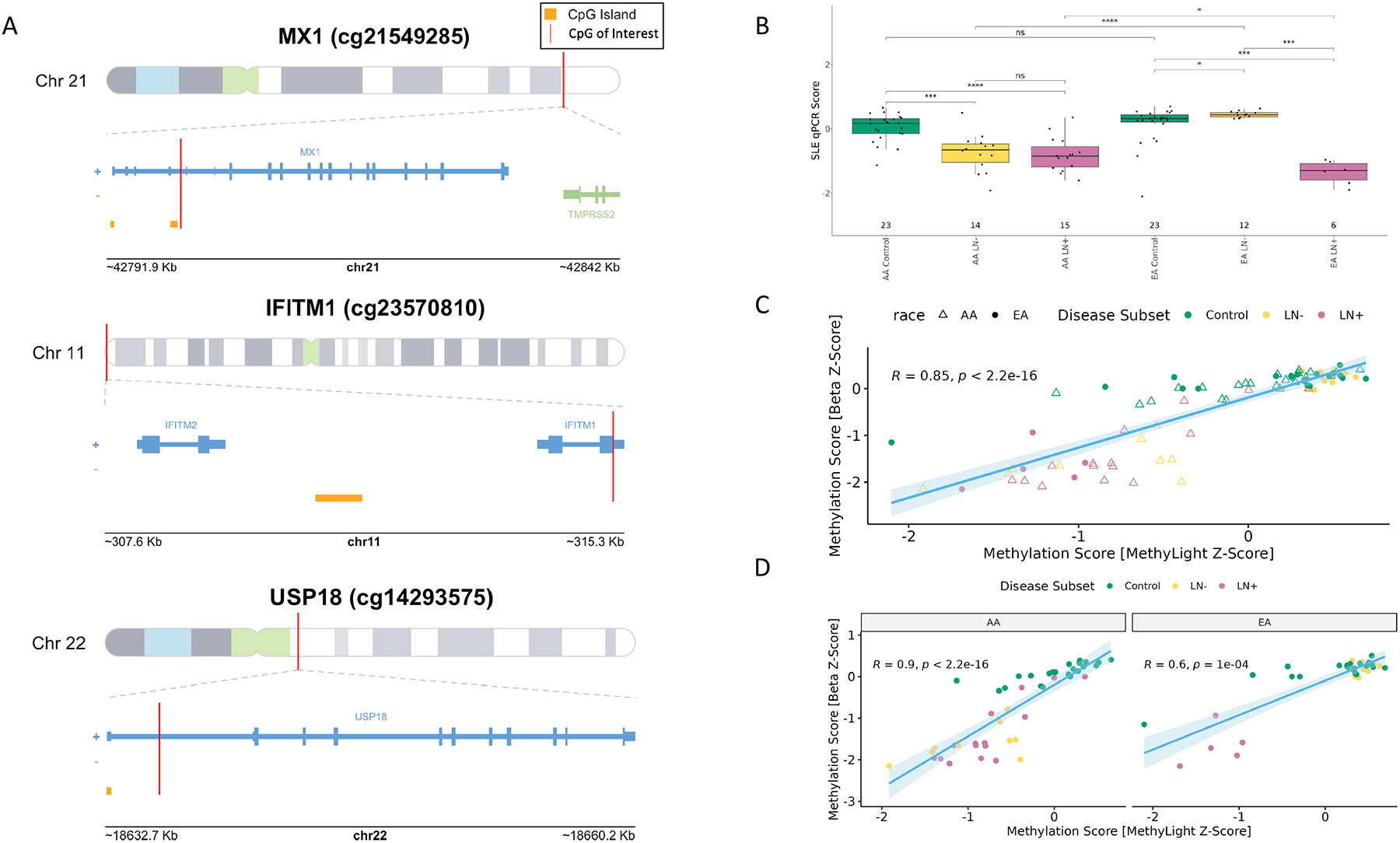
Systemic Lupus Erythematosus (SLE) is a chronic, multisystem, inflammatory autoimmune disease that disproportionately affects women. Trends in SLE prevalence and clinical course differ by ancestry, with those of African American ancestry presenting with more active, severe and rapidly progressive disease than European Americans. Previous research established altered epigenetic signatures in SLE patients compared to controls. However, the contribution of aberrant DNA methylation (DNAm) to the risk of SLE by ancestry and differences among patients with SLE-associated Lupus Nephritis (LN) has not been well described. We evaluated the DNA methylomes of 87 individuals including 41 SLE patients, with and without LN, and 46 controls enrolled in an ancestry diverse, well-characterized cohort study of established SLE (41 SLE patients [20 SLE-LN+, 21 SLE-LN-] and 46 sex-, race- and age-matched controls; 55% African American, 45% European American). Participants were genotyped using the Infinium Global Diversity Array (GDA), and genetic ancestry was estimated using principal components. Genome-wide DNA methylation was initially measured using the Illumina MethylationEPIC 850K Beadchip array followed by methylation-specific qPCR to validate the methylation status at putative loci. Differentially Methylated Positions (DMP) were identified using a case-control approach adjusted for ancestry. We identified a total of 51 DMPs in CpGs among SLE patients compared to controls. Genes proximal to these CpGs were highly enriched for involvement in type I interferon signaling. DMPs among European American SLE patients with LN were similar to African American SLE patients with and without LN. Our findings were validated using an orthogonal, methyl-specific PCR for three SLE-associated DMPs near or proximal to MX1, USP18, and IFITM1. Our study confirms previous reports that DMPs in CpGs associated with SLE are enriched in type I interferon genes. However, we show that European American SLE patients with LN have similar DNAm patterns to African American SLE patients irrespective of LN, suggesting that aberrant DNAm alters activity of type I interferon pathway leading to more severe disease independent of ancestry.
系统性红斑狼疮 (SLE) 是一种慢性、多系统、炎症性自身免疫性疾病,女性发病率明显高于男性。SLE 的患病率和临床病程趋势因种族而异,非裔美国人的疾病表现更为活跃、严重和快速进展,而欧洲裔美国人则较轻。先前的研究已经确定了与对照相比,SLE 患者的表观遗传特征发生了改变。然而,异常 DNA 甲基化 (DNAm) 对不同种族 SLE 患者发病风险的影响以及与 SLE 相关狼疮肾炎 (LN) 患者之间的差异尚未得到很好的描述。我们评估了 87 个人的 DNA 甲基组,包括 41 名 SLE 患者(有和没有 LN)和 46 名纳入了一项具有既定 SLE 的、遗传背景多样化、特征良好的队列研究的对照者(41 名 SLE 患者[20 名 SLE-LN+,21 名 SLE-LN-]和 46 名性别、种族和年龄匹配的对照者;55%为非裔美国人,45%为欧洲裔美国人)。参与者使用 Infinium 全球多样性阵列 (GDA) 进行基因分型,并使用主成分分析估计遗传背景。使用 Illumina MethylationEPIC 850K Beadchip 芯片阵列对全基因组 DNA 甲基化进行初步测量,然后使用甲基化特异性 qPCR 对假定基因座的甲基化状态进行验证。使用病例对照方法,在调整了遗传背景的情况下,鉴定差异甲基化位置 (DMP)。与对照组相比,我们在 SLE 患者的 CpG 中鉴定出总共 51 个 DMP。这些 CpG 附近的基因高度富集参与 I 型干扰素信号。欧洲裔美国 SLE 患者伴 LN 的 DMP 与非裔美国 SLE 患者伴或不伴 LN 的 DMP 相似。我们使用三个与 MX1、USP18 和 IFITM1 附近或近端相关的 SLE 相关 DMP 的正交、甲基特异性 PCR 对我们的发现进行了验证。我们的研究证实了先前的报告,即与 SLE 相关的 CpG 中的 DMP 富集了 I 型干扰素基因。然而,我们表明,无论 LN 情况如何,欧洲裔美国 SLE 患者伴 LN 的 DNAm 模式与非裔美国 SLE 患者相似,这表明异常 DNAm 改变了 I 型干扰素通路的活性,导致疾病更严重,而与遗传背景无关。