School of Nursing, Midwifery & Health Systems, University College Dublin, Dublin, Ireland.
School of Nursing & Midwifery, Trinity College Dublin, Dublin, Ireland.
BMC Med Ethics. 2023 Jul 28;24(1):55. doi: 10.1186/s12910-023-00937-6.
The use of long-term life-sustaining technology for children improves survival rates in paediatric intensive care units (PICUs), but it may also increase long-term morbidity. One example of this is children who are dependent on invasive long-term ventilation. Clinicians caring for these children navigate an increasing array of ethical complexities. This study looks at the meaning clinicians give to the bioethical considerations associated with the availability of increasingly sophisticated technology.
A hermeneutic phenomenological exploration of the experiences of clinicians in deciding whether to initiate invasive long-term ventilation in children took place, via unstructured interviews. Data were analysed to gain insight into the lived experiences of clinicians. Participants were from PICUs, or closely allied to the care of children in PICUs, in four countries.
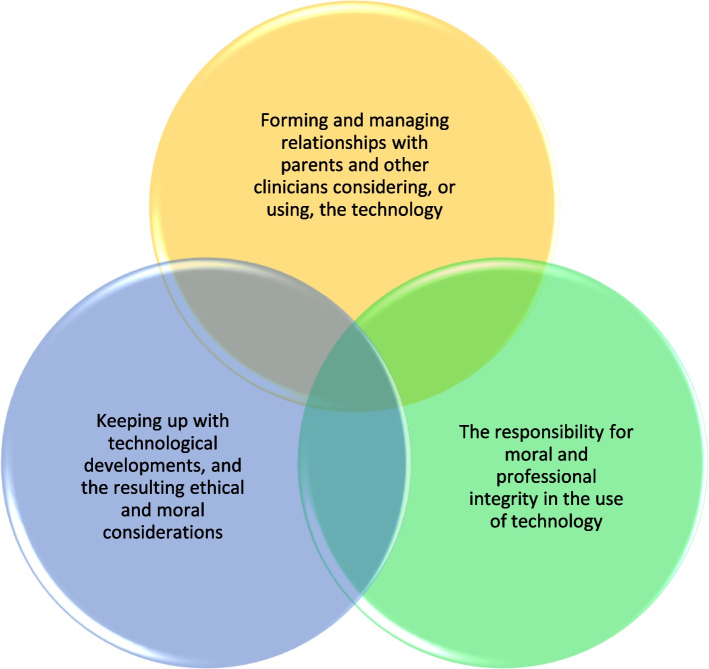
Three themes developed from the data that portray the experiences of the clinicians: forming and managing relationships with parents and other clinicians considering, or using, life sustaining technology; the responsibility for moral and professional integrity in the use of technology; and keeping up with technological developments, and the resulting ethical and moral considerations.
There are many benefits of the availability of long-term life-sustaining technology for a child, however, clinicians must also consider increasingly complex ethical dilemmas. Bioethical norms are adapting to aid clinicians, but challenges remain.
During a time of technological solutionism, more needs to be understood about the influences on the initiation of invasive long-term ventilation for a child. Further research to better understand how clinicians, and bioethics services, support care delivery may positively impact this arena of health care.
在儿科重症监护病房(PICU)中使用长期维持生命的技术提高了儿童的生存率,但也可能增加长期发病率。一个例子是依赖侵入性长期通气的儿童。照顾这些儿童的临床医生面临着越来越多的伦理复杂性。本研究探讨了临床医生对与日益复杂的技术可用性相关的生物伦理问题的看法。
通过非结构化访谈,对决定是否为儿童启动侵入性长期通气的临床医生的经验进行了诠释学现象学探索。通过分析数据来深入了解临床医生的生活经历。参与者来自四个国家的 PICU 或与 PICU 中儿童护理密切相关的地方。
从数据中得出了三个主题,描绘了临床医生的经验:与考虑或使用维持生命技术的父母和其他临床医生建立和管理关系;在使用技术时对道德和职业操守的责任;以及跟上技术发展以及由此产生的伦理道德考虑。
长期维持生命的技术对儿童有许多好处,但是,临床医生还必须考虑越来越复杂的伦理困境。生物伦理规范正在适应以帮助临床医生,但挑战仍然存在。
在技术解决方案主义时代,需要更多地了解启动儿童侵入性长期通气的影响因素。进一步研究如何更好地了解临床医生和生物伦理服务如何支持护理提供,可能会对这一医疗保健领域产生积极影响。