Wang Xiuping, Shan Gongbing
Department of Physical Education, Xinzhou Teachers' University, Xinzhou 034000, China.
Biomechanics Lab, Faculty of Arts & Science, University of Lethbridge, Lethbridge, AB T1K 3M4, Canada.
Bioengineering (Basel). 2023 Jun 25;10(7):761. doi: 10.3390/bioengineering10070761.
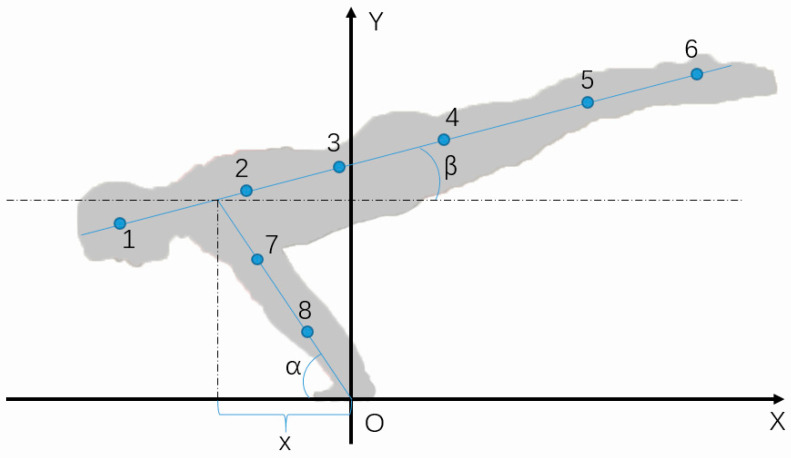
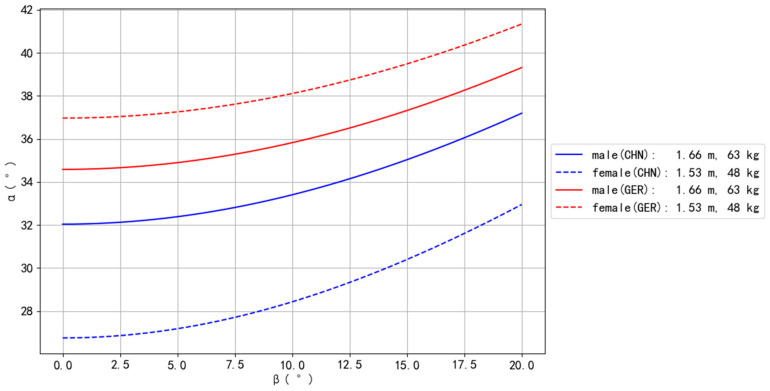
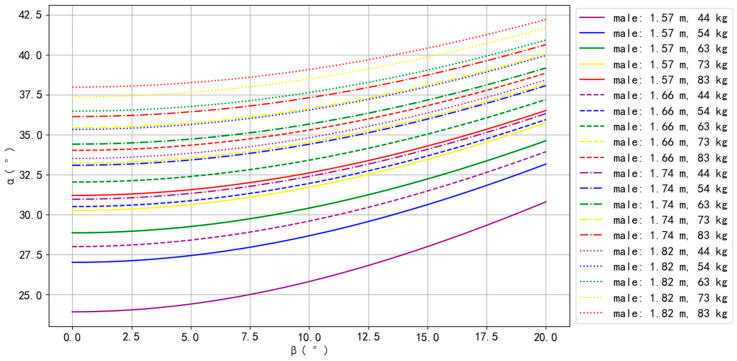
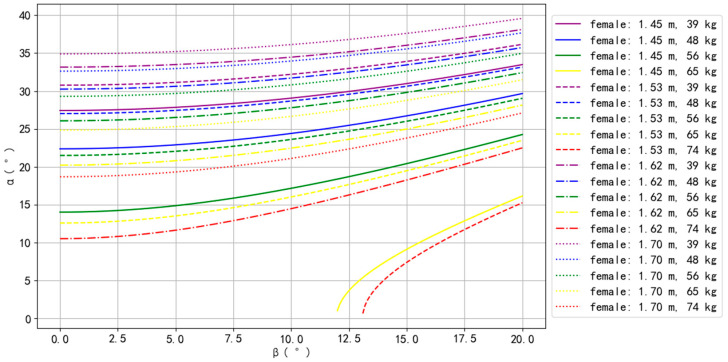
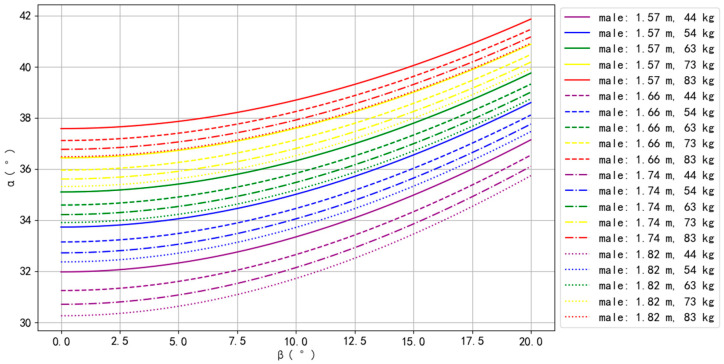
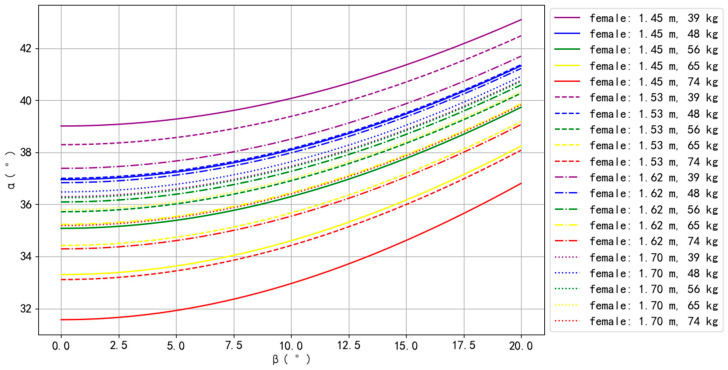
The Planche is a challenging, the most required, and a highly valued gymnastic skill. Yet, it is understudied biomechanically. This article aims to explore the anthropometric variations that could affect the quality of balancing control in the Planche and to identify the body types that have an advantage in learning and training. To achieve this goal, a 9-segment rigid-body model is designed to simulate the skill performance by using 80 different body types. The results demonstrate that body type is a critical factor in determining an individual's innate ability to perform the Planche. The innate ability is affected by body mass, height, gender, and race. The findings reveal that a personalized training plan based on an individual's body type is necessary for optimal learning and training. A one-size-fits-all approach may not be effective since each individual's body type varies. Additionally, this study emphasizes the importance of considering segmental and/or limb characteristics in designing effective training plans. This study concludes that, for a given height, individuals with relatively longer legs and a shorter trunk (the characteristics of Europeans in comparison to Asians) could be better suited to perform the Planche. This suggests that European body types are naturally more advanced than Asian body types when it comes to performing the Planche. The practical implications of the current study are that practitioners can use biomechanical modeling and simulation techniques to identify body types that are most suited for the Planche and design training programs that are tailored to individual body types for optimizing their learning and training.
水平支撑是一项具有挑战性、要求极高且备受重视的体操技能。然而,其在生物力学方面的研究较少。本文旨在探讨可能影响水平支撑平衡控制质量的人体测量学差异,并确定在学习和训练中具有优势的身体类型。为实现这一目标,设计了一个九节段刚体模型,通过使用80种不同的身体类型来模拟该技能的表现。结果表明,身体类型是决定个体执行水平支撑先天能力的关键因素。先天能力受体重、身高、性别和种族的影响。研究结果表明,基于个体身体类型的个性化训练计划对于最佳学习和训练是必要的。一刀切的方法可能无效,因为每个人的身体类型各不相同。此外,本研究强调在设计有效训练计划时考虑节段和/或肢体特征的重要性。本研究得出结论,对于给定身高,腿部相对较长且躯干较短的个体(与亚洲人相比欧洲人的特征)可能更适合执行水平支撑。这表明在执行水平支撑方面,欧洲人的身体类型天生比亚洲人的身体类型更具优势。当前研究的实际意义在于,从业者可以使用生物力学建模和模拟技术来识别最适合水平支撑的身体类型,并设计针对个体身体类型的训练计划,以优化他们的学习和训练。