Center for Medical, Agricultural and Veterinary Entomology, United States Department of Agriculture-Agricultural Research Service, Gainesville, FL 32608, USA.
Department of Entomology, LSU Agricultural Center, 404 Life Science Building, Baton Rouge, LA 70803, USA.
Genes (Basel). 2023 Jul 22;14(7):1495. doi: 10.3390/genes14071495.
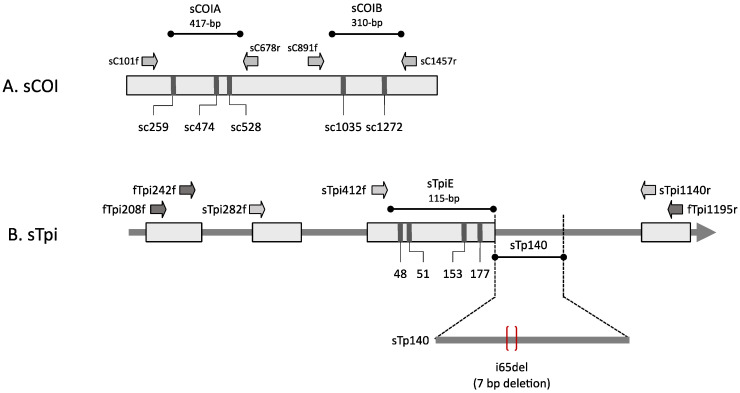
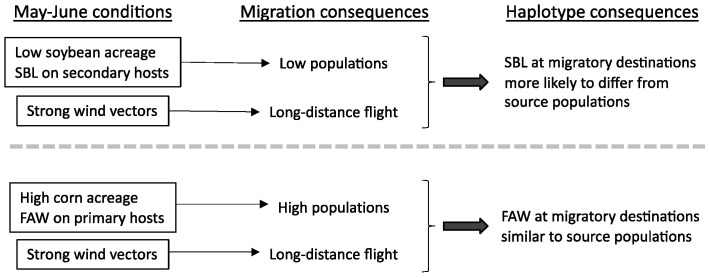
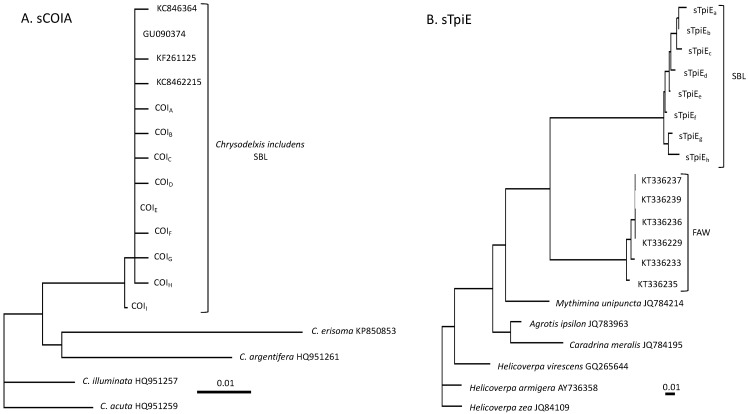
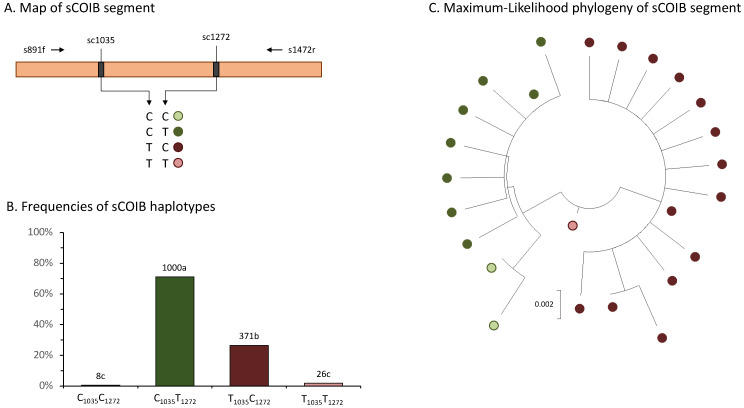
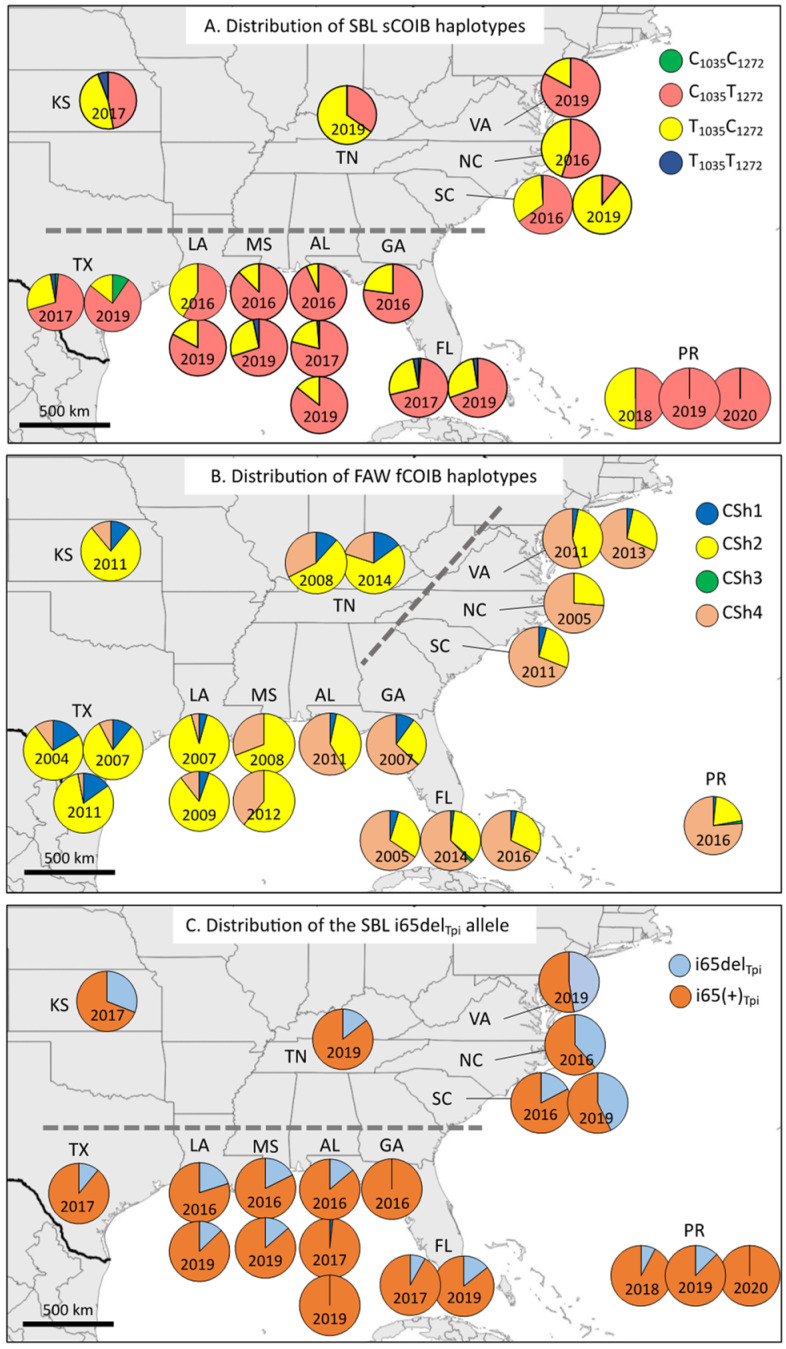
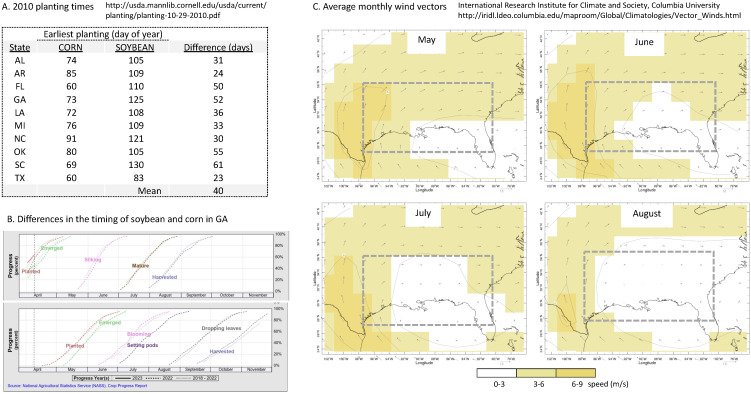
The Noctuid moth soybean looper (SBL), (Walker), is an economically important pest of soybean ( (Linnaeus) Merrill). Because it is not known to survive freezing winters, permanent populations in the United States are believed to be limited to the southern regions of Texas and Florida, yet its geographical range of infestations annually extend to Canada. This indicates annual migrations of thousands of kilometers during the spring and summer growing season. This behavior is like that of the fall armyworm (FAW), (J.E. Smith), also a Noctuid that is a major global pest of corn. SBL and FAW are projected to have very similar distributions of permanent populations in North America based on climate suitability modeling and the overlap in the distribution of their preferred host plants (corn and soybean). It therefore seems likely that the two species will display similar migratory behavior in the United States. This was tested by identifying genetic markers in SBL analogous to those successfully used to delineate FAW migratory pathways and comparing the distribution patterns of the markers from the two species. Contrary to expectations, the results indicate substantial differences in migratory behavior that appear to be related to differences in the timing of corn and soybean plantings. These findings underscore the importance of agricultural practices in influencing pest migration patterns, in particular the timing of host availability relative to mean seasonal air transport patterns.
大豆夜蛾 (SBL),也称秋黏虫( Walker),是一种严重危害大豆的鳞翅目害虫。因为其无法适应严寒的冬季,所以人们普遍认为其在美国的永久种群仅局限于德克萨斯州和佛罗里达州南部地区,然而其每年的疫区范围都会延伸到加拿大。这表明在春夏生长季节期间,其每年都会进行数千公里的迁徙。这种行为类似于秋行军虫(FAW),同样是一种对玉米危害极大的世界性鳞翅目害虫。基于气候适宜性模型和其偏好宿主植物(玉米和大豆)的分布重叠情况,预计 SBL 和 FAW 在北美的永久种群分布将非常相似。因此,这两种物种在美国很可能表现出相似的迁徙行为。通过确定 SBL 中与成功用于描绘 FAW 迁徙路径的那些基因标记类似的遗传标记,并比较两种标记的分布模式,来检验这一假设。与预期相反,结果表明,它们的迁徙行为存在明显差异,这似乎与玉米和大豆种植时间的差异有关。这些发现强调了农业实践对影响害虫迁徙模式的重要性,特别是相对于季节性平均空气输送模式而言,宿主可用性的时间安排。