Chemical Ecology Lab, Department of Entomology, The Pennsylvania State University, Orchard Road, University Park, PA, 16802, USA.
International Center for Insect Physiology and Chemical Ecology, Nairobi, Kenya.
Sci Rep. 2022 Jan 11;12(1):539. doi: 10.1038/s41598-021-04369-3.
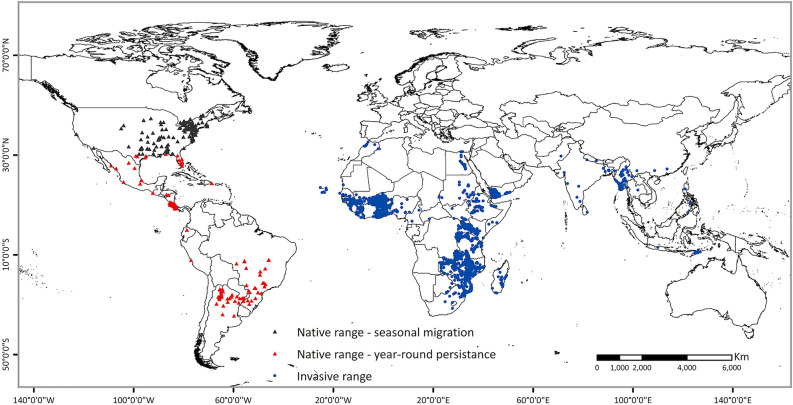
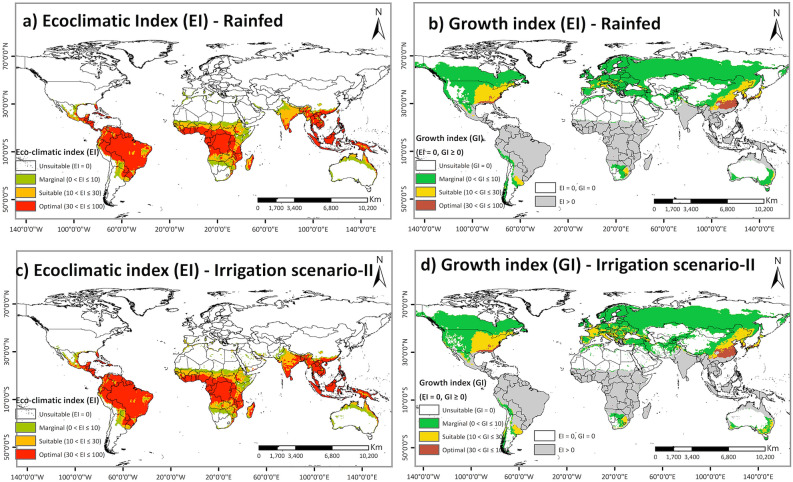
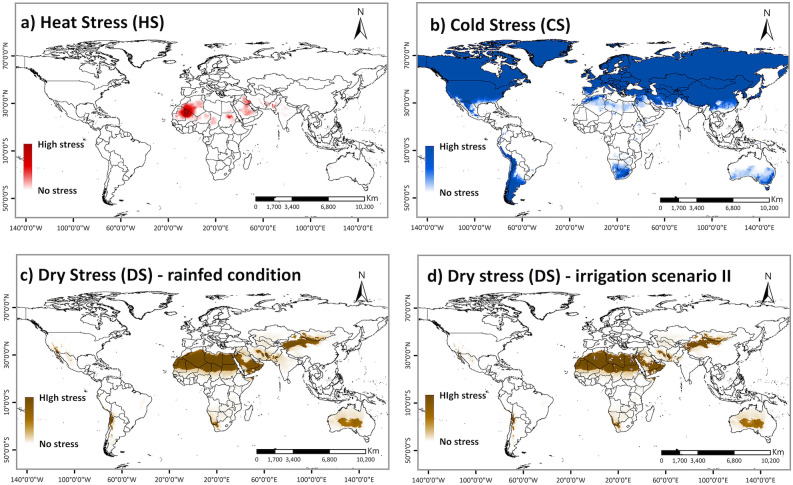
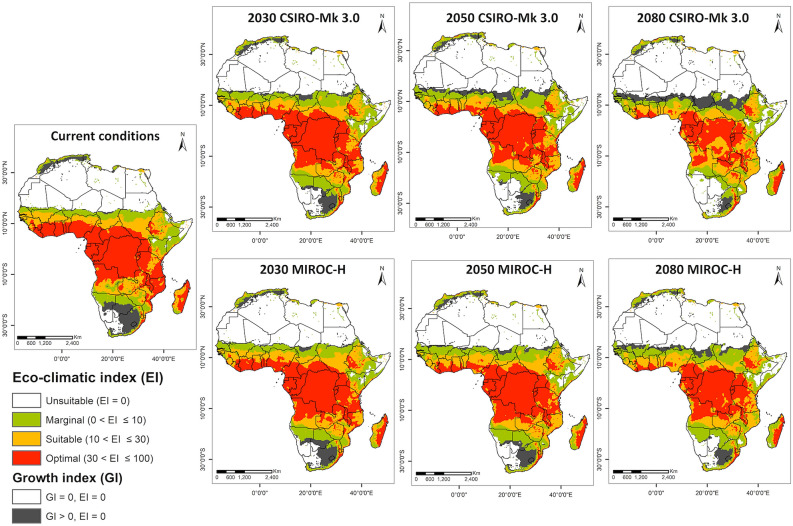
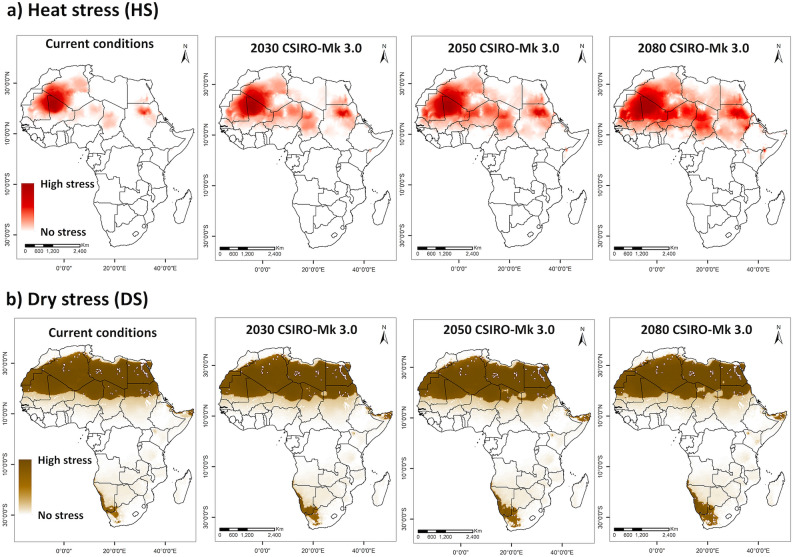
The fall armyworm, Spodoptera frugiperda (FAW), first invaded Africa in 2016 and has since become established in many areas across the continent where it poses a serious threat to food and nutrition security. We re-parameterized the existing CLIMEX model to assess the FAW global invasion threat, emphasizing the risk of transient and permanent population establishment in Africa under current and projected future climates, considering irrigation patterns. FAW can establish itself in almost all countries in eastern and central Africa and a large part of western Africa under the current climate. Climatic barriers, such as heat and dry stresses, may limit the spread of FAW to North and South Africa. Future projections suggest that FAW invasive range will retract from both northern and southern regions towards the equator. However, a large area in eastern and central Africa is projected to have an optimal climate for FAW persistence. These areas will serve as FAW 'hotspots' from where it may migrate to the north and south during favorable seasons and then pose an economic threat. Our projections can be used to identify countries at risk for permanent and transient FAW-population establishment and inform timely integrated pest management interventions under present and future climate in Africa.
秋粘虫(FAW)于 2016 年首次入侵非洲,此后已在非洲大陆的许多地区扎根,对粮食和营养安全构成严重威胁。我们重新参数化了现有的 CLIMEX 模型,以评估 FAW 的全球入侵威胁,强调在当前和未来预测的气候下,考虑到灌溉模式,FAW 在非洲临时和永久种群建立的风险。在当前气候下,FAW 几乎可以在东非和中非的所有国家以及西非的大部分地区建立自己的种群。气候障碍,如高温和干燥胁迫,可能会限制 FAW 在北非和南非的传播。未来的预测表明,FAW 的入侵范围将从北部和南部地区向赤道退缩。然而,东非和中非的大片地区预计将有适合 FAW 持续存在的最佳气候。这些地区将成为 FAW 的“热点”,在有利的季节,FAW 可能会从这些地区向北部和南部迁移,然后对经济构成威胁。我们的预测可用于确定在当前和未来非洲气候下,有永久和临时 FAW 种群建立风险的国家,并为及时采取综合虫害管理干预措施提供信息。