College of Food Science and Technology, Yunnan Agricultural University, Kunming 650201, China.
Engineering Research Center of Development and Utilization of Food and Drug Homologous Resources, Ministry of Education, Yunnan Agricultural University, Kunming 650201, China.
Int J Mol Sci. 2023 Jul 12;24(14):11376. doi: 10.3390/ijms241411376.
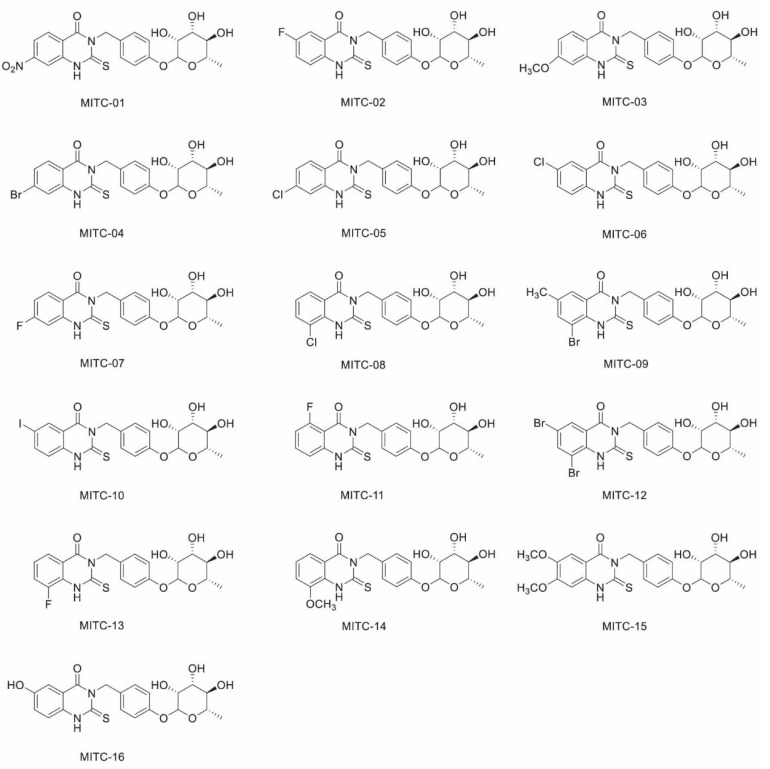
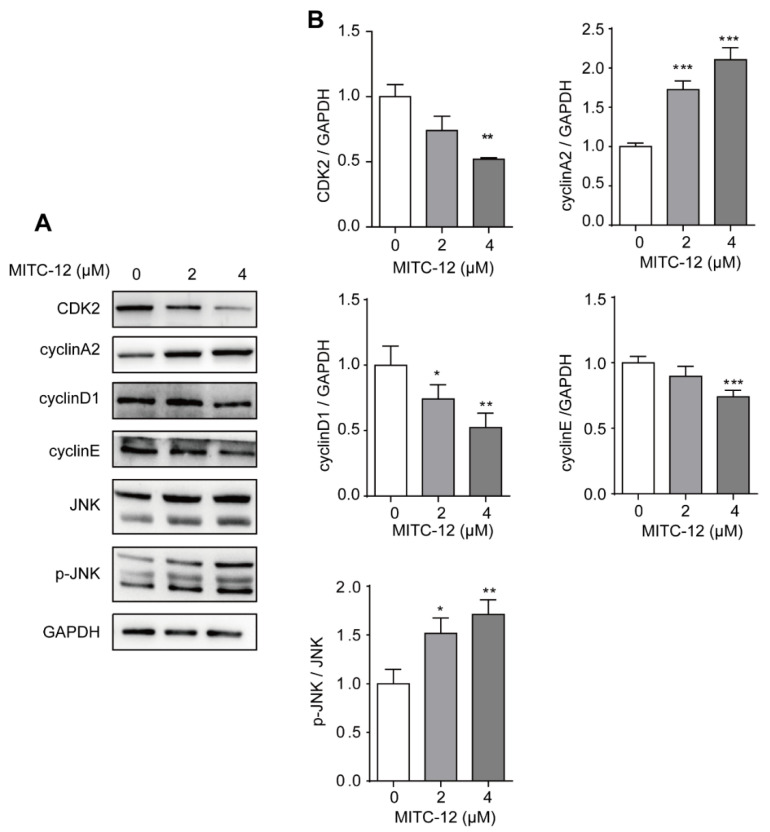
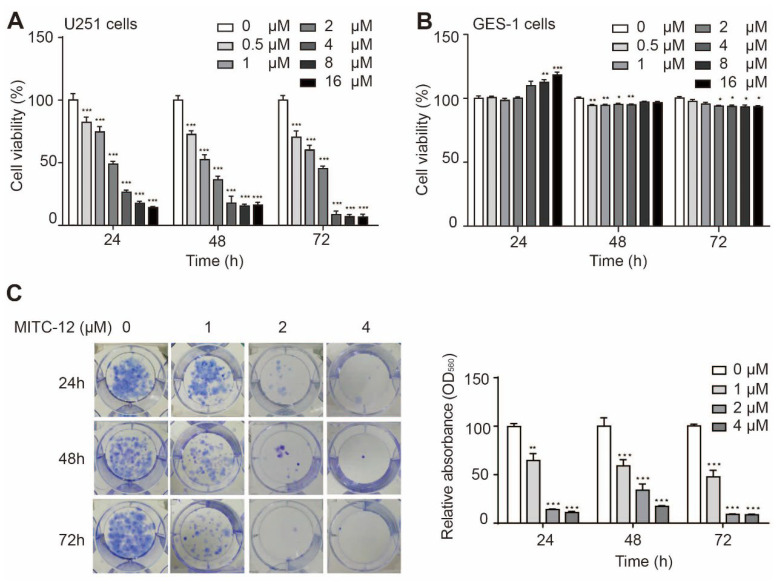
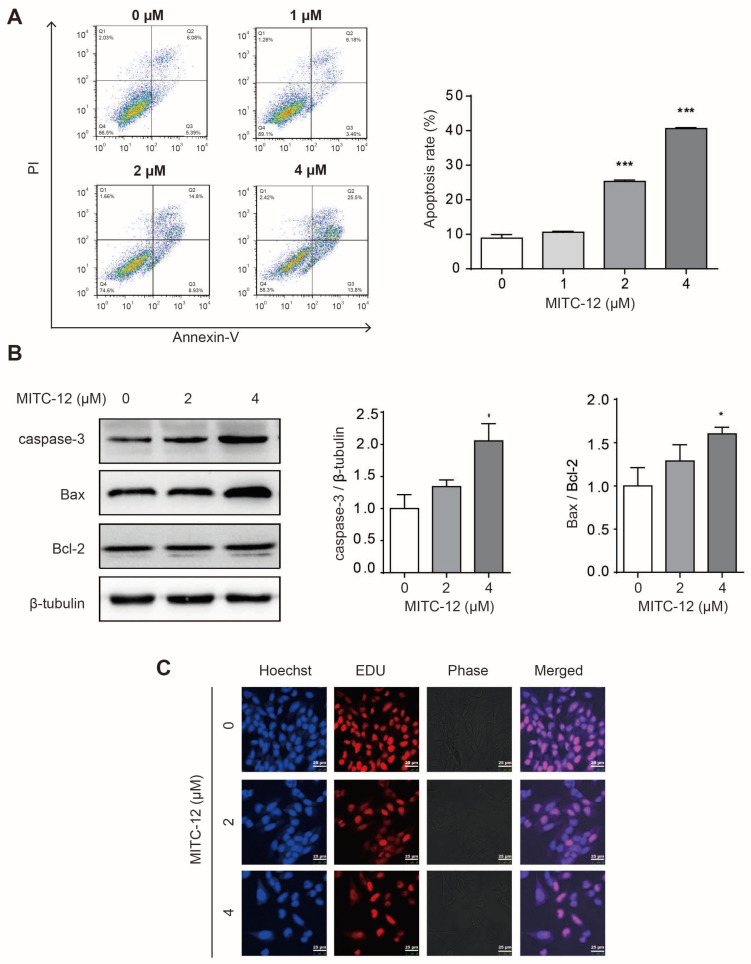
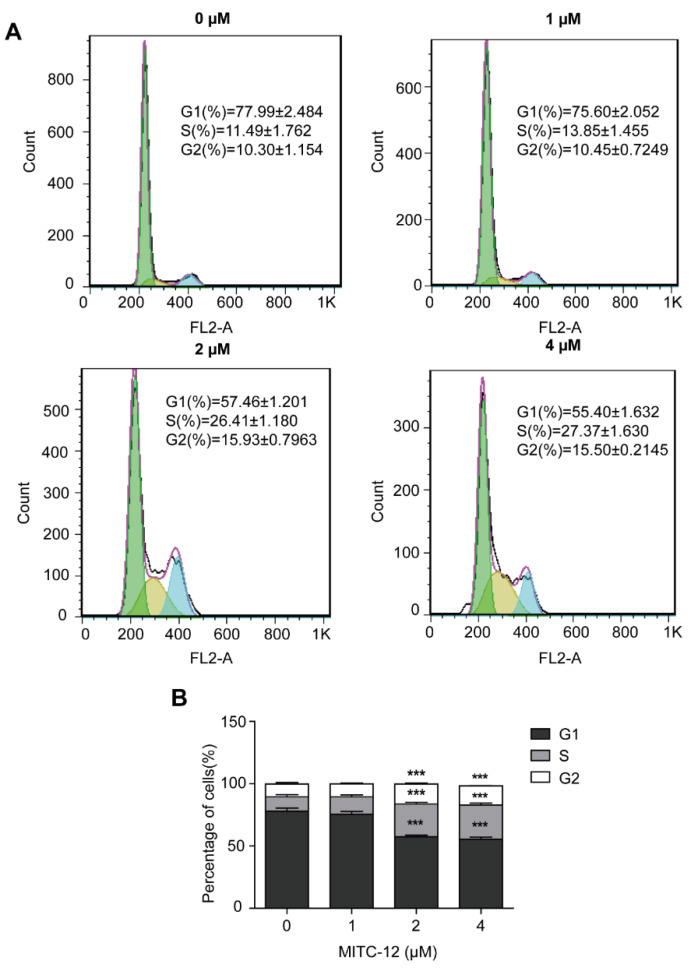
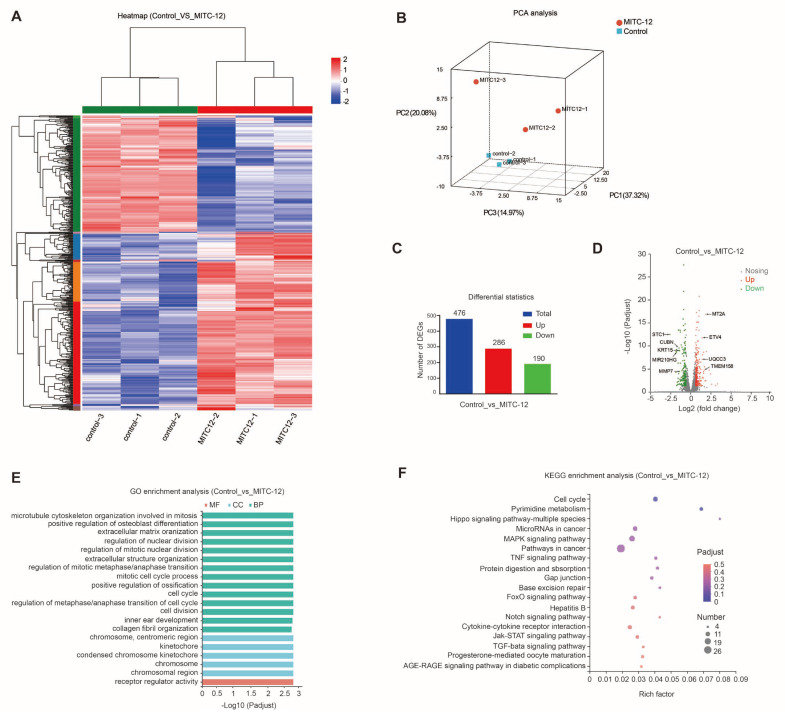
A major active constituent of Lam. is 4-[(α-L-rhamnose oxy) benzyl] isothiocyanate (MITC). To broaden MITC's application and improve its biological activity, we synthesized a series of MITC quinazolinone derivatives and evaluated their anticancer activity. The anticancer effects and mechanisms of the compound with the most potent anticancer activity were investigated further. Among 16 MITC quinazolinone derivatives which were analyzed, MITC-12 significantly inhibited the growth of U251, A375, A431, HCT-116, HeLa, and MDA-MB-231 cells. MITC-12 significantly inhibited U251 cell proliferation in a time- and dose-dependent manner and decreased the number of EdU-positive cells, but was not toxic to normal human gastric mucosal cells (GES-1). Further, MITC-12 induced apoptosis of U251 cells, and increased caspase-3 expression levels and the Bax:Bcl-2 ratio. In addition, MITC-12 significantly decreased the proportion of U251 cells in the G1 phase and increased it in S and G2 phases. Transcriptome sequencing showed that MITC-12 had a significant regulatory effect on pathways regulating the cell cycle. Further, MITC-12 significantly decreased the expression levels of the cell cycle-related proteins CDK2, cyclinD1, and cyclinE, and increased those of cyclinA2, as well as the p-JNK:JNK ratio. These results indicate that MITC-12 inhibits U251 cell proliferation by inducing apoptosis and cell cycle arrest, activating JNK, and regulating cell cycle-associated proteins. MITC-12 has potential for use in the prevention and treatment of glioma.
姜黄素的主要活性成分为 4-[(α-L-鼠李糖氧基)苄基]异硫氰酸酯(MITC)。为了拓宽 MITC 的应用范围并提高其生物活性,我们合成了一系列 MITC 喹唑啉酮衍生物,并评估了它们的抗癌活性。进一步研究了具有最强抗癌活性的化合物的抗癌作用和机制。在分析的 16 种 MITC 喹唑啉酮衍生物中,MITC-12 显著抑制了 U251、A375、A431、HCT-116、HeLa 和 MDA-MB-231 细胞的生长。MITC-12 显著抑制 U251 细胞的增殖呈时间和剂量依赖性,并减少 EdU 阳性细胞的数量,但对正常人类胃黏膜细胞(GES-1)没有毒性。此外,MITC-12 诱导 U251 细胞凋亡,增加 caspase-3 表达水平和 Bax:Bcl-2 比值。此外,MITC-12 显著降低 U251 细胞在 G1 期的比例,增加 S 和 G2 期的比例。转录组测序表明,MITC-12 对调节细胞周期的途径具有显著的调控作用。此外,MITC-12 显著降低了细胞周期相关蛋白 CDK2、cyclinD1 和 cyclinE 的表达水平,增加了 cyclinA2 的表达水平,以及 p-JNK:JNK 比值。这些结果表明,MITC-12 通过诱导细胞凋亡和细胞周期阻滞、激活 JNK 以及调节细胞周期相关蛋白来抑制 U251 细胞的增殖。MITC-12 具有预防和治疗神经胶质瘤的潜力。