Amalia Muttia, Puteri Meidi Utami, Saputri Fadlina Chany, Sauriasari Rani, Widyantoro Bambang
Doctoral Program, Faculty of Pharmacy, Universitas Indonesia, Kampus UI Depok, Depok 16424, Indonesia.
Laboratory of Pharmacology-Toxicology, Faculty of Pharmacy, Universitas Indonesia, Kampus UI Depok, Depok 16424, Indonesia.
Life (Basel). 2023 Jun 29;13(7):1473. doi: 10.3390/life13071473.
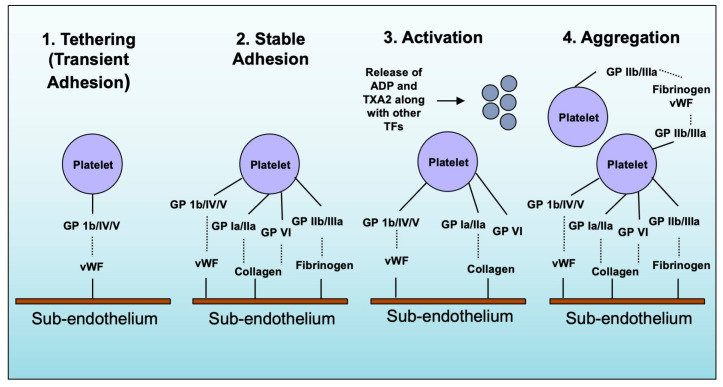
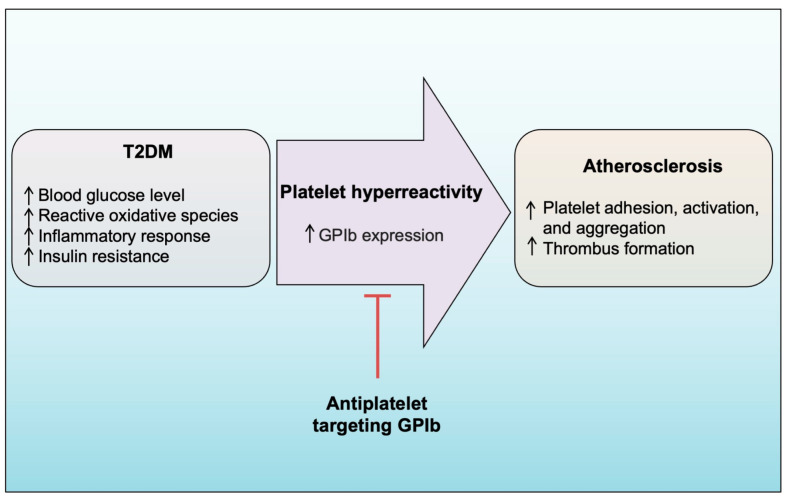
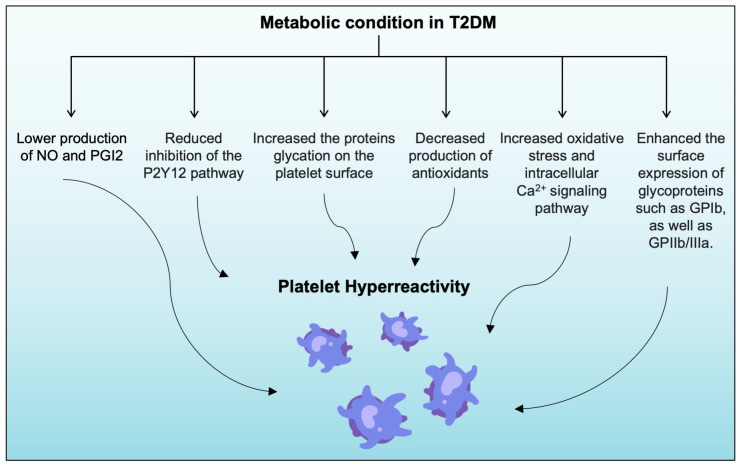
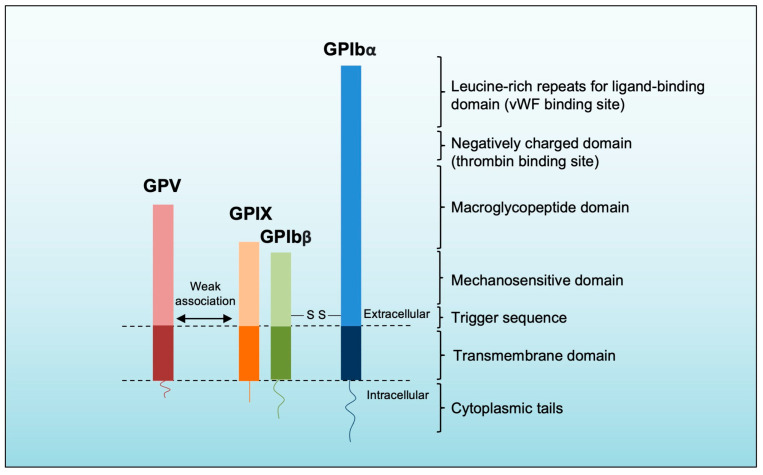
Type 2 diabetes mellitus (T2DM) is a persistent metabolic condition that contributes to the development of cardiovascular diseases. Numerous studies have provided evidence that individuals with T2DM are at a greater risk of developing cardiovascular diseases, typically two to four times more likely than those without T2DM, mainly due to an increased risk of atherosclerosis. The rupture of an atherosclerotic plaque leading to pathological thrombosis is commonly recognized as a significant factor in advancing cardiovascular diseases caused by TD2M, with platelets inducing the impact of plaque rupture in established atherosclerosis and predisposing to the primary expansion of atherosclerosis. Studies suggest that individuals with T2DM have platelets that display higher baseline activation and reactivity than those without the condition. The expression enhancement of several platelet receptors is known to regulate platelet activation signaling, including platelet glycoprotein-Ib (GPIb). Furthermore, the high expression of platelet GP1b has been reported to increase the risk of platelet adhesion, platelet-leucocyte interaction, and thrombo-inflammatory pathology. However, the study exploring the role of GP1b in promoting platelet activation-induced cardiovascular diseases in T2DM patients is still limited. Therefore, we summarize the important findings regarding pathophysiological continuity between T2DM, platelet GPIb, and atherosclerosis and highlight the potential therapy targeting GPIb as a novel antiplatelet agent for preventing further cardiovascular incidents in TD2M patients.
2型糖尿病(T2DM)是一种持续性代谢疾病,会促使心血管疾病的发生。众多研究已证实,T2DM患者患心血管疾病的风险更高,通常比非T2DM患者高出两到四倍,主要原因是动脉粥样硬化风险增加。动脉粥样硬化斑块破裂导致病理性血栓形成,通常被认为是T2DM引发心血管疾病进展的一个重要因素,血小板在已形成的动脉粥样硬化中引发斑块破裂的影响,并促使动脉粥样硬化的初始扩展。研究表明,T2DM患者的血小板比非T2DM患者表现出更高的基线激活和反应性。已知几种血小板受体的表达增强可调节血小板激活信号,包括血小板糖蛋白-Ib(GPIb)。此外,据报道血小板GP1b的高表达会增加血小板黏附、血小板-白细胞相互作用和血栓炎症病理的风险。然而,探索GP1b在促进T2DM患者血小板激活诱导的心血管疾病中的作用的研究仍然有限。因此,我们总结了关于T2DM、血小板GPIb和动脉粥样硬化之间病理生理连续性的重要发现,并强调将靶向GPIb作为一种新型抗血小板药物用于预防T2DM患者进一步心血管事件的潜在治疗方法。