Department of Chemical Engineering, University of Mississippi, Oxford, MS 38677, USA.
Pharmacy Administration, School of Pharmacy, University of Mississippi, Oxford, MS 38677, USA.
Molecules. 2024 Oct 15;29(20):4883. doi: 10.3390/molecules29204883.
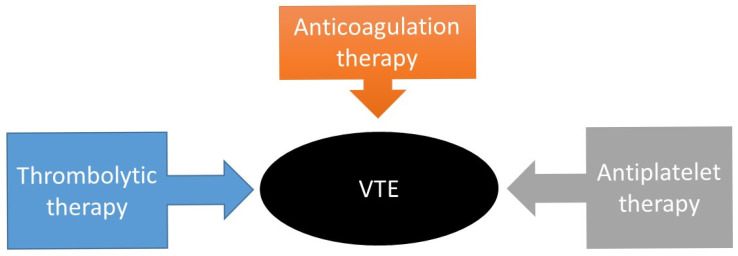
Venous thromboembolism (VTE) is a serious health condition and represents an important cause of morbidity and, in some cases, mortality due to the lack of effective treatment options. According to the Centers for Disease Control and Prevention, 3 out of 10 people with VTE will have recurrence of a clotting event within ten years, presenting a significant unmet medical need. For some VTE patients, symptoms can last longer and have a higher than average risk of serious complications; in contrast, others may experience complications arising from insufficient therapies. People with VTE are initially treated with anticoagulants to prevent conditions such as stroke and to reduce the recurrence of VTE. However, thrombolytic therapy is used for people with pulmonary embolism (PE) experiencing low blood pressure or in severe cases of DVT. New drugs are under development, with the aim to ensure they are safe and effective, and may provide an additional option for the treatment of VTE. In this review, we summarize all ongoing trials evaluating anticoagulant interventions in VTE listed in clinicaltrials.gov, clarifying their underlying mechanisms and evaluating whether they prevent the progression of DVT to PE and recurrence of thrombosis. Moreover, this review summarizes the available evidence that supports the use of antiplatelet therapy for VTE. Since thrombolytic agents would cause off-target effects, targeted drug delivery platforms are used to develop various therapeutics for thrombotic diseases. We discuss the recent advances achieved with thrombus-targeting nanocarriers as well as the major challenges associated with the use of nanoparticle-based therapeutics.
静脉血栓栓塞症(VTE)是一种严重的健康状况,是发病率的重要原因之一,在某些情况下,由于缺乏有效治疗方案,还会导致死亡率上升。根据疾病控制与预防中心的数据,每 10 个 VTE 患者中就有 3 个在十年内会再次发生血栓事件,这表明存在着重大的未满足的医疗需求。对于一些 VTE 患者,症状可能会持续更长时间,并且发生严重并发症的风险高于平均水平;相比之下,其他人可能会因治疗不足而出现并发症。VTE 患者最初接受抗凝治疗,以预防中风等疾病,并降低 VTE 的复发风险。然而,对于出现低血压的肺栓塞(PE)患者或 DVT 严重病例,会使用溶栓疗法。新的药物正在开发中,目的是确保它们安全有效,并可能为 VTE 的治疗提供额外选择。在这篇综述中,我们总结了所有正在进行的临床试验,评估了临床研究.gov 中列出的 VTE 抗凝干预措施,阐明了它们的潜在机制,并评估了它们是否能预防 DVT 向 PE 的进展以及血栓复发。此外,这篇综述还总结了支持抗血小板治疗 VTE 的现有证据。由于溶栓剂会产生脱靶效应,因此靶向药物输送平台被用于开发各种血栓性疾病的治疗方法。我们讨论了血栓靶向纳米载体所取得的最新进展,以及与基于纳米颗粒的治疗方法相关的主要挑战。