Covei Maria, Bogatu Cristina, Gheorghita Silvioara, Duta Anca, Stroescu Hermine, Nicolescu Madalina, Calderon-Moreno Jose Maria, Atkinson Irina, Bratan Veronica, Gartner Mariuca
Department of Product Design, Mechatronics and Environment, Transilvania University of Brasov, 29 Eroilor Bd., 500036 Brasov, Romania.
"Ilie Murgulescu" Institute of Physical Chemistry, Romanian Academy, 202 Splaiul Independentei St., 060021 Bucharest, Romania.
Materials (Basel). 2023 Jul 8;16(14):4899. doi: 10.3390/ma16144899.
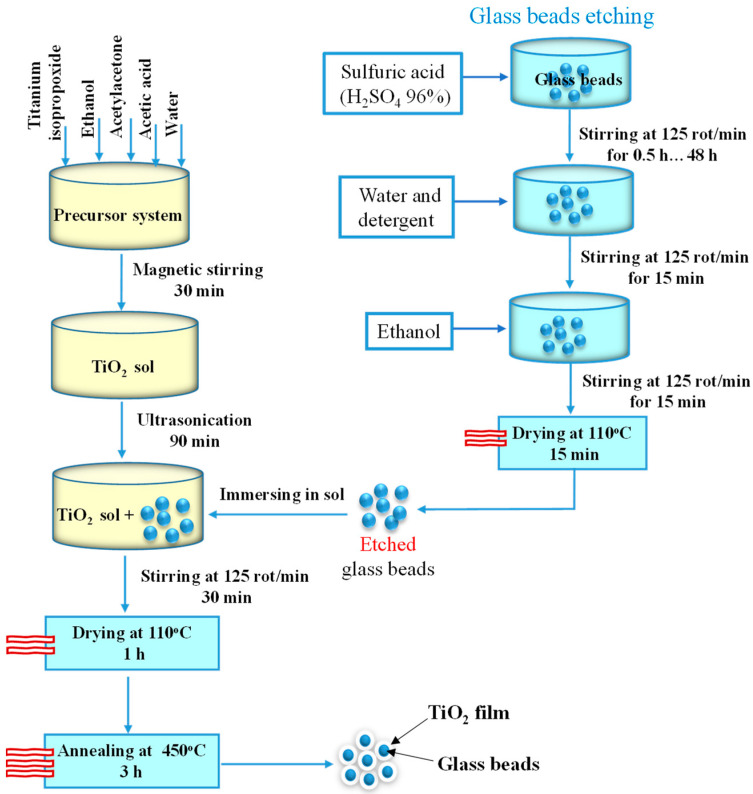
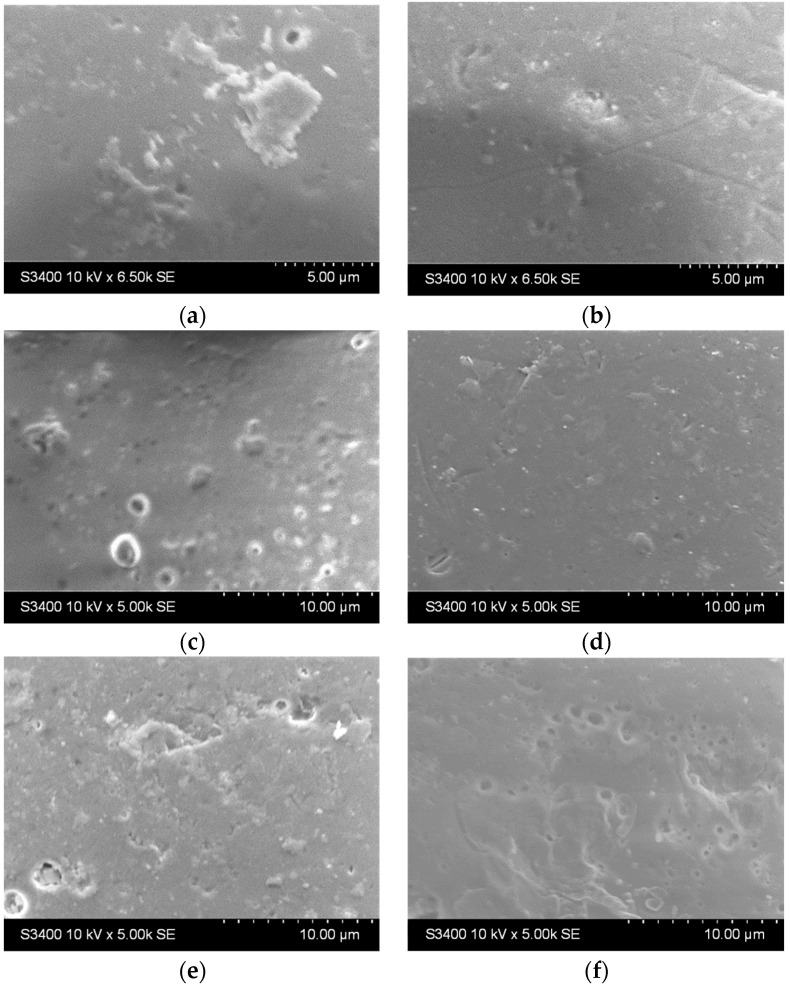
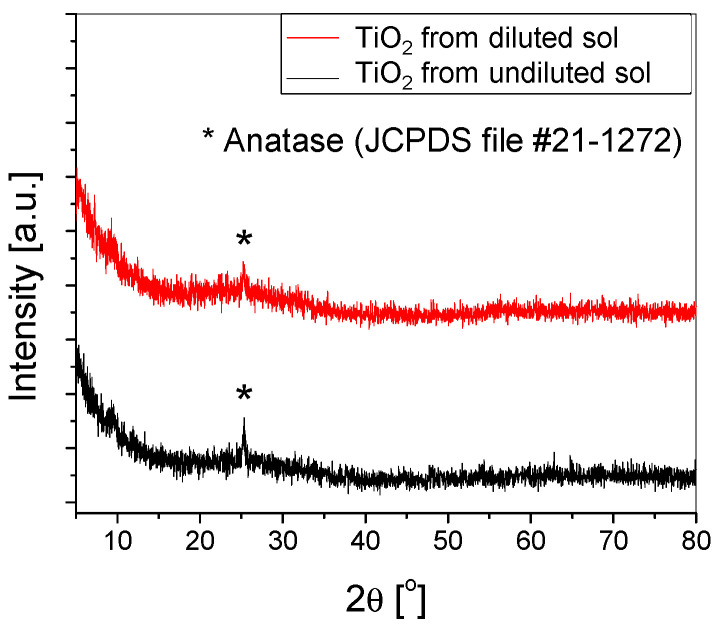
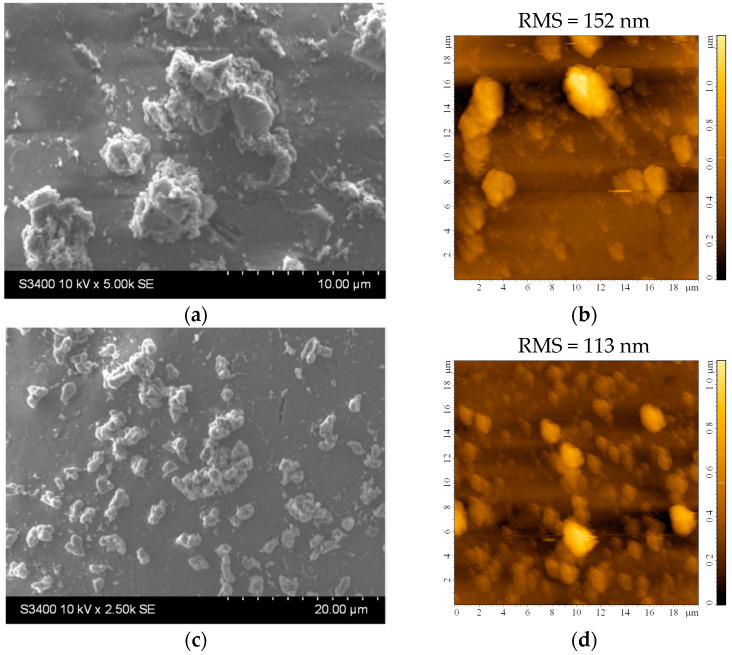
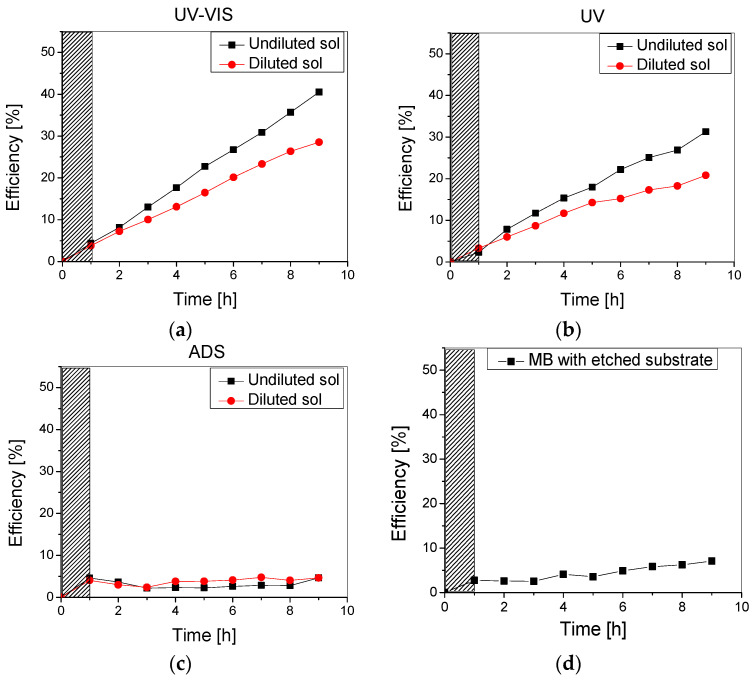
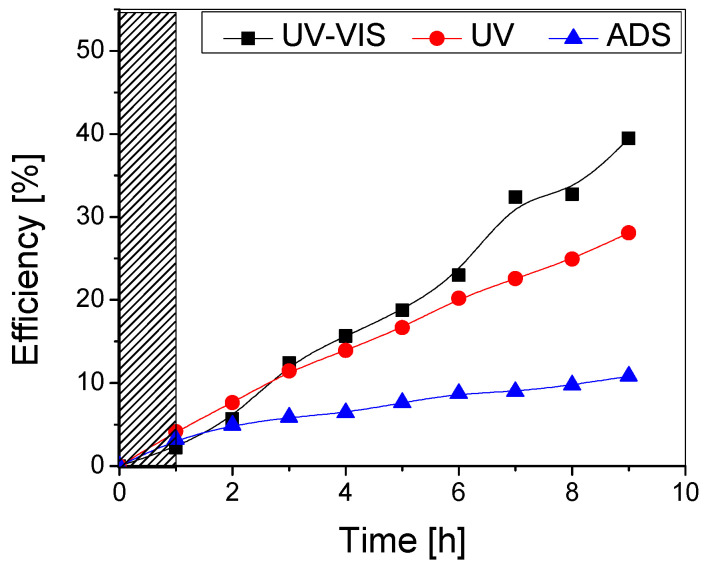
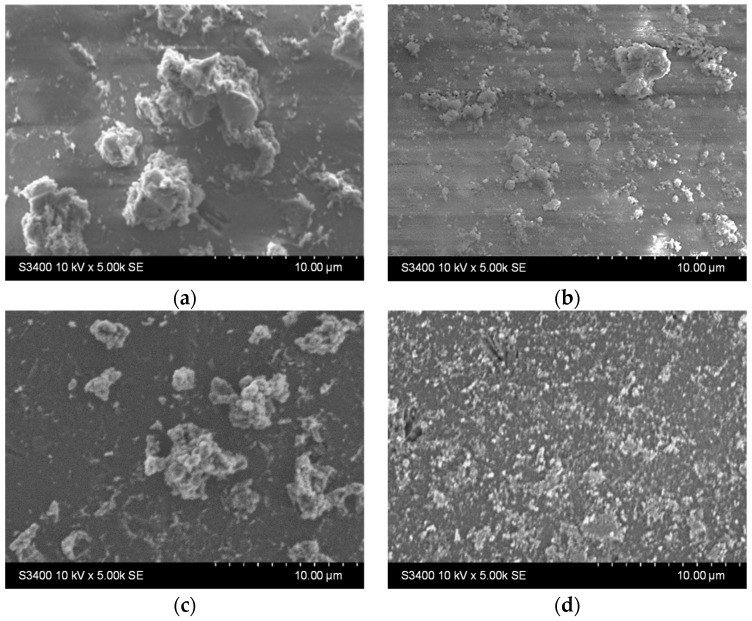
Wastewater treatment targeting reuse may limit water scarcity. Photocatalysis is an advanced oxidation process that may be employed in the removal of traces of organic pollutants, where the material choice is important. Titanium dioxide (TiO) is a highly efficient photocatalyst with good aqueous stability. TiO powder has a high surface area, thus allowing good pollutant adsorption, but it is difficult to filter for reuse. Thin films have a significantly lower surface area but are easier to regenerate and reuse. In this paper, we report on obtaining sol-gel TiO thin films on spherical beads (2 mm diameter) with high surface area and easy recovery from wastewater. The complex influence of the substrate morphology (etched up to 48 h in concentrated HSO), of the sol dilution with ethanol (1:0 or 1:1), and the number of layers (1 or 2) on the structure, morphology, chemical composition, and photocatalytic performance of the TiO thin films is investigated. Etching the substrate for 2 h in HSO leads to uniform, smooth surfaces on which crystalline, homogeneous TiO thin films are grown. Films deposited using an undiluted sol are stable in water, with some surface reorganization of the TiO aggregates occurring, while the films obtained using diluted sol are partially washed out. By increasing the film thickness through the deposition of a second layer, the roughness increases (from ~50 nm to ~100 nm), but this increase is not high enough to promote higher adsorption or overall photocatalytic efficiency in methylene blue photodegradation (both about 40% after 8 h of UV-Vis irradiation at 55 W/m). The most promising thin film, deposited on spherical bead substrates (etched for 2 h in HSO) using the undiluted sol, with one layer, is highly crystalline, uniform, water-stable, and proves to have good photocatalytic activity.
以回用为目标的废水处理可能会缓解水资源短缺问题。光催化是一种高级氧化工艺,可用于去除痕量有机污染物,其中材料的选择至关重要。二氧化钛(TiO₂)是一种高效的光催化剂,具有良好的水稳定性。TiO₂粉末具有高比表面积,因此具有良好的污染物吸附性能,但难以过滤回用。薄膜具有显著更低的比表面积,但更易于再生和回用。在本文中,我们报道了在直径为2毫米的球形珠粒上获得具有高比表面积且易于从废水中回收的溶胶-凝胶TiO₂薄膜。研究了底物形态(在浓H₂SO₄中蚀刻长达48小时)、乙醇对溶胶的稀释比例(1:0或1:1)以及层数(1层或2层)对TiO₂薄膜的结构、形态、化学成分和光催化性能的复杂影响。在H₂SO₄中蚀刻底物2小时会产生均匀、光滑的表面,在其上生长出结晶均匀的TiO₂薄膜。使用未稀释溶胶沉积的薄膜在水中稳定,TiO₂聚集体会发生一些表面重组,而使用稀释溶胶获得的薄膜会部分被冲洗掉。通过沉积第二层来增加膜厚度,粗糙度会增加(从约50纳米增加到约100纳米),但这种增加不足以促进更高的吸附或在亚甲基蓝光降解中的整体光催化效率(在55 W/m²的紫外-可见光照8小时后两者均约为40%)。最有前景的薄膜是使用未稀释溶胶在球形珠粒底物上(在H₂SO₄中蚀刻2小时)沉积的单层薄膜,它高度结晶、均匀、水稳定,并被证明具有良好的光催化活性。