Krueger Emily S, Griffin Laura E, Beales Joseph L, Lloyd Trevor S, Brown Nathan J, Elison Weston S, Kay Colin D, Neilson Andrew P, Tessem Jeffery S
Department of Nutrition, Dietetics, and Food Science, Brigham Young University, Provo, UT 84602, USA.
Plants for Human Health Institute, Department of Food, Bioprocessing and Nutrition Sciences, North Carolina State University, Kannapolis, NC 28081, USA.
Metabolites. 2023 Jun 28;13(7):801. doi: 10.3390/metabo13070801.
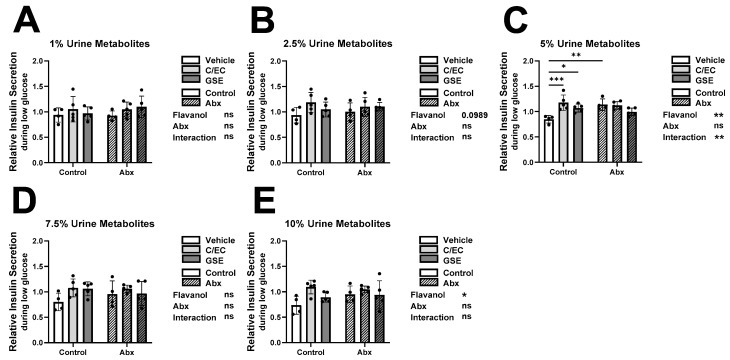
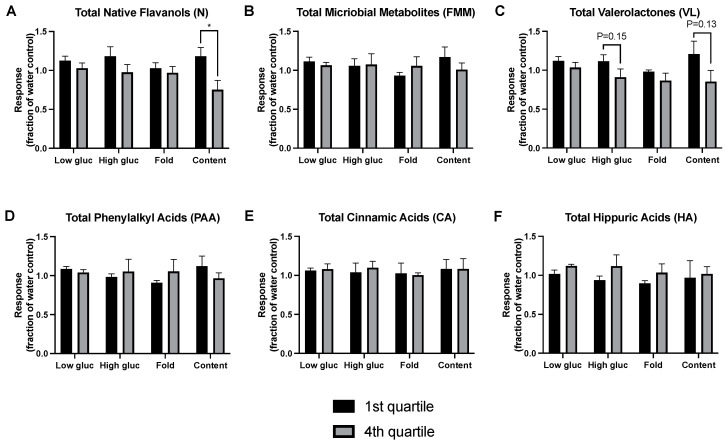
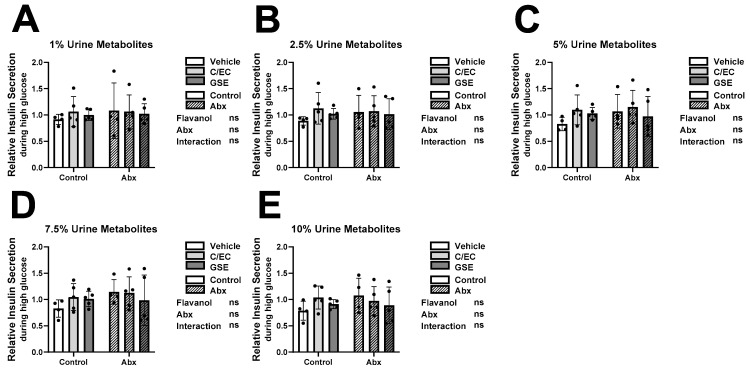
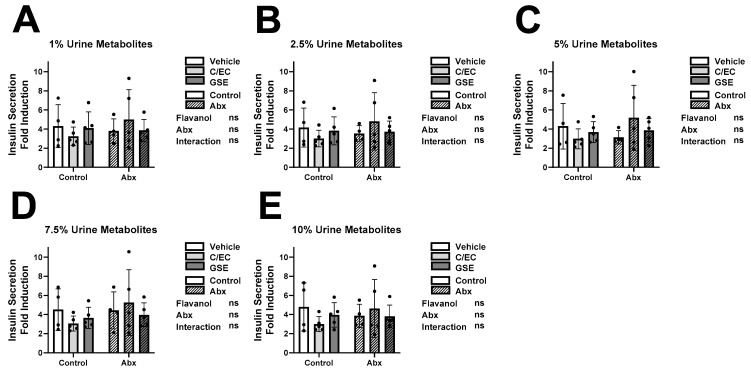
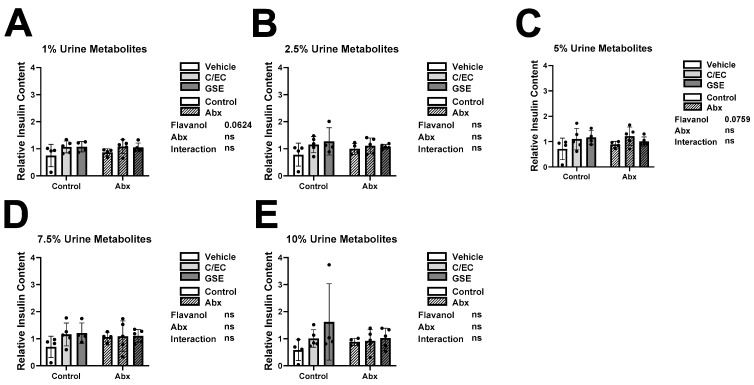
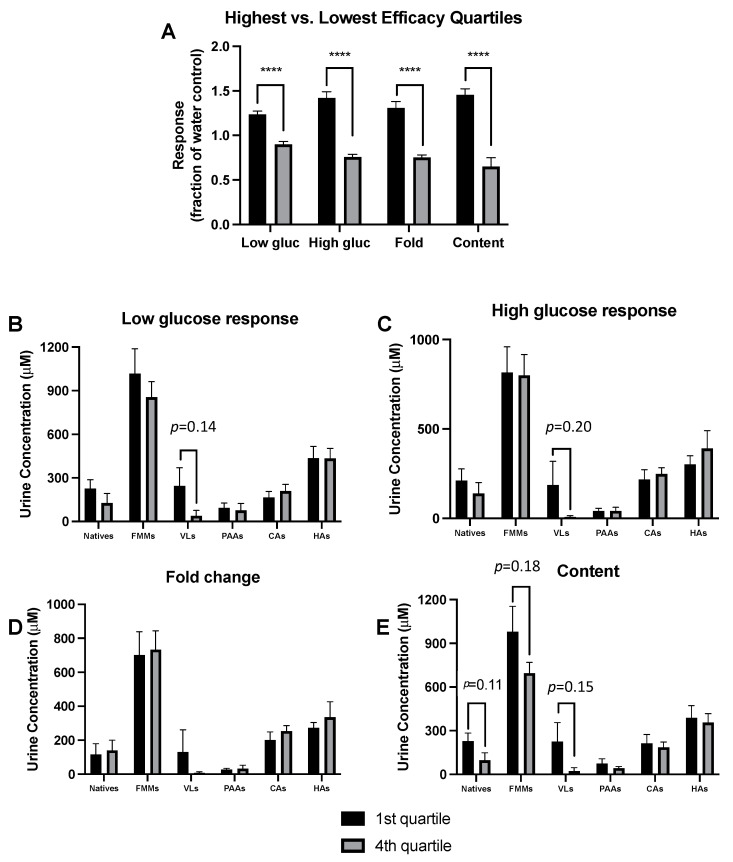
Dietary flavanols are known for disease preventative properties but are often poorly absorbed. Gut microbiome flavanol metabolites are more bioavailable and may exert protective activities. Using metabolite mixtures extracted from the urine of rats supplemented with flavanols and treated with or without antibiotics, we investigated their effects on INS-1 832/13 β-cell glucose stimulated insulin secretion (GSIS) capacity. We measured insulin secretion under non-stimulatory (low) and stimulatory (high) glucose levels, insulin secretion fold induction, and total insulin content. We conducted treatment-level comparisons, individual-level dose responses, and a responder vs. non-responder predictive analysis of metabolite composition. While the first two analyses did not elucidate treatment effects, metabolites from 9 of the 28 animals demonstrated significant dose responses, regardless of treatment. Differentiation of responders vs. non-responder revealed that levels of native flavanols and valerolactones approached significance for predicting enhanced GSIS, regardless of treatment. Although treatment-level patterns were not discernable, we conclude that the high inter-individual variability shows that metabolite bioactivity on GSIS capacity is less related to flavanol supplementation or antibiotic treatment and may be more associated with the unique microbiome or metabolome of each animal. These findings suggest flavanol metabolite activities are individualized and point to the need for personalized nutrition practices.
膳食黄烷醇以其疾病预防特性而闻名,但往往吸收不佳。肠道微生物群产生的黄烷醇代谢产物具有更高的生物利用度,可能发挥保护作用。我们从补充了黄烷醇且接受或未接受抗生素治疗的大鼠尿液中提取代谢物混合物,研究它们对INS-1 832/13β细胞葡萄糖刺激的胰岛素分泌(GSIS)能力的影响。我们测量了非刺激(低)和刺激(高)葡萄糖水平下的胰岛素分泌、胰岛素分泌诱导倍数以及总胰岛素含量。我们进行了处理水平比较、个体水平剂量反应以及代谢物组成的反应者与非反应者预测分析。虽然前两项分析未阐明处理效果,但28只动物中有9只的代谢物表现出显著的剂量反应,与处理无关。反应者与非反应者的区分显示,无论处理如何,天然黄烷醇和戊内酯的水平对于预测增强的GSIS接近显著水平。尽管处理水平模式不明显,但我们得出结论,个体间的高变异性表明代谢物对GSIS能力的生物活性与黄烷醇补充或抗生素治疗的相关性较小,可能更多地与每只动物独特的微生物群或代谢组有关。这些发现表明黄烷醇代谢物的活性是个体化的,并指出了个性化营养实践的必要性。