Shaw Claire, Hess Matthias, Weimer Bart C
Department of Population Health and Reproduction, 100K Pathogen Genome Project, University of California Davis, Davis, CA 95616, USA.
Department of Animal Science, College of Agricultural and Environmental Sciences, University of California Davis, Davis, CA 95616, USA.
Microorganisms. 2023 Jul 17;11(7):1825. doi: 10.3390/microorganisms11071825.
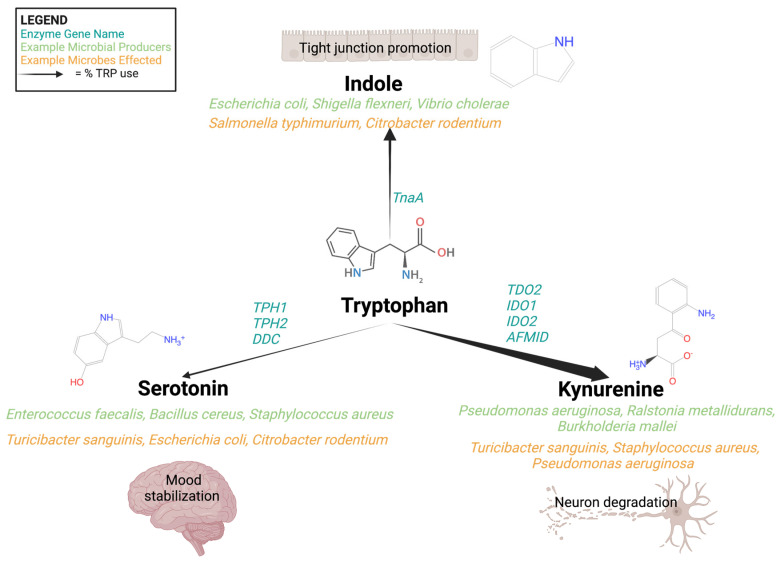
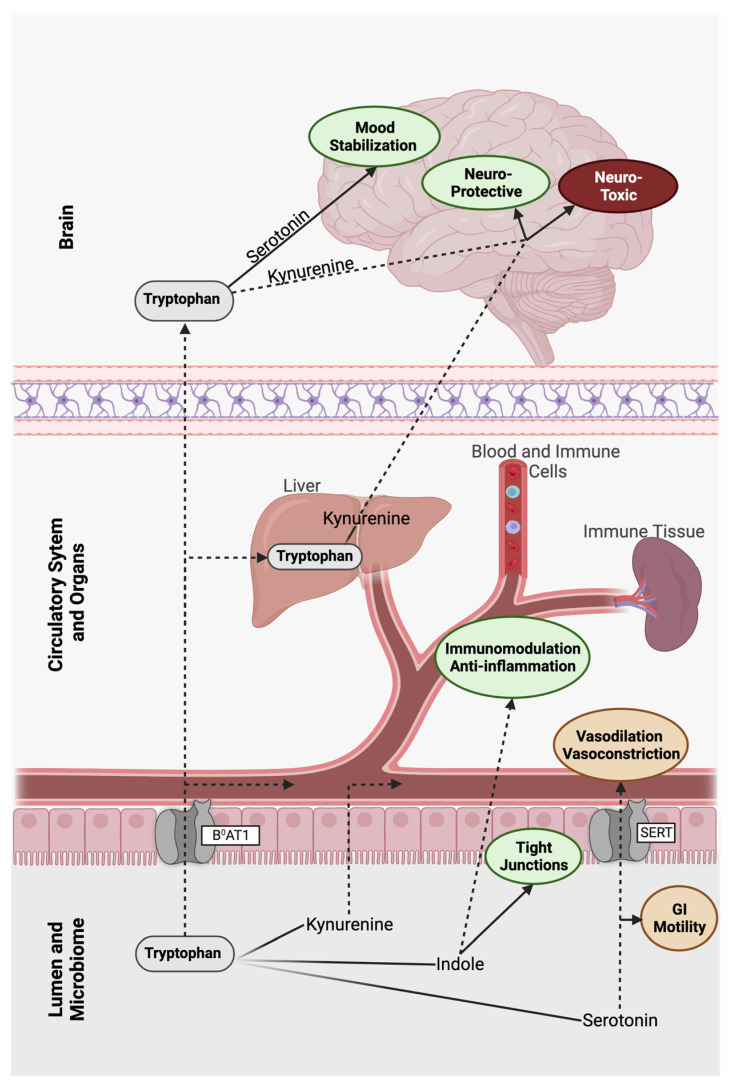
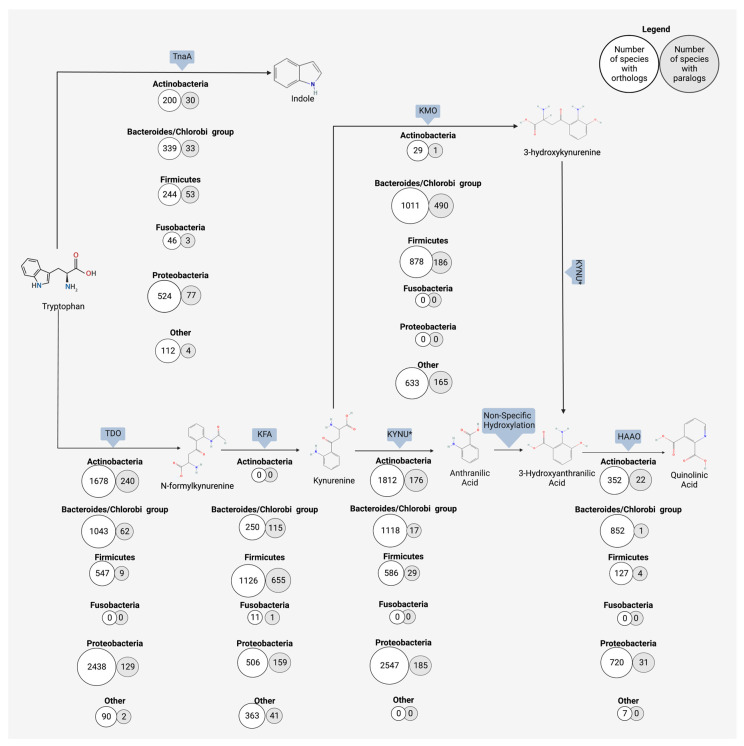
The gut microbiome provides the host access to otherwise indigestible nutrients, which are often further metabolized by the microbiome into bioactive components. The gut microbiome can also shift the balance of host-produced compounds, which may alter host health. One precursor to bioactive metabolites is the essential aromatic amino acid tryptophan. Tryptophan is mostly shunted into the kynurenine pathway but is also the primary metabolite for serotonin production and the bacterial indole pathway. Balance between tryptophan-derived bioactive metabolites is crucial for neurological homeostasis and metabolic imbalance can trigger or exacerbate neurological diseases. Alzheimer's, depression, and schizophrenia have been linked to diverging levels of tryptophan-derived anthranilic, kynurenic, and quinolinic acid. Anthranilic acid from collective microbiome metabolism plays a complex but important role in systemic host health. Although anthranilic acid and its metabolic products are of great importance for host-microbe interaction in neurological health, literature examining the mechanistic relationships between microbial production, host regulation, and neurological diseases is scarce and at times conflicting. This narrative review provides an overview of the current understanding of anthranilic acid's role in neurological health and disease, with particular focus on the contribution of the gut microbiome, the gut-brain axis, and the involvement of the three major tryptophan pathways.
肠道微生物群为宿主提供了获取其他难以消化的营养物质的途径,这些营养物质通常会被微生物群进一步代谢为生物活性成分。肠道微生物群还可以改变宿主产生的化合物的平衡,这可能会改变宿主的健康状况。生物活性代谢物的一个前体是必需芳香族氨基酸色氨酸。色氨酸大多被分流到犬尿氨酸途径,但也是血清素产生和细菌吲哚途径的主要代谢物。色氨酸衍生的生物活性代谢物之间的平衡对于神经稳态至关重要,代谢失衡会引发或加剧神经疾病。阿尔茨海默病、抑郁症和精神分裂症与色氨酸衍生的邻氨基苯甲酸、犬尿喹啉酸和喹啉酸水平的差异有关。集体微生物群代谢产生的邻氨基苯甲酸在宿主全身健康中发挥着复杂但重要的作用。尽管邻氨基苯甲酸及其代谢产物在神经健康中的宿主-微生物相互作用中非常重要,但研究微生物产生、宿主调节和神经疾病之间机制关系的文献却很稀少,而且有时相互矛盾。这篇叙述性综述概述了目前对邻氨基苯甲酸在神经健康和疾病中的作用的理解,特别关注肠道微生物群、肠-脑轴的贡献以及三大色氨酸途径的参与情况。