Université de Lorraine, CNRS, CRM2, F-54000 Nancy, France.
Université Assane Seck de Ziguinchor, Laboratoire de Chimie et de Physique des Matériaux (LCPM), 523 Ziguinchor, Senegal.
Molecules. 2023 Jul 24;28(14):5603. doi: 10.3390/molecules28145603.
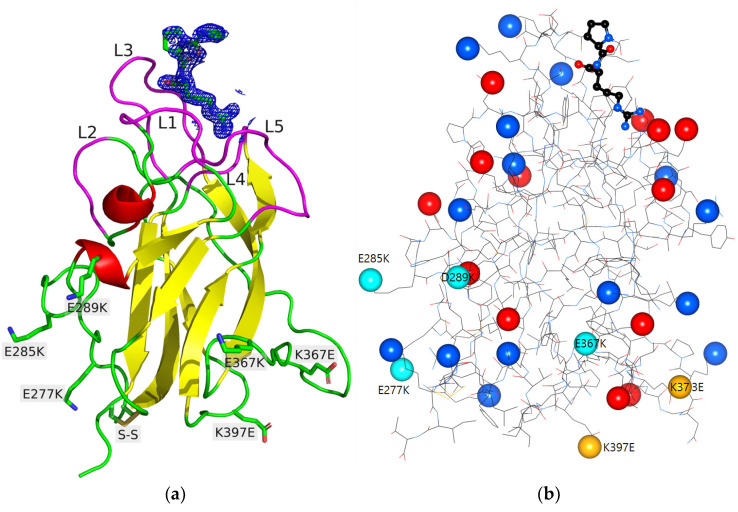
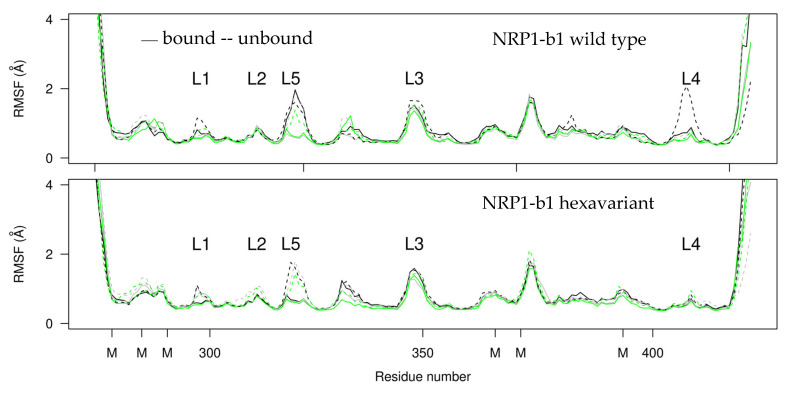
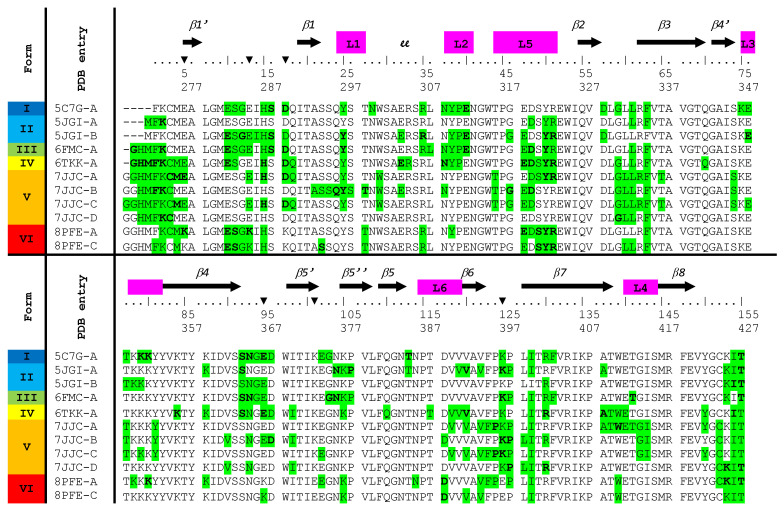
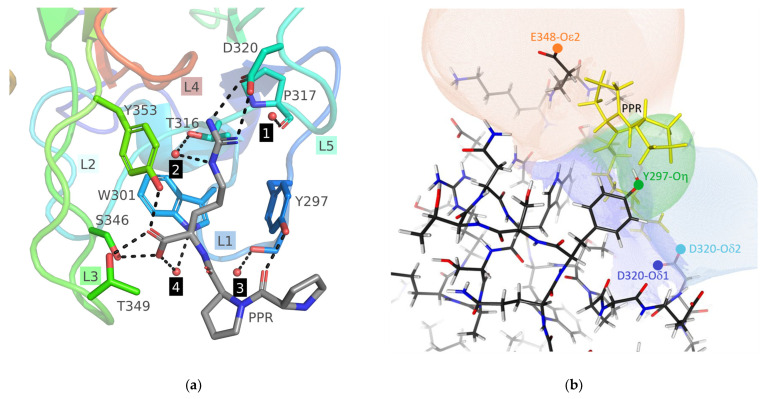
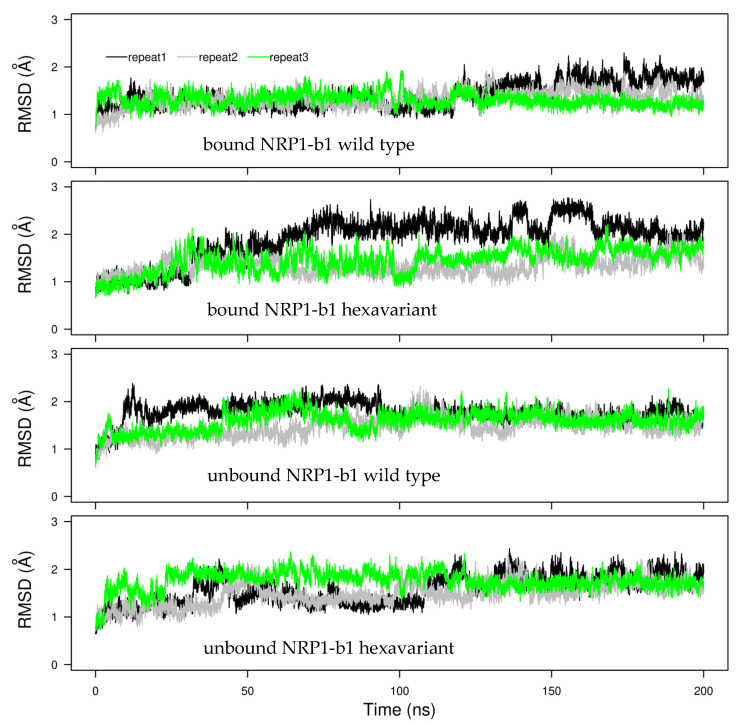
Neuropilin 1 (NRP1), a cell-surface co-receptor of a number of growth factors and other signaling molecules, has long been the focus of attention due to its association with the development and the progression of several types of cancer. For example, the KDKPPR peptide has recently been combined with a photosensitizer and a contrast agent to bind NRP1 for the detection and treatment by photodynamic therapy of glioblastoma, an aggressive brain cancer. The main therapeutic target is a pocket of the fragment b1 of NRP1 (NRP1-b1), in which vascular endothelial growth factors (VEGFs) bind. In the crystal packing of native human NRP1-b1, the VEGF-binding site is obstructed by a crystallographic symmetry neighbor protein, which prevents the binding of ligands. Six charged amino acids located at the protein surface were mutated to allow the protein to form a new crystal packing. The structure of the mutated fragment b1 complexed with the KDKPPR peptide was determined by X-ray crystallography. The variant crystallized in a new crystal form with the VEGF-binding cleft exposed to the solvent and, as expected, filled by the C-terminal moiety of the peptide. The atomic interactions were analyzed using new approaches based on a multipolar electron density model. Among other things, these methods indicated the role played by Asp320 and Glu348 in the electrostatic steering of the ligand in its binding site. Molecular dynamics simulations were carried out to further analyze the peptide binding and motion of the wild-type and mutant proteins. The simulations revealed that specific loops interacting with the peptide exhibited mobility in both the unbound and bound forms.
神经纤毛蛋白 1(NRP1)是许多生长因子和其他信号分子的细胞表面共受体,由于其与几种类型癌症的发展和进展有关,因此一直备受关注。例如,最近将 KDKPPR 肽与光敏剂和对比剂结合,用于结合 NRP1,通过光动力疗法检测和治疗胶质母细胞瘤,这是一种侵袭性脑癌。主要治疗靶点是 NRP1-b1 片段的一个口袋(NRP1-b1),血管内皮生长因子(VEGFs)结合在其中。在天然人 NRP1-b1 的晶体包装中,VEGF 结合位点被晶体学对称邻居蛋白阻塞,从而阻止配体结合。六个位于蛋白质表面的带电氨基酸被突变以允许蛋白质形成新的晶体包装。用 X 射线晶体学测定与 KDKPPR 肽结合的突变片段 b1 的结构。该变体在新的晶体形式中结晶,VEGF 结合裂隙暴露于溶剂中,并且如预期的那样,由肽的 C 末端部分填充。使用基于多极电子密度模型的新方法分析原子相互作用。除其他外,这些方法表明 Asp320 和 Glu348 在配体在其结合位点中的静电引导中发挥作用。进行分子动力学模拟以进一步分析野生型和突变蛋白的肽结合和运动。模拟表明,与肽相互作用的特定环在未结合和结合形式下均表现出移动性。