Vuu Yen My, Kadar Shahib Ashraf, Rastegar Mojgan
Department of Biochemistry and Medical Genetics, Max Rady College of Medicine, Rady Faculty of Health Sciences, University of Manitoba, Winnipeg, MB R3E 0J9, Canada.
Pharmaceuticals (Basel). 2023 Jun 22;16(7):914. doi: 10.3390/ph16070914.
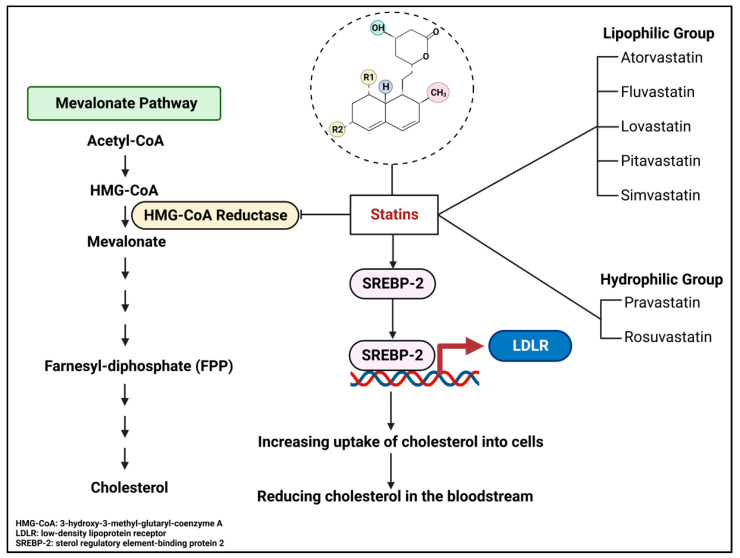
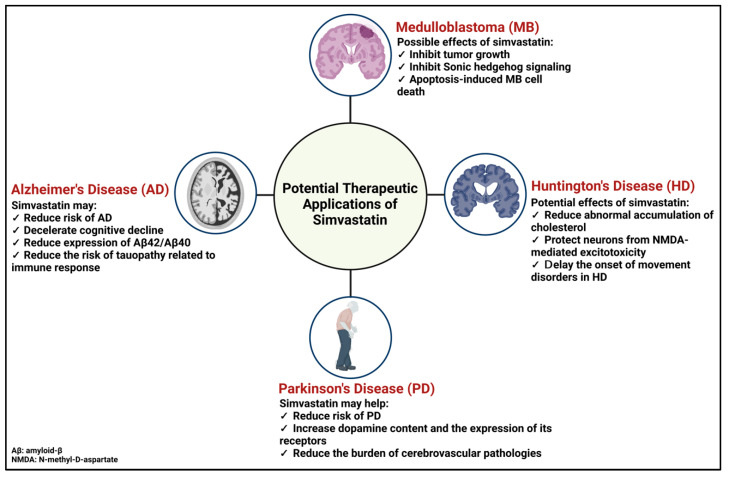
Statins are common drugs that are clinically used to reduce elevated plasma cholesterol levels. Based on their solubility, statins are considered to be either hydrophilic or lipophilic. Amongst them, simvastatin has the highest lipophilicity to facilitate its ability to cross the blood-brain barrier. Recent studies have suggested that simvastatin could be a promising therapeutic option for different brain complications and diseases ranging from brain tumors (i.e., medulloblastoma and glioblastoma) to neurological disorders (i.e., Alzheimer's disease, Parkinson's disease, and Huntington's disease). Specific mechanisms of disease amelioration, however, are still unclear. Independent studies suggest that simvastatin may reduce the risk of developing certain neurodegenerative disorders. Meanwhile, other studies point towards inducing cell death in brain tumor cell lines. In this review, we outline the potential therapeutic effects of simvastatin on brain complications and review the clinically relevant molecular mechanisms in different cases.
他汀类药物是临床上用于降低血浆胆固醇水平升高的常用药物。根据其溶解性,他汀类药物被认为是亲水性或亲脂性的。其中,辛伐他汀具有最高的亲脂性,便于其穿越血脑屏障。最近的研究表明,辛伐他汀可能是治疗从脑肿瘤(即髓母细胞瘤和胶质母细胞瘤)到神经疾病(即阿尔茨海默病、帕金森病和亨廷顿病)等不同脑部并发症和疾病的有前景的治疗选择。然而,疾病改善的具体机制仍不清楚。独立研究表明,辛伐他汀可能降低患某些神经退行性疾病的风险。同时,其他研究指向诱导脑肿瘤细胞系中的细胞死亡。在这篇综述中,我们概述了辛伐他汀对脑部并发症的潜在治疗作用,并回顾了不同情况下的临床相关分子机制。