El-Temsah Mohamed E, Abd-Elkrem Yasser M, El-Gabry Yasser A, Abdelkader Mohamed A, Morsi Nahid A A, Taha Noura M, Abd-Elrahman Shaimaa H, Hashem Fadl A E, Shahin Mostafa G, Abd El-Samad Gomaa A, Boudiar Ridha, Silvar Cristina, El-Hendawy Salah, Mansour Elsayed, El-Hady Mohamed A Abd
Agronomy Department, Faculty of Agriculture, Ain Shams University, Cairo 11241, Egypt.
Cell Research Department (CRD), Field Crops Research Institute (FCRI), Agricultural Research Center (ARC), Giza 12619, Egypt.
Plants (Basel). 2023 Jul 9;12(14):2598. doi: 10.3390/plants12142598.
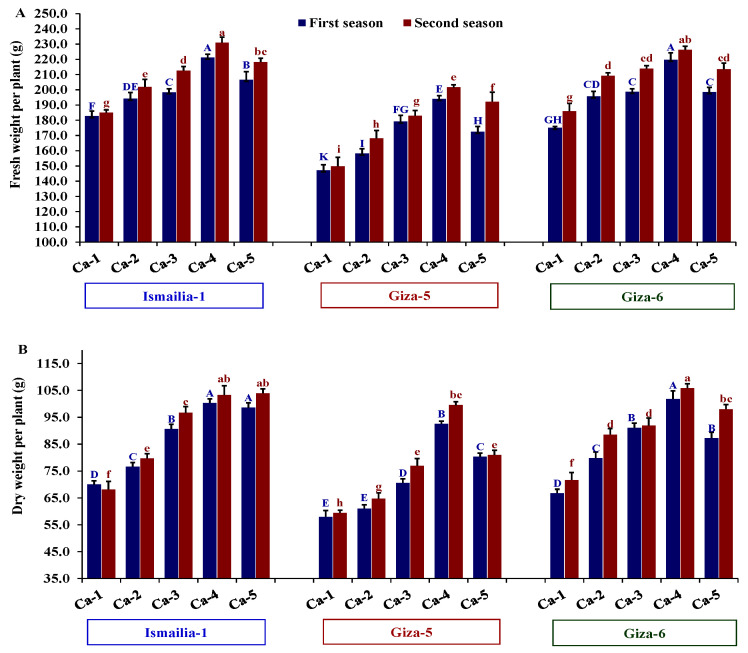
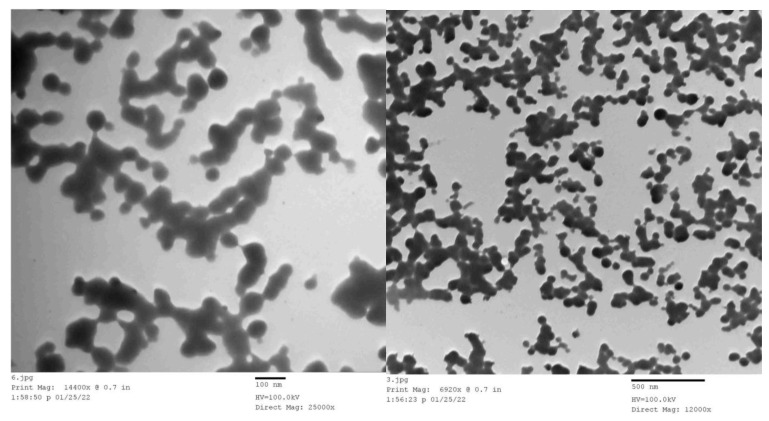
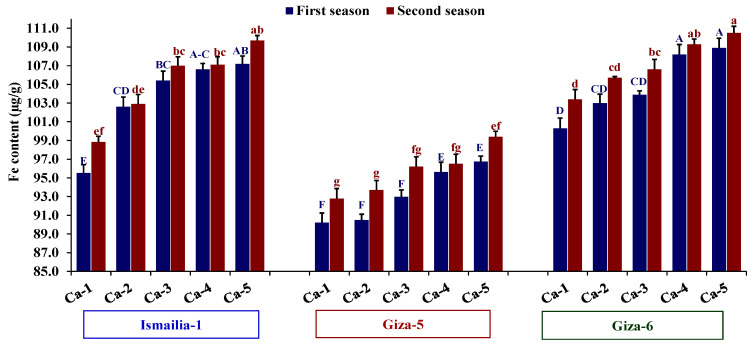
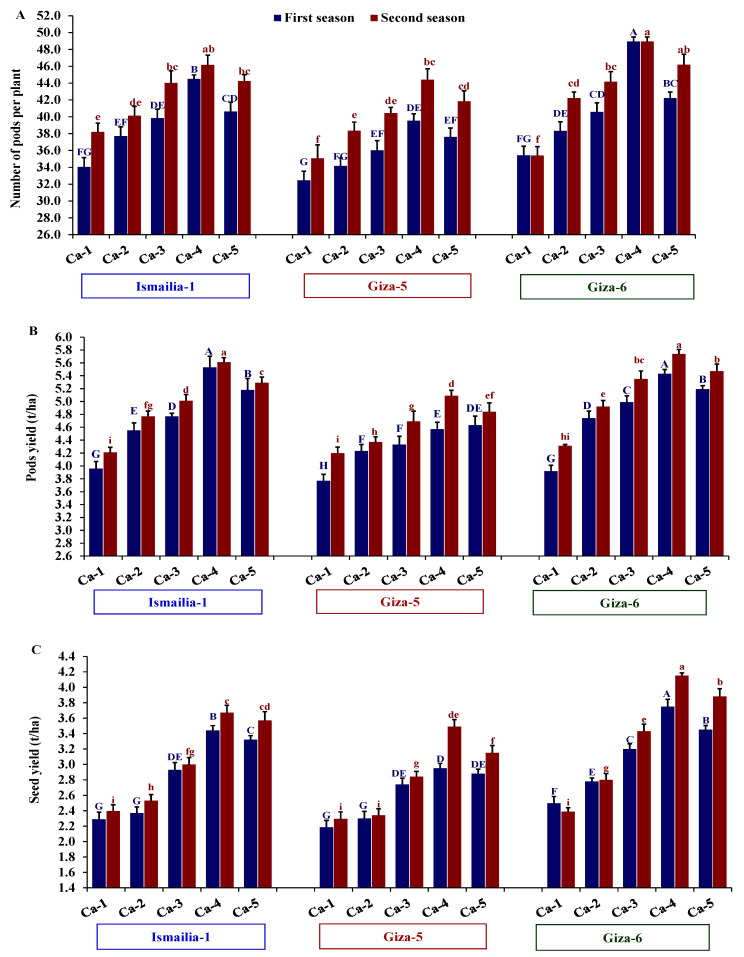
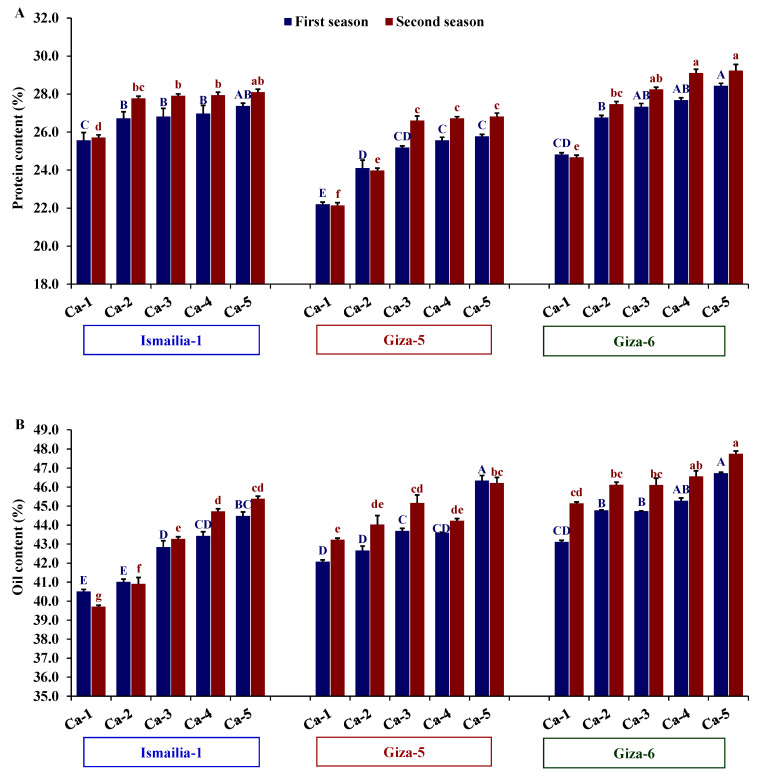
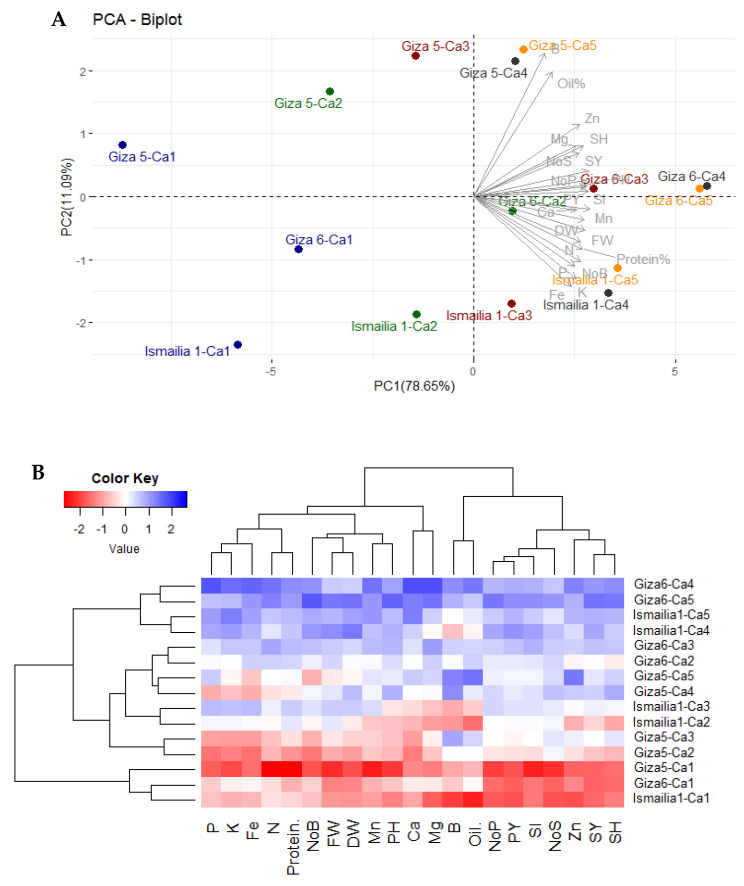
Calcium is one of the most limiting factors for the growth and reproduction of peanut, which ultimately affects pod and seed yields. A two-year field experiment was carried out to assess the impact of five calcium applications, including nano-calcium and conventional forms, on growth, leaf nutrient content, yield traits, and quality parameters of three diverse peanut cultivars (Ismailia-1, Giza-5, and Giza-6). The applied calcium applications were calcium sulfate, which is recommended for commercial peanut cultivation and commonly referred to as gypsum (coded as Ca-1), calcium nitrate (Ca-2), nano-calcium nitrate (Ca-3), 50% calcium nitrate + 50% nano-calcium (Ca-4), and 50% calcium sulfate + 50% nano-calcium (Ca-5). Calcium sulfate (gypsum, Ca-1) was soil-supplied during the seedbed preparation as recommended, while the other calcium applications (Ca-2, Ca-3, Ca-4, and Ca-5) were exogenously sprayed three times at 30, 45, and 60 days after sowing. The soil of the experimental site was alkaline, with a high pH of 8.6. The results revealed significant differences among cultivars, calcium applications, and their interactions. The soil-supplied gypsum Ca-1 displayed lower agronomic performance on all recorded growth, leaf nutrient content, yield traits, and quality parameters. On the other hand, the foliar-supplied calcium, particularly Ca-4 and Ca-5, displayed superior effects compared to the other simple calcium forms. Ca-4 and Ca-5 produced significantly higher seed yield (3.58 and 3.38 t/ha) than the simple recommended form (Ca-1, 2.34 t/ha). This could be due to the difficulty of calcium uptake from soil-supplied calcium under high soil pH compared to the exogenously sprayed nano-calcium form. Moreover, the superior performance of Ca-4 and Ca-5 could be caused by the mixture of fertilizers from the synergistic effect of calcium and nitrate or sulfate. Furthermore, the effect of nitrate was applied in nano form in the Ca4 and Ca-5 treatments, which contributed to improving nutrient uptake efficiency and plant growth compared to the other treatments. The peanut cultivar Giza-6 showed superiority for most measured traits over the other two cultivars. The interaction effect between the assessed cultivars and calcium applications was significant for various traits. The cultivar Giza-6 showed a significant advantage for most measured traits with the mixture of 50% calcium nitrate + 50% nano-calcium (Ca-4). Conclusively, the results pointed out the advantage of the exogenously sprayed nano-calcium form combined with calcium nitrate or calcium sulfate for promoting growth, leaf nutrient content, yield, and quality traits of peanut, particularly with high-yielding cultivars under sandy soil with high pH.
钙是花生生长和繁殖的最限制因素之一,最终会影响荚果和种子产量。开展了一项为期两年的田间试验,以评估包括纳米钙和传统形式在内的五种钙施用方式对三个不同花生品种(伊斯梅利亚 - 1、吉萨 - 5和吉萨 - 6)的生长、叶片养分含量、产量性状和品质参数的影响。施用的钙源有硫酸钙,它是商业花生种植推荐使用的,通常称为石膏(编码为Ca - 1)、硝酸钙(Ca - 2)、纳米硝酸钙(Ca - 3)、50%硝酸钙 + 50%纳米钙(Ca - 4)和50%硫酸钙 + 50%纳米钙(Ca - 5)。硫酸钙(石膏,Ca - 1)按照推荐在苗床准备期间进行土壤施用,而其他钙源(Ca - 2、Ca - 3、Ca - 4和Ca - 5)在播种后30、45和60天进行三次外源喷施。试验地土壤呈碱性,pH值高达8.6。结果表明品种、钙施用方式及其相互作用之间存在显著差异。土壤施用的石膏Ca - 1在所有记录的生长、叶片养分含量、产量性状和品质参数方面表现出较低的农艺性能。另一方面,叶面施用钙,特别是Ca - 4和Ca - 5,与其他单一钙形式相比显示出更好的效果。Ca - 4和Ca - 5的种子产量(分别为3.58和3.38吨/公顷)显著高于单一推荐形式(Ca - 1,2.34吨/公顷)。这可能是由于在高土壤pH值条件下,从土壤供应的钙中吸收钙比外源喷施的纳米钙形式更困难。此外,Ca - 4和Ca - 5的优异表现可能是由于钙与硝酸盐或硫酸盐的协同作用导致肥料混合的结果。此外,在Ca4和Ca - 5处理中硝酸盐以纳米形式施用,与其他处理相比有助于提高养分吸收效率和植物生长。花生品种吉萨 - 6在大多数测量性状上比其他两个品种表现更优。评估的品种和钙施用方式之间的相互作用对各种性状都有显著影响。品种吉萨 - 6在50%硝酸钙 + 50%纳米钙(Ca - 4)的混合处理下,在大多数测量性状上显示出显著优势。总之,结果指出了外源喷施纳米钙形式与硝酸钙或硫酸钙结合对于促进花生的生长、叶片养分含量、产量和品质性状的优势,特别是在高pH值的沙质土壤中与高产品种结合时。