Gentili Rodolfo, Ambrosini Roberto, Montagnani Chiara, Caronni Sarah, Citterio Sandra
Department of Earth and Environmental Sciences, University of Milano-Bicocca, Milan, Italy.
Department of Environmental Science and Policy, University of Milan, Milan, Italy.
Front Plant Sci. 2018 Sep 20;9:1335. doi: 10.3389/fpls.2018.01335. eCollection 2018.
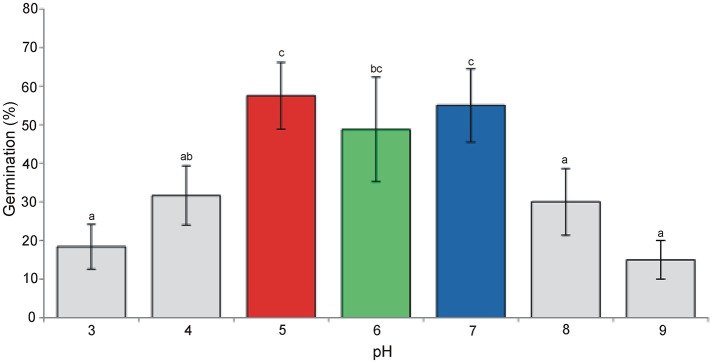
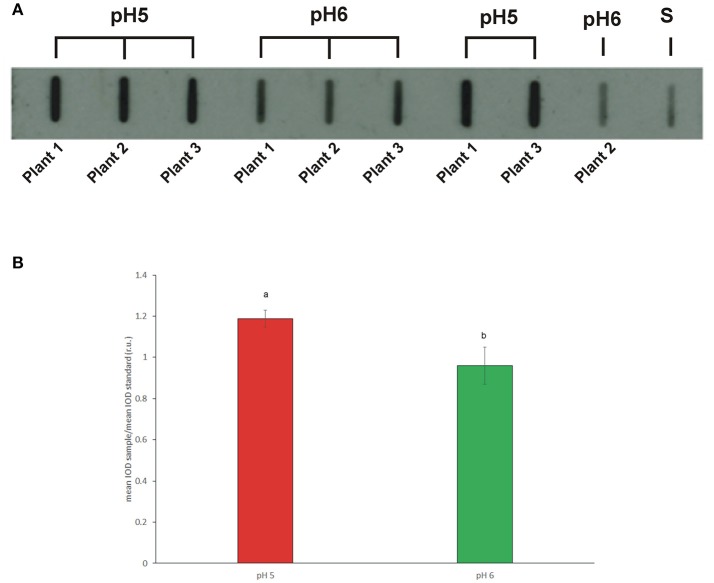
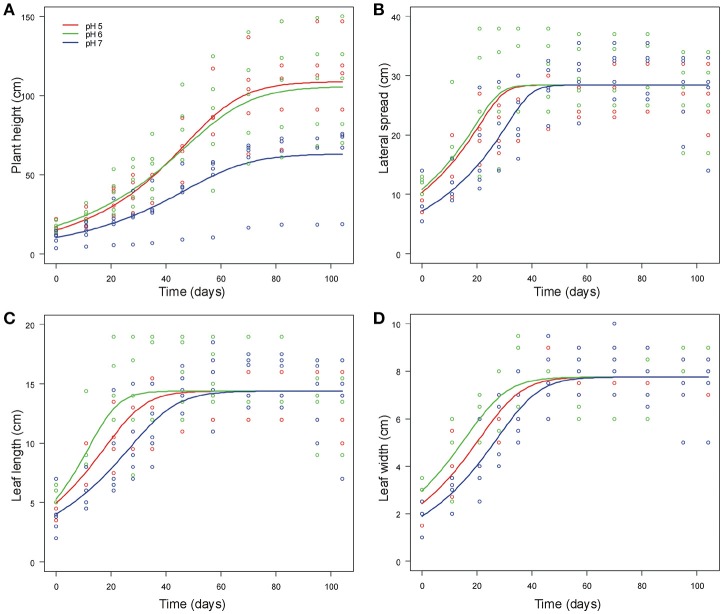
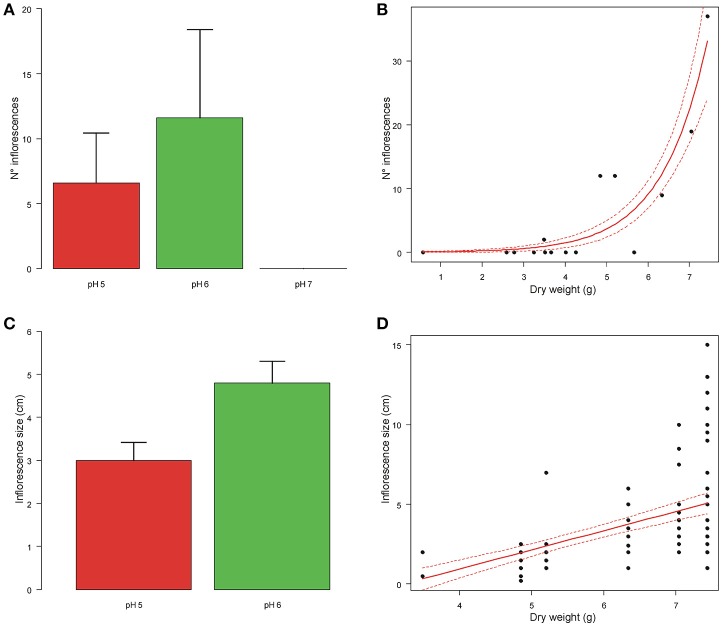
Despite the importance of soil reaction for alien plant establishment, few and incomplete studies have included this key factor so far. In this study, we investigated the effects of soil pH on the germination, growth (plant height, width, dry weight, etc.) and reproductive investment (inflorescence size and n° of flowers) of (common ragweed), an allergenic species that is highly invasive and alien in Europe, through a replicated experiment in controlled conditions. In addition, we determined if soil pH has an effect on the total pollen allergenicity of the species. After preliminary germination tests on agar at different pH (from pH4 to pH8), plants were grown in natural soils with pH values of 5 (acid), 6 (sub-acid) and 7 (neutral) obtained by modifying a natural soil by liming methods (calcium hydroxide solution). Results showed that plants grown at pH7 were shorter and developed leaves at a slower rate than those grown at pH5 and pH6; plants grown at pH7 did not produce flowers and pollen. We also observed that, at pH5 and pH6, larger plants (as assessed by the dry weight of the aerial biomass) had both larger and more numerous inflorescences and emitted pollen earlier. Finally, the IgE-binding signal was higher in pollen samples collected from plants grown at pH5 (Integrated Optical Density, IOD, range: 1.12-1.25) than in those grown at pH6 (IOD range: 0.86 -1.03). Although we acknowledge the limitations of only testing the effects of pH in controlled conditions, this study suggests that soil pH greatly affects the growth and development of and indicates that it may have a role in limiting the distribution and hazardousness of this plant. Future field tests should therefore assess the effectiveness of liming in the management and control of ragweed and other alien species.
尽管土壤反应对外来植物的定殖很重要,但迄今为止,很少有研究将这一关键因素纳入其中,且研究并不完整。在本研究中,我们通过在可控条件下进行的重复实验,研究了土壤pH值对豚草(一种在欧洲具有高度入侵性的外来致敏物种)的发芽、生长(株高、株宽、干重等)和繁殖投入(花序大小和花朵数量)的影响。此外,我们还确定了土壤pH值是否会对该物种的总花粉致敏性产生影响。在不同pH值(pH4至pH8)的琼脂上进行初步发芽试验后,将植物种植在通过用石灰法(氢氧化钙溶液)改良天然土壤而获得的pH值分别为5(酸性)、6(亚酸性)和7(中性)的天然土壤中。结果表明,在pH7条件下生长的植物比在pH5和pH6条件下生长的植物更矮,叶片发育速度更慢;在pH7条件下生长的植物不产生花朵和花粉。我们还观察到,在pH5和pH6条件下,较大的植物(通过地上生物量的干重评估)具有更大、更多的花序,并且更早地释放花粉。最后,从在pH5条件下生长的植物中收集的花粉样本中的IgE结合信号(积分光密度,IOD,范围:1.12 - 1.25)高于在pH6条件下生长的植物(IOD范围:0.86 - 1.03)。尽管我们承认仅在可控条件下测试pH值影响存在局限性,但本研究表明土壤pH值极大地影响了豚草的生长和发育,并表明其可能在限制该植物的分布和危害性方面发挥作用。因此,未来的田间试验应评估石灰处理在豚草和其他外来物种管理与控制中的有效性。