Shaikh Khurram, Hussain Imtiaz, Chowdhry Bhawani Shankar
Department of Electronic Engineering, Mehran University of Engineering and Technology, Jamshoro 76062, Pakistan.
Department of Electrical Engineering, National University of Sciences and Technology, Islamabad 44000, Pakistan.
Sensors (Basel). 2023 Jul 8;23(14):6248. doi: 10.3390/s23146248.
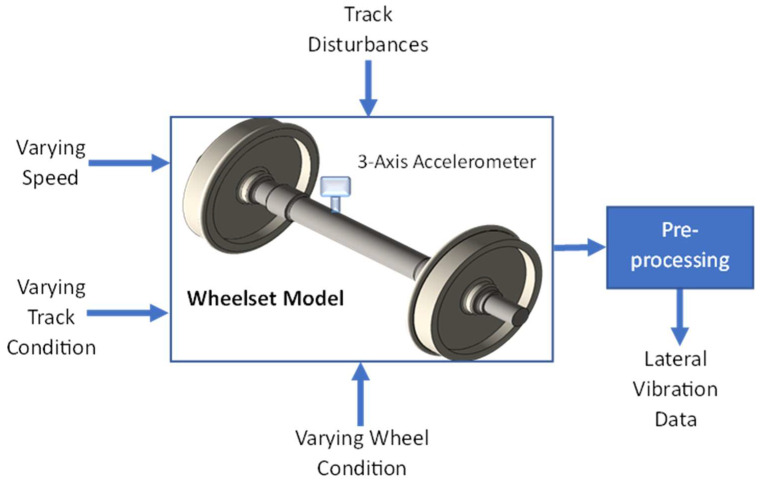
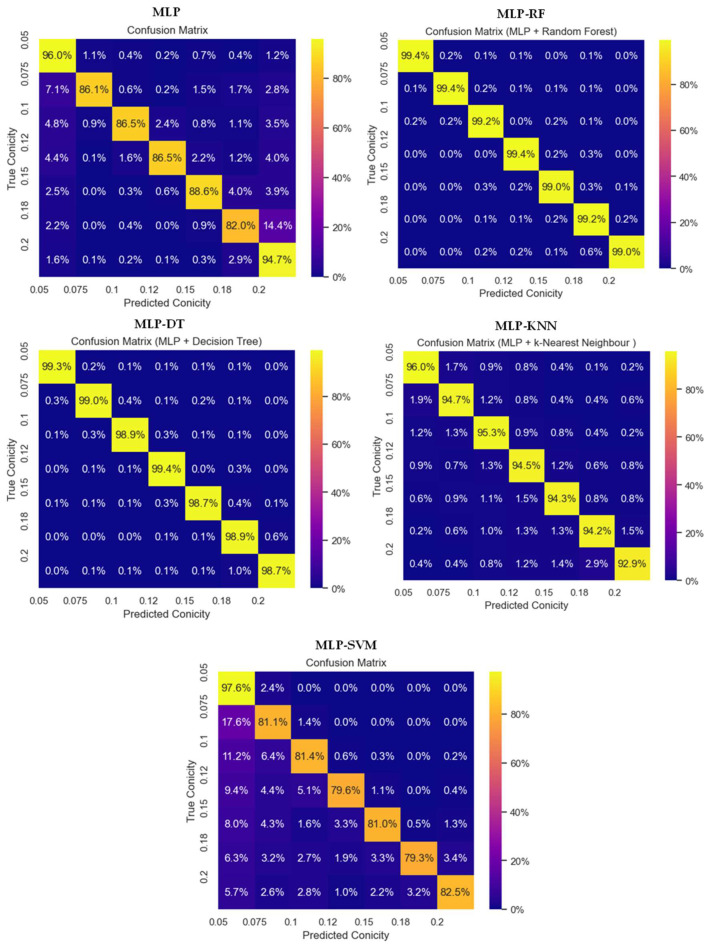
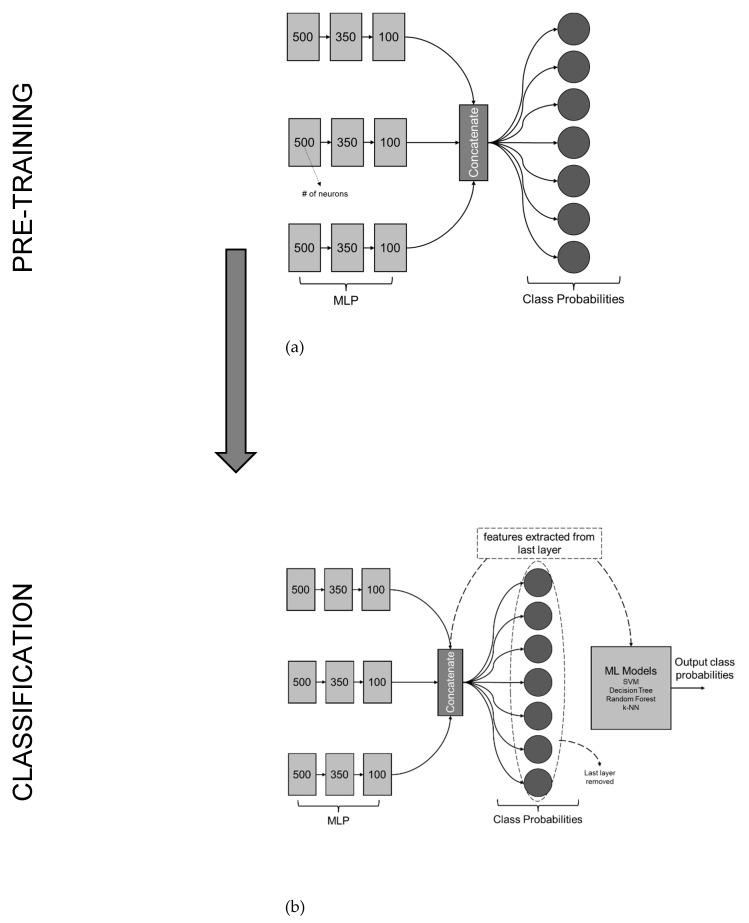
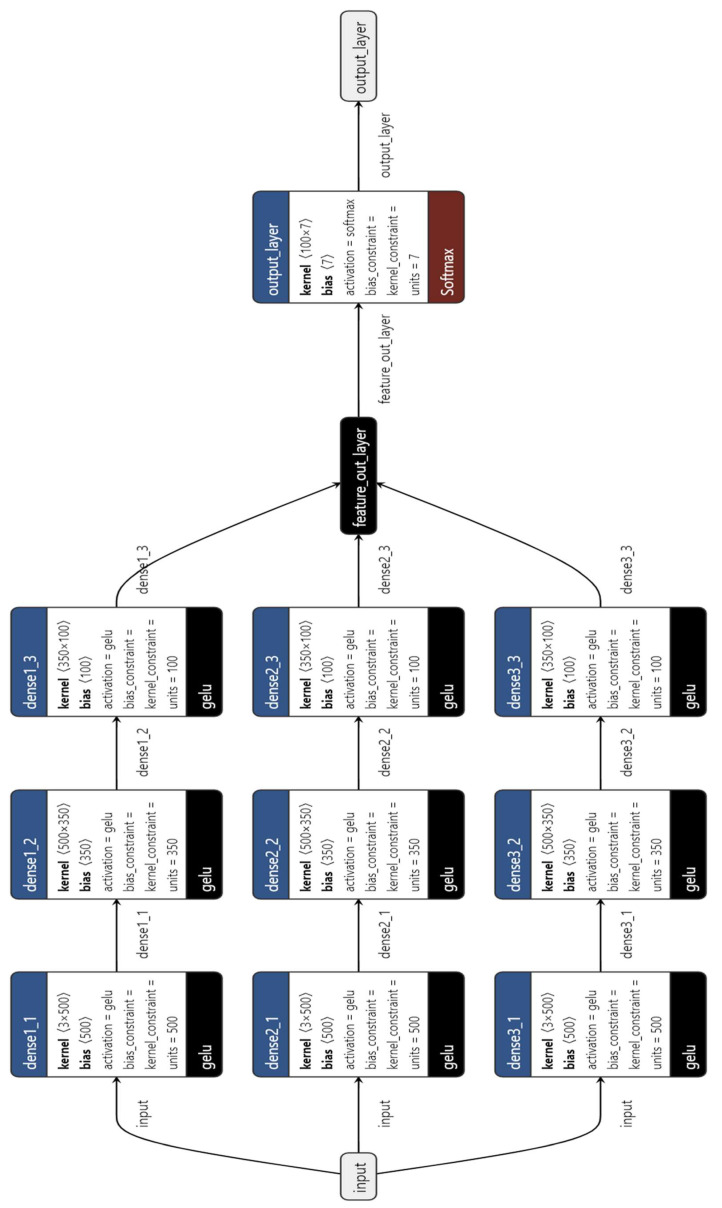
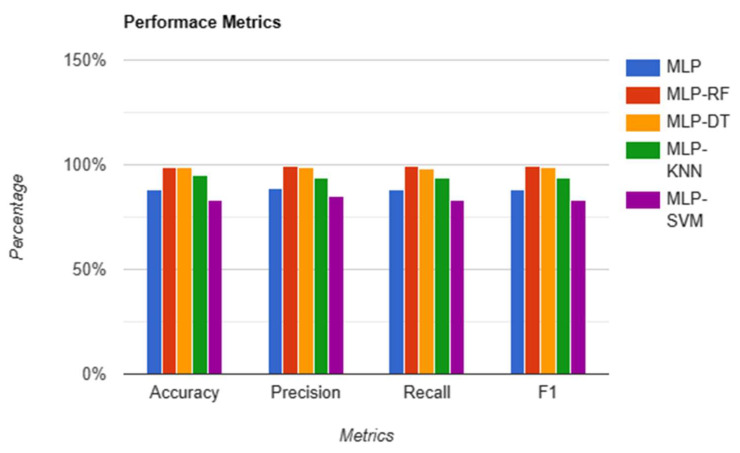
Defective wheels pose a significant challenge in railway transportation, impacting operational performance and safety. Excessive traction and braking forces give rise to deviations from the intended conical tread shape, resulting in amplified vibrations and noise. Moreover, these deviations contribute to the accelerated damage of track components. Detecting wheel defects at an early stage is crucial to ensure safe and comfortable operation, as well as to minimize maintenance costs. However, the presence of various vibrations, such as those induced by the track, traction motors, and other rolling stock subsystems, poses a significant challenge for onboard detection techniques. These vibrations create difficulties in accurately identifying wheel defects in real-time during operational activities, often resulting in false alarms. This research paper aims to address this issue by using a hybrid deep learning-based approach for the accurate detection of various types of wheel defects using accelerometer data. The proposed approach aims to enhance wheel defect detection accuracy while considering onboard techniques' cost-effectiveness and efficiency. A realistic simulation model of the railway wheelset is developed to generate a comprehensive dataset. To generate vibration data in various scenarios, the model is simulated for 20 s under different conditions, including one non-faulty scenario and six faulty scenarios. The simulations are conducted at different speeds and track conditions to capture a wide range of operating conditions. Within each simulation iteration, a total of 200,000 data points are generated, providing a comprehensive dataset for analysis and evaluation. The generated data are then utilized to train and evaluate a hybrid deep learning model, employing a multi-layer perceptron (MLP) as a feature extractor and multiple machine learning models (support vector machine, random forest, decision tree, and k-nearest neighbors) for performance comparison. The results demonstrate that the MLP-RF (multi-layer perceptron with random forest) model achieved an accuracy of 99%, while the MLP-DT (multi-layer perceptron with decision tree) model achieved an accuracy of 98%. These high accuracy values indicate the effectiveness of the models in accurately classifying and predicting the outcomes. The contributions of this research work include the development of a realistic simulation model, the evaluation of sensor layout effectiveness, and the application of deep learning techniques for improved wheel flat detections.
有缺陷的车轮给铁路运输带来了重大挑战,影响运营性能和安全。过大的牵引力和制动力会导致车轮偏离预期的锥形踏面形状,从而加剧振动和噪音。此外,这些偏差还会加速轨道部件的损坏。早期检测车轮缺陷对于确保安全舒适的运营以及降低维护成本至关重要。然而,各种振动的存在,如由轨道、牵引电机和其他车辆子系统引起的振动,给车载检测技术带来了重大挑战。这些振动使得在运营活动中实时准确识别车轮缺陷变得困难,常常导致误报。本文旨在通过使用基于深度学习的混合方法,利用加速度计数据准确检测各种类型的车轮缺陷来解决这一问题。所提出的方法旨在提高车轮缺陷检测的准确性,同时考虑车载技术的成本效益和效率。开发了一个逼真的铁路轮对仿真模型以生成全面的数据集。为了在各种场景下生成振动数据,该模型在不同条件下进行了20秒的模拟,包括一种无故障场景和六种故障场景。模拟在不同速度和轨道条件下进行,以涵盖广泛的运行条件。在每次模拟迭代中,总共生成200,000个数据点,为分析和评估提供了全面的数据集。然后利用生成的数据训练和评估一个混合深度学习模型,采用多层感知器(MLP)作为特征提取器,并使用多个机器学习模型(支持向量机、随机森林、决策树和k近邻)进行性能比较。结果表明,MLP-RF(带有随机森林的多层感知器)模型的准确率达到了99%,而MLP-DT(带有决策树的多层感知器)模型的准确率达到了98%。这些高准确率值表明了模型在准确分类和预测结果方面的有效性。这项研究工作的贡献包括开发了一个逼真的仿真模型、评估了传感器布局的有效性以及应用深度学习技术改进车轮扁疤检测。