Department of Mechanical Engineering, INSIGNEO Institute for In Silico Medicine, The University of Sheffield, Sheffield S10 2TN, UK.
Academic Department of Neurosciences, Sheffield Teaching Hospitals NHS Trust, University of Sheffield, Sheffield S10 2TN, UK.
Sensors (Basel). 2023 Jul 20;23(14):6563. doi: 10.3390/s23146563.
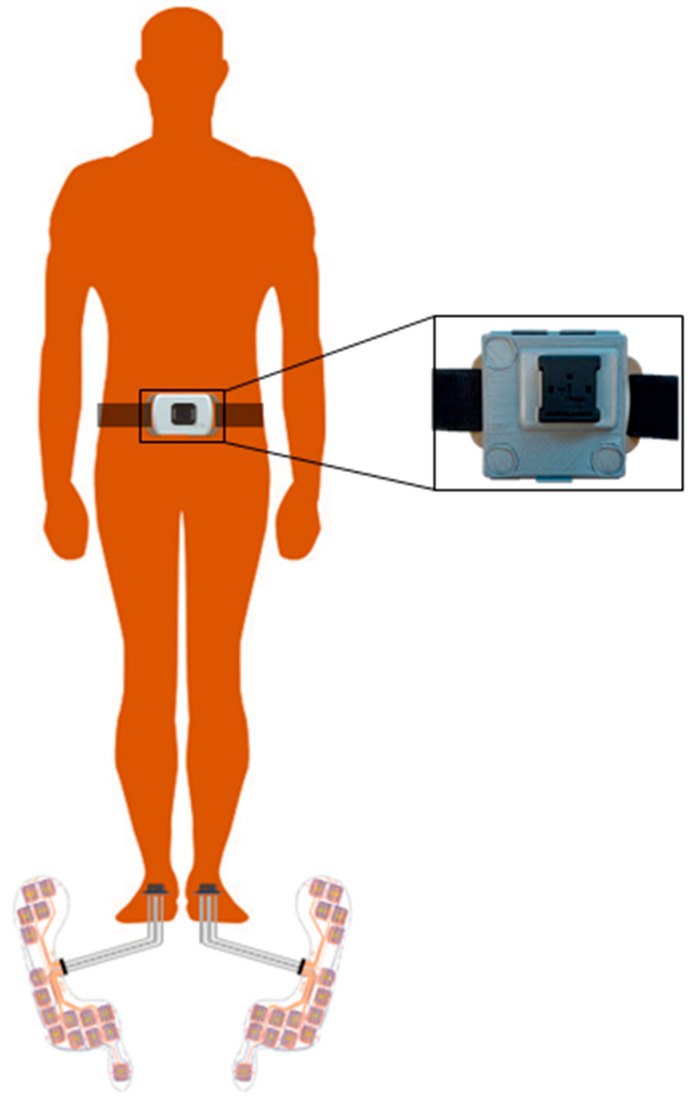
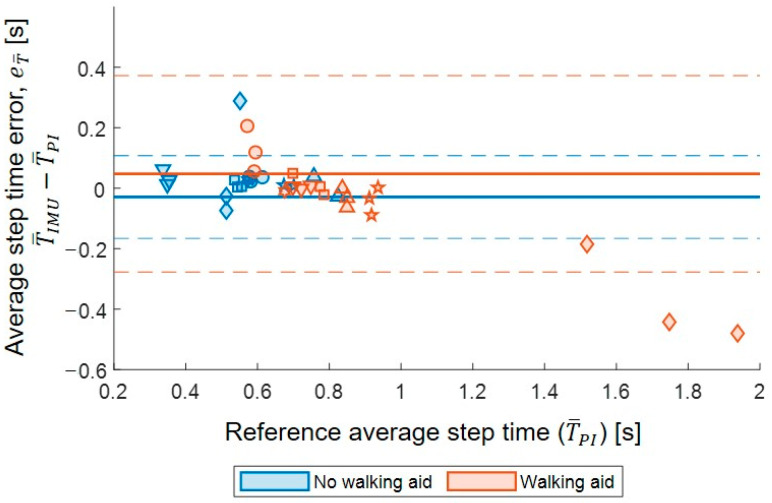
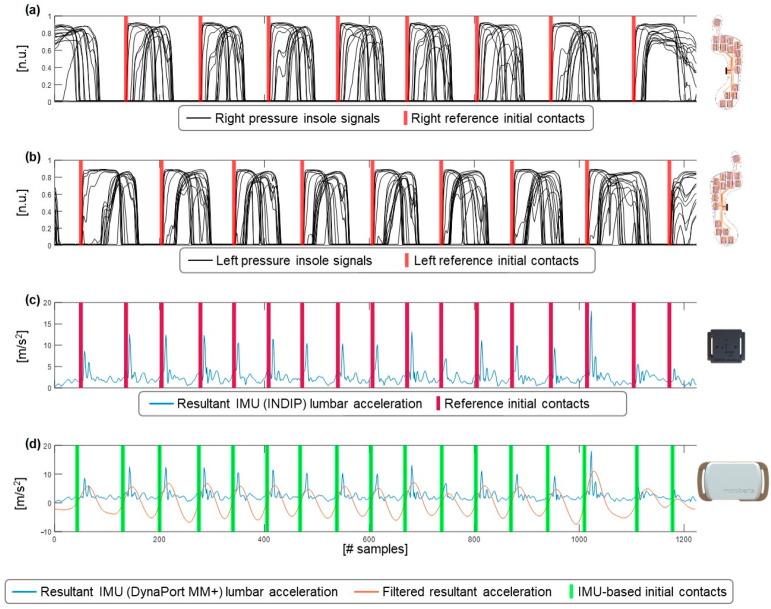
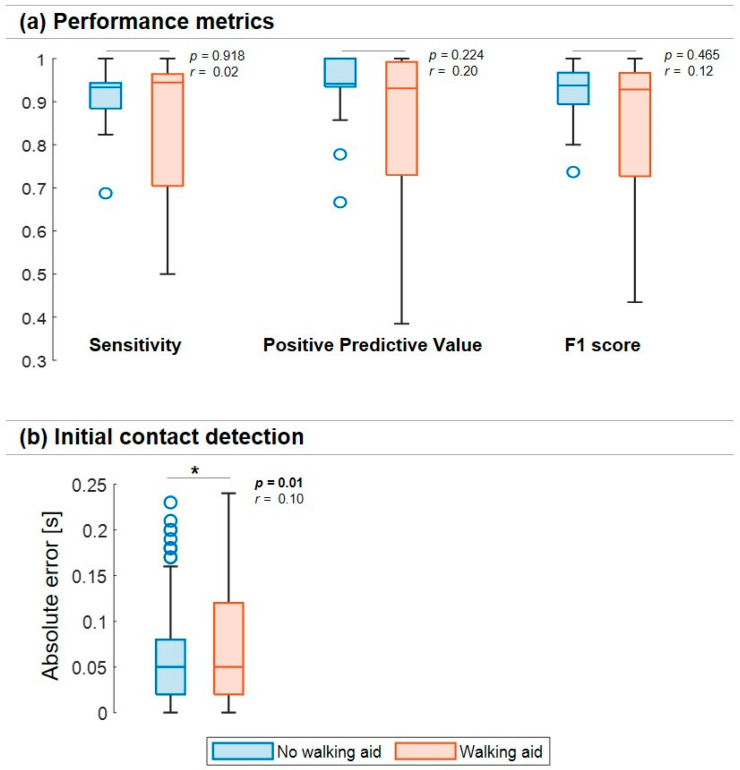
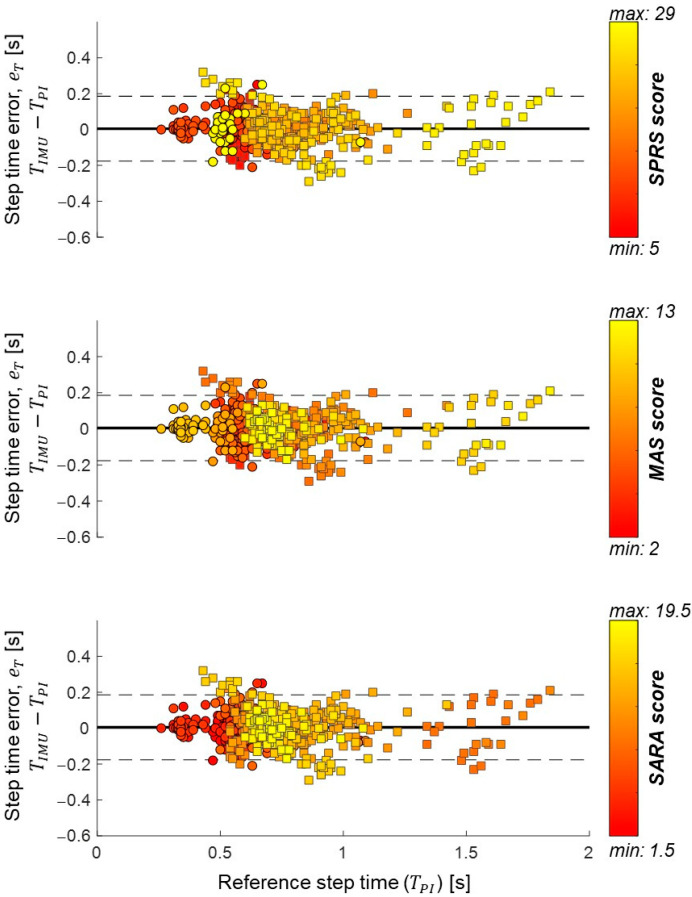
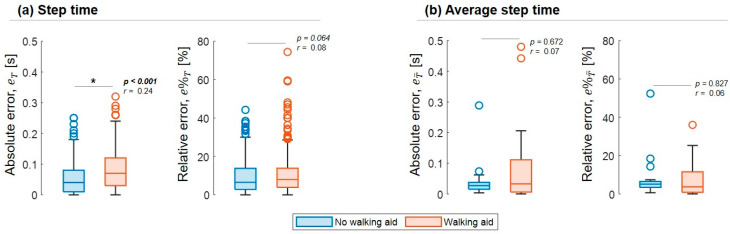
Hereditary spastic paraplegia (HSP) is characterised by progressive lower-limb spasticity and weakness resulting in ambulation difficulties. During clinical practice, walking is observed and/or assessed by timed 10-metre walk tests; time, feasibility, and methodological reliability are barriers to detailed characterisation of patients' walking abilities when instrumenting this test. Wearable sensors have the potential to overcome such drawbacks once a validated approach is available for patients with HSP. Therefore, while limiting patients' and assessors' burdens, this study aims to validate the adoption of a single lower-back wearable inertial sensor approach for step detection in HSP patients; this is the first essential algorithmic step in quantifying most gait temporal metrics. After filtering the 3D acceleration signal based on its smoothness and enhancing the step-related peaks, initial contacts (ICs) were identified as positive zero-crossings of the processed signal. The proposed approach was validated on thirteen individuals with HSP while they performed three 10-metre tests and wore pressure insoles used as a gold standard. Overall, the single-sensor approach detected 794 ICs (87% correctly identified) with high accuracy (median absolute errors (): 0.05 s) and excellent reliability (ICC = 1.00). Although about 12% of the ICs were missed and the use of walking aids introduced extra ICs, a minor impact was observed on the step time quantifications ( 0.03 s (5.1%), ICC = 0.89); the use of walking aids caused no significant differences in the average step time quantifications. Therefore, the proposed single-sensor approach provides a reliable methodology for step identification in HSP, augmenting the gait information that can be accurately and objectively extracted from patients with HSP during their clinical assessment.
遗传性痉挛性截瘫(HSP)的特征是进行性下肢痉挛和无力,导致行走困难。在临床实践中,通过定时 10 米步行测试来观察和/或评估行走能力;时间、可行性和方法学可靠性是对患者行走能力进行详细特征描述的障碍,特别是在对该测试进行仪器化时。一旦为 HSP 患者提供了经过验证的方法,可穿戴传感器就有可能克服这些缺点。因此,尽管限制了患者和评估者的负担,但本研究旨在验证采用单个背部可穿戴惯性传感器方法来检测 HSP 患者的步幅,这是量化大多数步态时间指标的第一个必要算法步骤。在根据信号的平滑度对 3D 加速度信号进行滤波并增强与步幅相关的峰值后,初始接触(IC)被确定为处理后信号的正过零点。该方法在 13 名 HSP 患者中进行了验证,这些患者进行了三次 10 米测试并佩戴压力鞋垫作为金标准。总体而言,单个传感器方法检测到 794 个 IC(87%正确识别),具有高精度(中位数绝对误差():0.05 s)和极好的可靠性(ICC=1.00)。尽管约 12%的 IC 被遗漏,使用助行器会引入额外的 IC,但对步幅时间的量化影响很小(0.03 s(5.1%),ICC=0.89);助行器的使用并未对平均步幅时间的量化产生显著差异。因此,所提出的单传感器方法为 HSP 中的步幅识别提供了一种可靠的方法,增加了可以从 HSP 患者的临床评估中准确和客观提取的步态信息。