Mohanty Madhu Chhanda, Desai Mukesh, Mohammad Ahmad, Aggarwal Amita, Govindaraj Geeta, Bhattad Sagar, Lashkari Harsha Prasada, Rajasekhar Liza, Verma Harish, Kumar Arun, Sawant Unnati, Varose Swapnil Yashwant, Taur Prasad, Yadav Reetika Malik, Tatkare Manogat, Fernandes Mevis, Bargir Umair, Majumdar Sanjukta, Edavazhippurath Athulya, Rangarajan Jyoti, Manthri Ramesh, Madkaikar Manisha Ranjan
Mumbai Unit, ICMR-National Institute of Virology (ICMR-NIV), Mumbai 400012, India.
Department of Immunology, Bai Jerbai Wadia Hospital for Children, Mumbai 400012, India.
Vaccines (Basel). 2023 Jul 6;11(7):1211. doi: 10.3390/vaccines11071211.
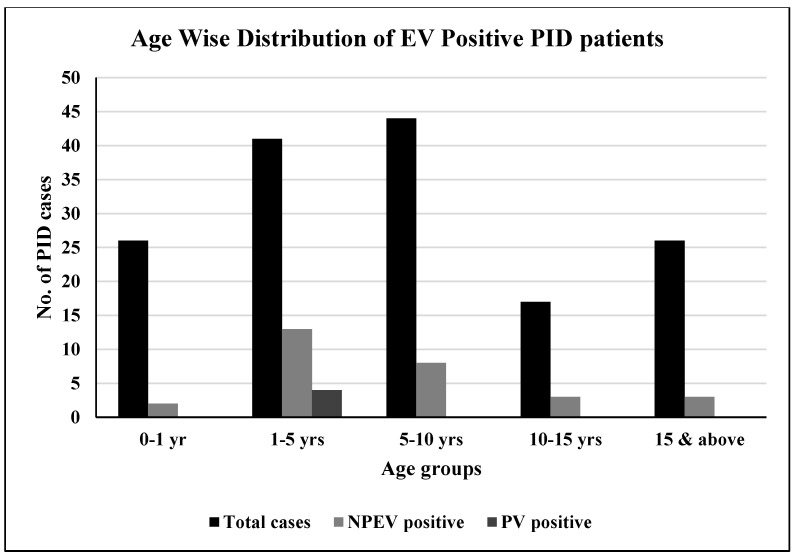
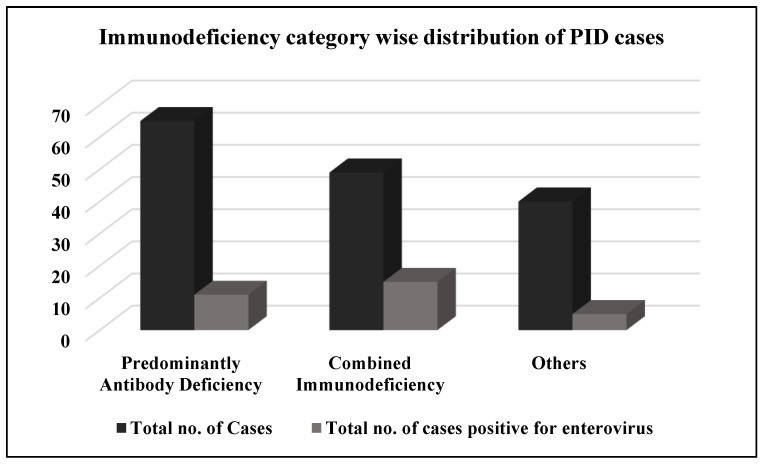
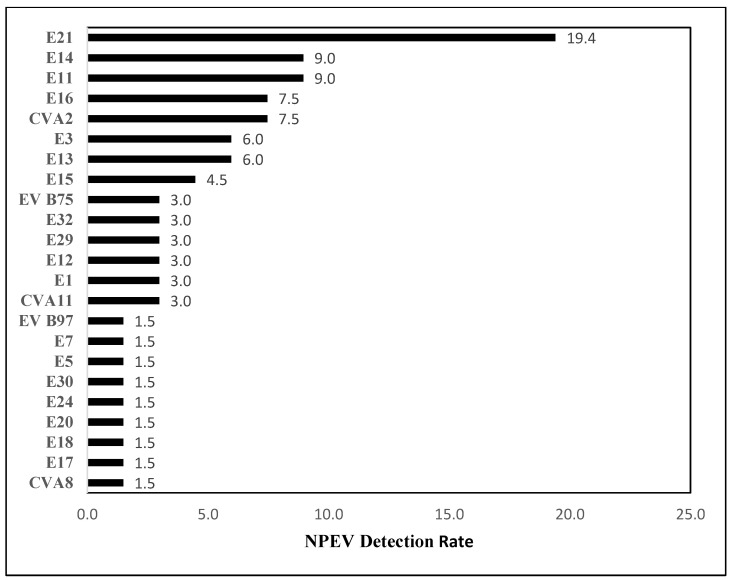
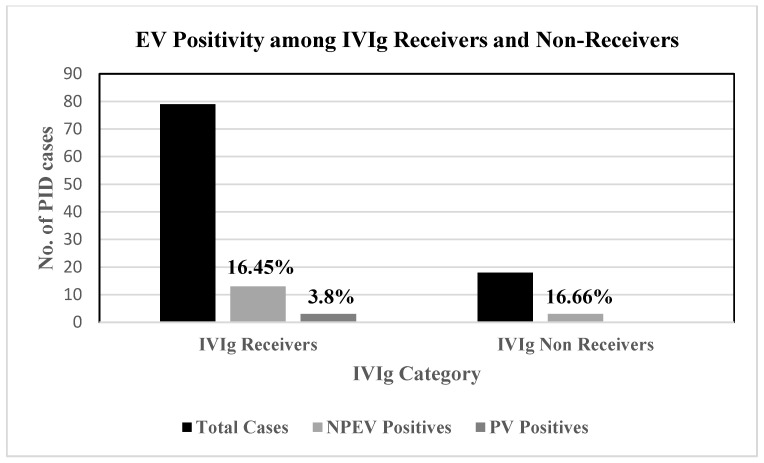
The emergence of vaccine-derived polioviruses (VDPVs) in patients with Primary Immunodeficiency (PID) is a threat to the polio-eradication program. In a first of its kind pilot study for successful screening and identification of VDPV excretion among patients with PID in India, enteroviruses were assessed in stool specimens of 154 PID patients across India in a period of two years. A total of 21.42% of patients were tested positive for enteroviruses, 2.59% tested positive for polioviruses (PV), whereas 18.83% of patients were positive for non-polio enteroviruses (NPEV). A male child of 3 years and 6 months of age diagnosed with Hyper IgM syndrome was detected positive for type1 VDPV (iVDPV1) with 1.6% nucleotide divergence from the parent Sabin strain. E21 (19.4%), E14 (9%), E11 (9%), E16 (7.5%), and CVA2 (7.5%) were the five most frequently observed NPEV types in PID patients. Patients with combined immunodeficiency were at a higher risk for enterovirus infection as compared to antibody deficiency. The high susceptibility of PID patients to enterovirus infection emphasizes the need for enhanced surveillance of these patients until the use of OPV is stopped. The expansion of PID surveillance and integration with a national program will facilitate early detection and follow-up of iVDPV excretion to mitigate the risk for iVDPV spread.
原发性免疫缺陷(PID)患者中疫苗衍生脊髓灰质炎病毒(VDPV)的出现对脊髓灰质炎根除计划构成威胁。在印度针对PID患者成功筛查和鉴定VDPV排泄情况的同类首次试点研究中,在两年时间里对印度各地154例PID患者的粪便标本进行了肠道病毒评估。共有21.42%的患者肠道病毒检测呈阳性,2.59%的患者脊髓灰质炎病毒(PV)检测呈阳性,而18.83%的患者非脊髓灰质炎肠道病毒(NPEV)呈阳性。一名3岁6个月大、被诊断为高IgM综合征的男童被检测出1型VDPV(iVDPV1)呈阳性,与亲本萨宾株的核苷酸差异为1.6%。E21(19.4%)、E14(9%)、E11(9%)、E16(7.5%)和CVA2(7.5%)是PID患者中最常观察到的五种NPEV类型。与抗体缺陷患者相比,联合免疫缺陷患者感染肠道病毒的风险更高。PID患者对肠道病毒感染的高易感性强调了在停止使用口服脊髓灰质炎疫苗之前加强对这些患者监测的必要性。扩大PID监测并与国家计划相结合将有助于早期发现和追踪iVDPV排泄情况,以降低iVDPV传播的风险。