High-Resolution Microscopy Section, Center for Research in Health Sciences and Biomedicine, Autonomous University of San Luis Potosí, San Luis Potosí 78210, Mexico.
Center for Research in Health Sciences and Biomedicine, Autonomous University of San Luis Potosí, San Luis Potosí 78210, Mexico.
Viruses. 2023 Jul 7;15(7):1518. doi: 10.3390/v15071518.
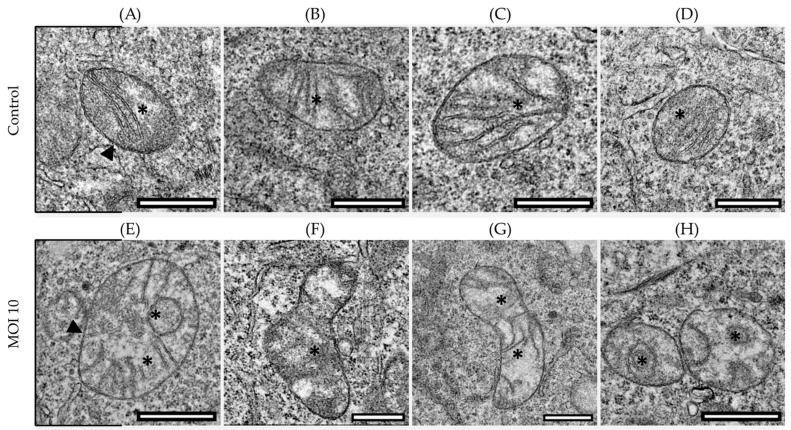
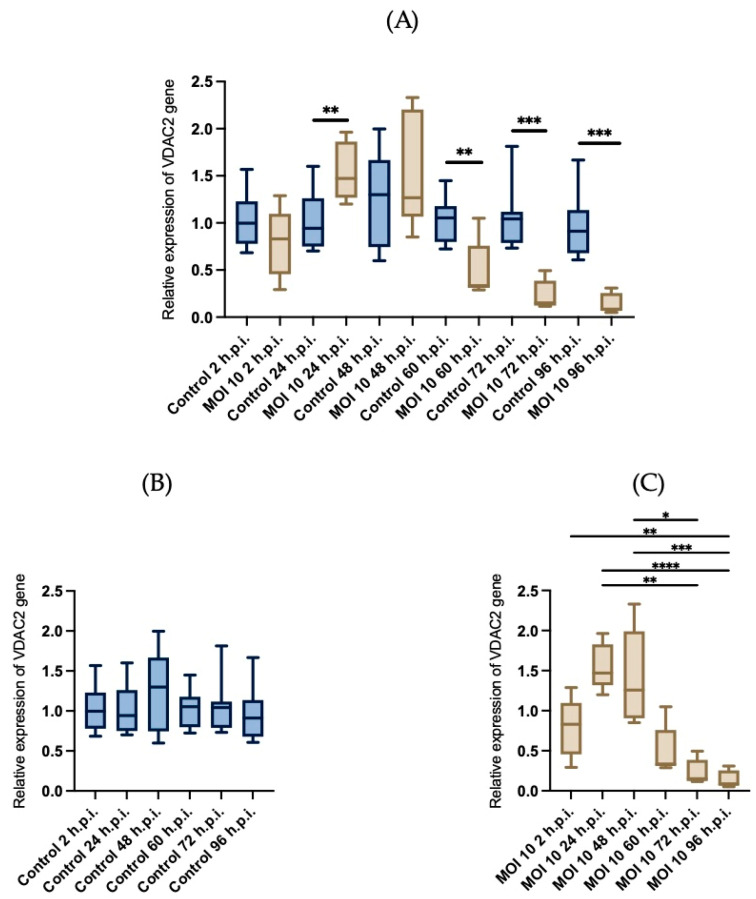
Human respiratory syncytial virus (hRSV) is the leading cause of acute lower respiratory tract infections in children under five years of age and older adults worldwide. During hRSV infection, host cells undergo changes in endomembrane organelles, including mitochondria. This organelle is responsible for energy production in the cell and plays an important role in the antiviral response. The present study focuses on characterizing the ultrastructural and functional changes during hRSV infection using thin-section transmission electron microscopy and RT-qPCR. Here we report that hRSV infection alters mitochondrial morphodynamics by regulating the expression of key genes in the antiviral response process, such as Mfn1, VDAC2, and PINK1. Our results suggest that hRSV alters mitochondrial morphology during infection, producing a mitochondrial phenotype with shortened cristae, swollen matrix, and damaged membrane. We also observed that hRSV infection modulates the expression of the aforementioned genes, possibly as an evasion mechanism in the face of cellular antiviral response. Taken together, these results advance our knowledge of the ultrastructural alterations associated with hRSV infection and might guide future therapeutic efforts to develop effective antiviral drugs for hRSV treatment.
人呼吸道合胞病毒(hRSV)是导致全球 5 岁以下儿童和老年人急性下呼吸道感染的主要原因。在 hRSV 感染期间,宿主细胞的内质网膜细胞器发生变化,包括线粒体。该细胞器负责细胞内的能量产生,在抗病毒反应中起着重要作用。本研究使用超薄切片透射电子显微镜和 RT-qPCR 来研究 hRSV 感染过程中内质网细胞器的超微结构和功能变化。我们报告 hRSV 通过调节抗病毒反应过程中的关键基因(如 Mfn1、VDAC2 和 PINK1)的表达来改变线粒体形态动力学。我们的结果表明,hRSV 在感染过程中改变线粒体形态,产生具有缩短嵴、肿胀基质和受损膜的线粒体表型。我们还观察到 hRSV 感染调节上述基因的表达,这可能是细胞抗病毒反应面临的一种逃避机制。总之,这些结果提高了我们对 hRSV 感染相关的超微结构改变的认识,并可能为开发有效的 hRSV 治疗抗病毒药物提供指导。